Things To Do
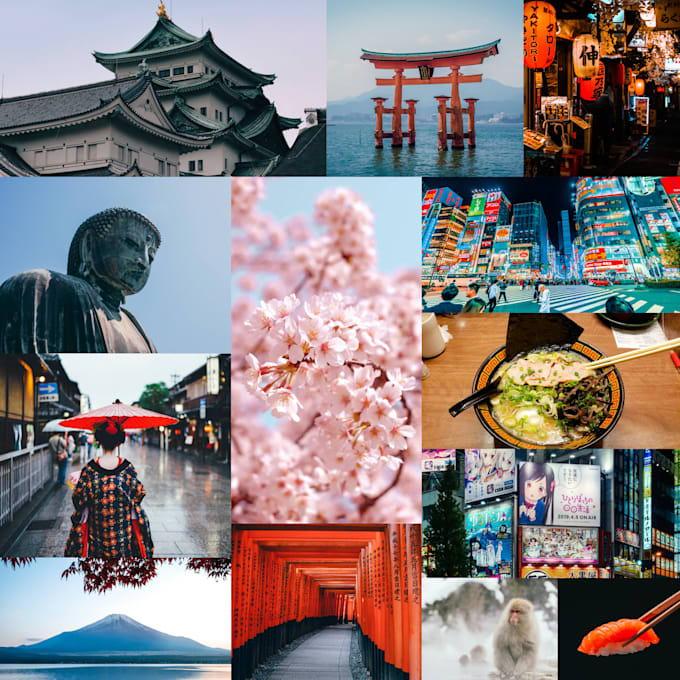
Kotoku-in
The Great Buddha is a 20-30min walk from the wedding venue.
Hasedera
Buddhist temple with beautiful bamboo garden.
Enoshima
A seaside village crowned by the revered Enoshima Shrine. The shrine is one of Japan’s “Three Great Benzaiten Shrines,” dedicated to Benzaiten – the goddess of fortune, music, and the arts.
Meiji Jingu
Meiji Jingu Shrine is a significant Shinto shrine in Tokyo dedicated to the deified spirits of Emperor Meiji and Empress Shoken.
Asakusa & Sensō-ji
Built in 645, it's Tokyo's oldest temple. Legend says that in the year 628, two brothers fished a statue of Kannon, the goddess of mercy, out of the Sumida River, and even though they put the statue back into the river, it always returned to them. Consequently, Senso-ji was built for the goddess of Kannon.
Ninja Cafe Asakusa
3 types of ninja training are offered here: Shuriken (Ninja Star), Blow Darts and Japanese Sword. In addition, you can change into ninja costumes.
Akihabara Electric Town
World-famous for its densely packed buildings crammed full of anime, manga, and game paraphernalia.
Imperial Palace
You must apply for a permit to enter by submitting an application to visit, as it is the main residence of the Emperor of Japan.
Maidreamin (Maid Cafe)
Waitresses, dressed in maid costumes, act as servants, and treat customers as masters (and mistresses).
Ueno Park
Has many museums: Tokyo National Museum, National Museum for Western Art (UNESCO World Heritage Site), Tokyo Metropolitan Art Museum and the National Science Museum. It is also home to Ueno Zoo.
Shibuya Scramble Crossing
This is the infamous crosswalk of Japan! Best to go when work lets out to see the organized chaos.
Tokyo Skytree
Tokyo Sky Tree is one of the tallest towers in the world. It is home to many attractions including a restaurant, a cafe, an aquarium, and observatories with views of Tokyo's cityscape.
Sumo Wrestling
Sumo wrestling is Japan’s oldest sport, dating back over 1,500 years to Shinto harvest ceremonies, where matches were held as offerings to the gods for good fortune and prosperity. Over time, it evolved into Japan’s national sport.
Gonpachi (Kill Bill Restaurant)
This restaurant was the inspiration for the ‘House of Blue Leaves’ in Tarantino’s 2004 film, Kill Bill.
Fishing Restaurant Zauo Shinjuku
Catch your own dinner! Go fishing and catch a fish and eat it fresh for dinner!
Vampire Café
Horror-themed restaurant with food to match the theme.
Gōtokuji Temple
Buddhist Temple, also known as the "lucky cat temple" for its incredible display of maneki-nekos.
Tokyo Disneyland
This is one of my dream destinations! Hoping to make it happen this trip!
Mount Fuji
Mt. Fuji is an active volcano!!! It is the highest mountain in Japan. Fujisan is one of Japan's "Three Holy Mountains" (along with Mount Tate and Mount Haku) and is designated as a UNESCO World Heritage site.
Hakone Onsen
Truly embrace Japanese culture and experience an Onsen (natural hot springs heated by underground volcanic activity), but this isn't for the faint of heart as you have to get completely naked with family, friends, and strangers! I personally love it! Note that most traditional onsens will deny entry to people with tattoos.
Kiyomizu-dera
Buddhist Temple founded in 780. It is one of the most celebrated temples of Japan.
Arashiyama Bamboo Forest
The Arashiyama Bamboo Grove is one of Kyoto's most iconic sights. Immerse yourself in the emerald green of the bamboo forest.
Fushimi Inari Taisha
Definitely a sight to see with roughly 10,000 torii, and approximately 800 of them are set in a row to form the Senbon Torii, creating the impression of a tunnel. The Shinto shrine is dedicated to the God Inari - kami of rice and agriculture.
Kinkakuji (Temple of the Golden Pavilion)
Zen Buddhist Temple made of gold! It is designated as a UNESCO World Heritage Site, a National Special Historic Site, a National Special Landscape, and one of the 17 Historic Monuments of Ancient Kyoto.
Gion (Geisha District)
Kyoto's most famous geisha district. It is filled with shops, restaurants and teahouses, where geisha and maiko (geisha apprentices) entertain. Seeing a real geisha is rare, but if you do, act respectfully. Complaints about tourists behaving like ruthless paparazzi have been astronomical. Respect the culture, live in the moment, and please DO NOT photograph them.
Nijō Castle
Built in 1603 for Tokugawa Ieyasu, the first Shogun of the Edo Period. Its palace buildings are the best surviving examples of castle palace architecture of that era, and it has been designated a UNESCO World Heritage Site.
Kyoto Samurai Ninja Museum
Museum with hands-on experiences - wear samurai armor, practice swordsmanship, and master ninja skills like shuriken throwing and blowgun techniques.
Itsukushima Jinja
A Shinto shrine on the island of Miyajima, best known for its "floating" torii. It is listed as a UNESCO World Heritage Site, and the Japanese government has designated several buildings and possessions as National Treasures.
Peace Memorial Park - Hiroshima
The park exists in memory of the victims of the nuclear attack on August 6, 1945, in which the United States dropped an atomic bomb on the Japanese city of Hiroshima. The park was built on an open field that was created by the explosion. It's super intense and emotional, but one I believe all Americans should experience. The A-Bomb Dome is on the UNESCO World Heritage List. The Children's Peace Monument is a statue dedicated to the memory of the children who died from the bombing. The statue is of a girl with outstretched arms with a folded paper crane rising above her. The statue is based on the true story of Sadako Sasaki, a young girl who died from radiation from the bomb. She is known for folding over 1,000 paper cranes while in the hospital in hopes an ancient folklore (that if a sick person folds 1,000 paper cranes, then that person would get well) would come true. She died October 1955, at only 12 years old.