Y&G
Jewish Wedding Traditions
Question
What is the Bedeken?
Answer
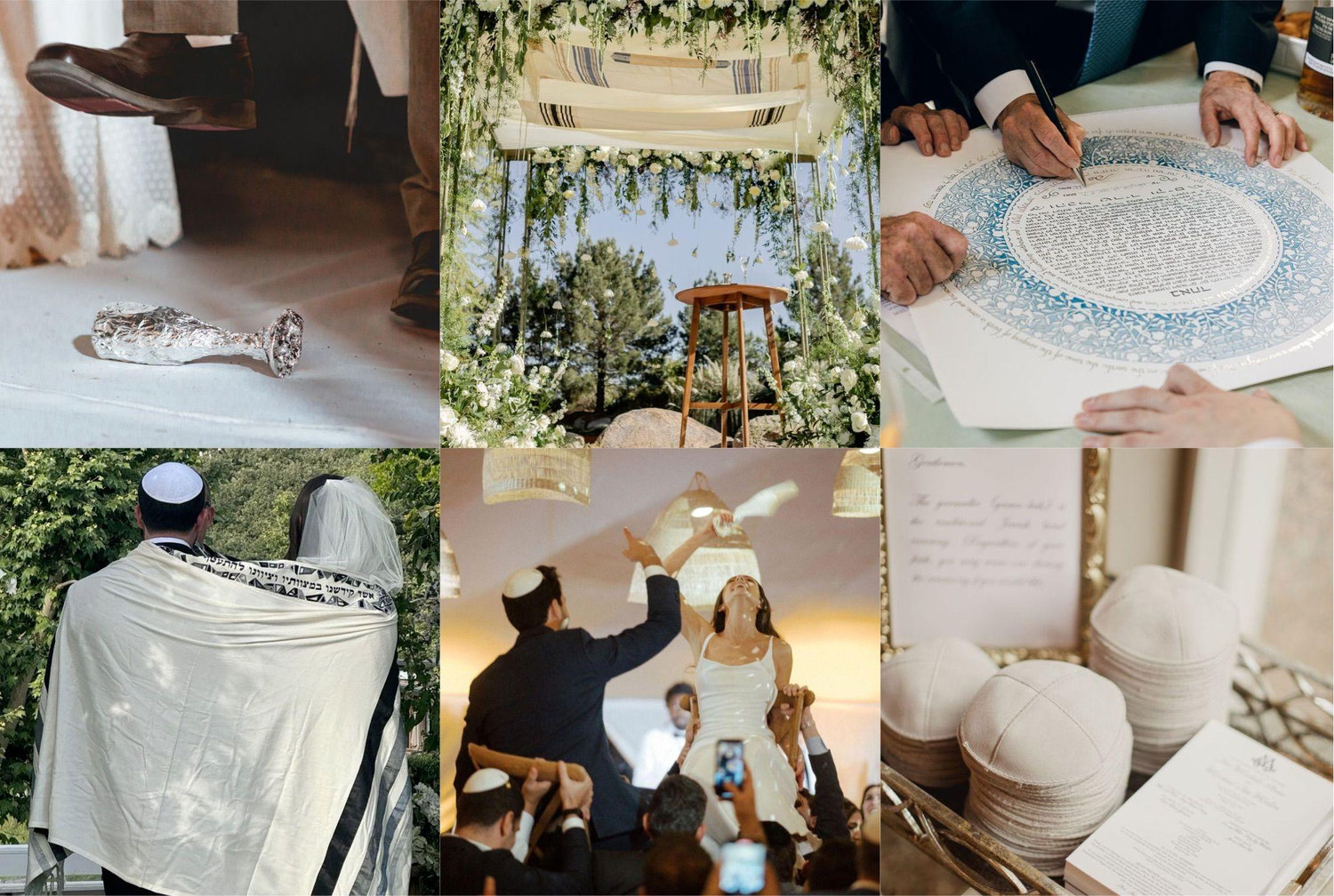
The Bedeken is a meaningful moment when the groom covers the bride’s face with her veil just before the ceremony. It derives from the biblical story of Jacob, who was deceived into marrying Leah instead of Rachel. The Bedeken symbolizes the intention to see and love one another for who one truly is inside.
Question
What is a Chuppah?
Answer
The Chuppah is the wedding canopy under which we will be married. It represents our future home together—open on all sides to welcome family, friends, and community.
Question
What is the Ketubah?
Answer
The Ketubah is the Jewish marriage contract. It serves as both a Jewish legal document and a sacred expression of commitment.
Question
What is a Kippah (or Yarmulke)? Should I wear one if I am not Jewish?
Answer
A Kippah (also called a yarmulke) is a small head covering traditionally worn by men during Jewish prayer and sacred moments. Men of all backgrounds are welcome and encouraged to wear a kippah during the ceremony as a sign of respect. It is completely optional, and kippot will be provided for anyone who would like one.
Question
What is a Tallit?
Answer
A Tallit is a traditional Jewish prayer shawl. Its fringes (tzitzit) serve as a reminder of Jewish commandments and spiritual responsibility. In a wedding, it symbolizes wrapping the marriage in faith, tradition, and continuity.
Question
Why does the groom break a glass?
Answer
At the conclusion of the ceremony, the groom breaks a glass underfoot. This act reminds us of the destruction of the Temple in Jerusalem and that even in moments of great joy, we remember loss and imperfection in the world. Immediately afterward, everyone joyfully calls out “Mazel Tov,” a Hebrew phrase meaning “good fortune” or “congratulations,” to celebrate the couple and mark the start of the festivities.
Question
What is Yichud?
Answer
Yichud is a brief moment of seclusion for the newly married couple immediately after the ceremony. It gives us a quiet pause together before joining the celebration.
Question
What is the Hora?
Answer
The Hora is a joyful circle dance where guests celebrate together and the bride and groom are lifted up on chairs. Expect big smiles, Hebrew songs, and lots of energy.