Mami & Junichi
Things to do in Kyoto
Kyoto Station
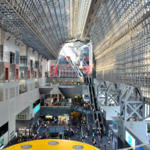
Kyoto Station building was constructed on the 1,200th anniversary of the capital's foundation in Kyoto. The building's futuristic design and atmosphere was conceived by the Japanese architect Hara Hiroshi.
Kyoto Imperial Palace
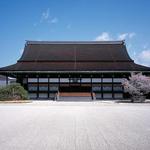
Kyoto Imperial Palace, which was the residence of the Imperial Family until the capital was moved to Tokyo in 1869, is located in Kyoto Gyoen Park.
Arashiyama Bamboo Forest
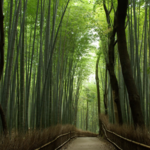
Walking through the soaring bamboo stalks of the densely packed Bamboo Forest in the shadows of the morning light is eerily beautiful and incredibly serene. The Bamboo Forest thoroughly deserves its spot as an iconic Kyoto sight and one of its most photographed spots!
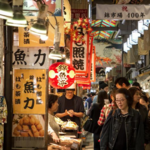
Nishiki Food Market
The 400 year old Nishiki Market is Kyoto’s best traditional food market and attracts locals and tourists in equal measures. Nishiki is the perfect place for a afternoon souvenir wander and to sample the delicious food synonymous with the city.
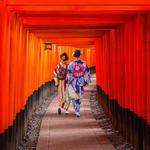
Fushimi Inari Shrine
This intriguing shrine was dedicated to the god of rice and sake by the Hata clan in the 8th century. As the role of agriculture diminished, deities were enrolled to ensure prosperity in business enterprises. The magical, seemingly unending path of over 5,000 vibrant orange torii gates that wind through the hills behind Fushimi Inari Shrine makes it one of the most popular shrines in Japan. This shrine also features dozens of statues of foxes. The fox is seen as the messenger of the god of grain foods.
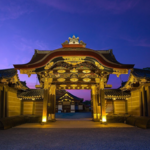
Nijō Castle
Nijo-jo Castle was the residence of the Tokugawa “Shogun” in Kyoto, who had been ruling Japan for over 260 years from 1603 to 1868, and it remains an eloquent testimony to their power. Inside the palace are several masterpieces of Japanese art, most notably the painted screens of the main chamber. Also, in the palace are the famous "Nightingale Floors" which were designed to squeak when stepped on and thus alert guards to any intruders.
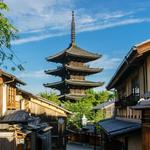
Hōkan-ji Temple (Yasaka-Pagoda)
Hokan-ji Temple, known as Yasaka Pagoda, is a 46-meter tall pagoda with graceful, sloping roofs on each tier, which lies in the middle of an old Kyoto neighborhood, as known as Higashiyama area. It is one of the unexpected treasures that reward the person on a casual stroll through the Higashiyama District. Originally built by the Imperial Prince Shotoku in 589, the pagoda is said to have been inspired by a dream.
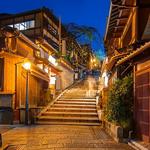
Higashiyama District
Walking through Kyoto’s Higashiyama District is like taking a step back in time. Narrow streets snake up the side of Mount Kiyomizu-dera Temple and the streets are lined with shops, restaurants and local specialties of pottery, crafts and sweets. This historic district, with its wooden buildings and traditional stores, invokes a feeling of old: it is crammed with tourists and makes for a fun and picturesque afternoon in Kyoto.

Gion District
Gion is the Geisha capital of Japan and an entertainment district dotted with traditional Japanese tea houses and restaurants. It’s known as the birthplace of Geisha culture and has the feel of a Japan gone by. It’s often possible to see a Geisha hurrying along the streets between engagements but be careful not to confuse them with the many visitors who dress up as Geisha’s, a popular activity offered by many studios in the area.
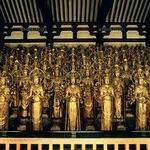
Rengeoin Sanjusangendo
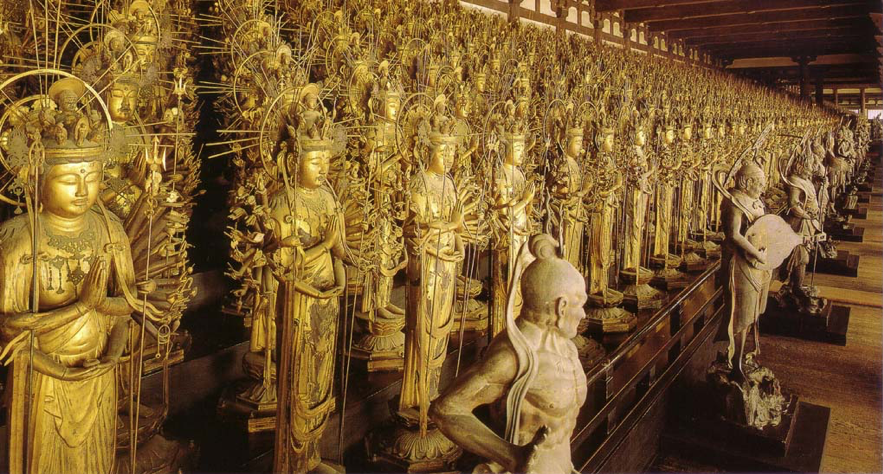
The temple name means literally "Hall with thirty three spaces between the columns", describing the architecture of the 120-meter long (the world's longest wooden building) main hall of the temple. It is one of the most impressive assemblies of statues in the world as well. There are 28 statues of guardian deities with intense expressions and impressive detail.
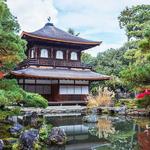
Jisho-ji Temple (Silver Pavillion)
Ginkaku-ji Temple (Temple of the Silver Pavilion), a temple belonging to the Buddhist Shokoku School of the Rinzai Zen sect. The Temple is an elegant temple set in beautiful grounds at the foot of Kyoto's eastern mountains. Yet Ginkaku-ji Temple was never plated with silver, and the main temple building remains an unpainted brown--and in its way, exemplifies the Japanese idea that something plain can be beautiful.
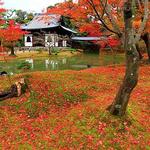
Kōdai-ji Temple
Kodai-ji Temple’s walking garden is an exceptional piece of landscape architecture, featuring large stones and trees placed on a hilly landscape among elegant temple buildings, tea houses, and a bamboo grove. From the top of the hill, you are afforded great views of not only the temple grounds, but of much of Kyoto. The roof of “Kasa-tei” teahouse is made of logs and thin bamboo, lending it the appearance of a traditional umbrella, hence its name.
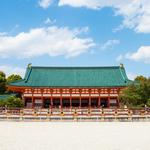
Heian-Jingu Shrine
Heian-jingu Shrine is a relatively recent addition to Kyoto's collection of sacred places, built in 1895 to commemorate the 1100th anniversary of the founding of “Heian Kyo” (Kyoto), and dedicated to the Emperors Kammu and Komei, the first and last Emperors to rule Kyoto. The vermillion-lacquered Otenmon Gate and Daigoku-den (main hall) are especially beautiful.
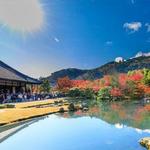
Tenryu-ji Temple
Tenyru-ji Temple is a major temple of the Rinzai School. It was built in 1339 on the former site of Emperor Godaigo's villa. The main attraction of this temple is the Zen garden dating back to the 14th century. Many elements of this garden were prototypes for later gardens built elsewhere. In autumn, the maples provide a fine display of fall color, while in spring you might see the blossoms of wild cherry trees or the stunted trunks of Japanese red pines on the distant hills.
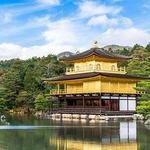
Kinkaku-ji (Golden Pavilion)
It is perhaps the most widely-recognized image of Kyoto. Seen reflected in the adjoining mirror pond with its small islands of rock and pine, Kinkaku-ji Temple, "Golden Pavilion," is a breathtaking must-see. The building's first purpose was to serve the retiring Shogun Ashikaga Yoshimitsu (1358-1409) as a residence. The gold-leaf-adorned building was converted into a Zen temple shortly after his death.
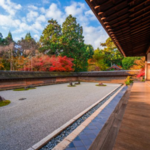
Ryōan-ji Temple
Ryoan-ji Temple is famous for its mysterious “Zen” rock garden, the most celebrated in Japan, which defies attempts at explanation. A viewing platform right above the garden gives visitors an unimpeded view, although from whatever angle you view the garden, you can never see all fifteen stones. It was built in 1450 by but no one knows for certain when the rock garden was made, who designed it, or what the designer's intentions were.
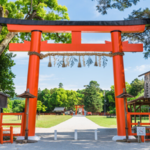
Kamigamo-jinja Shrine
This shrine is one of the oldest shrines in Kyoto, dating back to the 7th century and predating the establishment of “Heian Kyo (Kyoto)”. A large vermilion “Torii” gate marks the entrance to the shrine. An example is the annual “Aoi Matsuri” (Hollyhock Festival), which features a long parade of people in costumes of different historical periods.