Location
St Vincent Ferrer
CHURCH
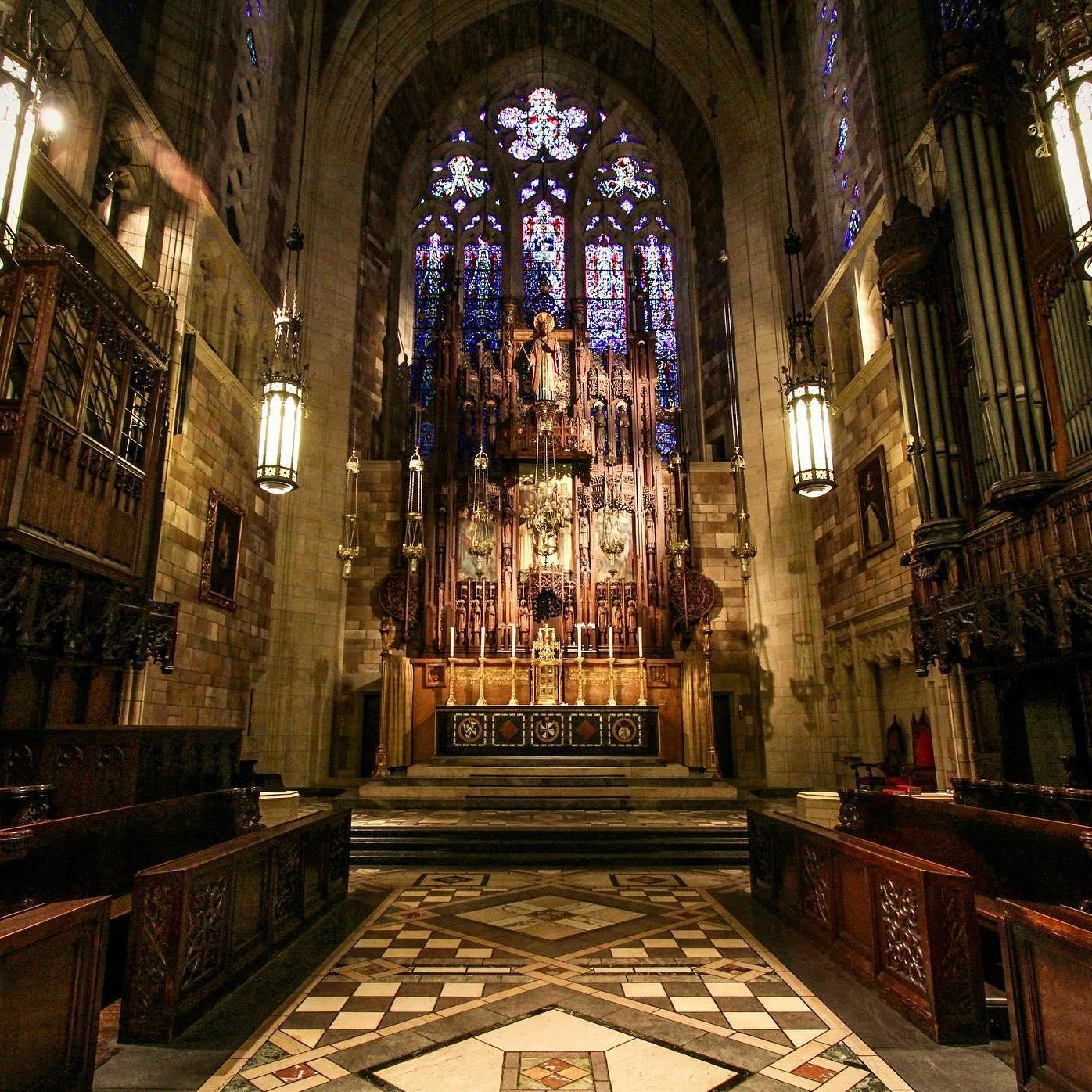
St. Vincent Ferrer on the Upper East Side is one of New York’s finest Gothic Revival churches, completed in 1918 for the Dominican Order and designed by architect Bertram Grosvenor Goodhue, who considered it one of his masterpieces. Built in limestone with a vast rose window and refined French-Gothic lines, Goodhue’s approach prized beauty as a sacramental language. In his vision, architecture should teach and lift the mind to God and reveal truth through proportion, light, and ornament. St. Vincent Ferrer stands as the clearest expression of that vision in New York. The church is deeply shaped by the Dominican Order, whose charism centers on preaching, teaching, and the intellectual life. Their presence gives the building its distinctive atmosphere: the liturgy is dignified and rooted in tradition; the art emphasizes clarity, order, and theological meaning; and the overall style reflects the Dominicans’ heritage, in which beauty and truth are inseparable.
The Sanctuary
RECEPTION
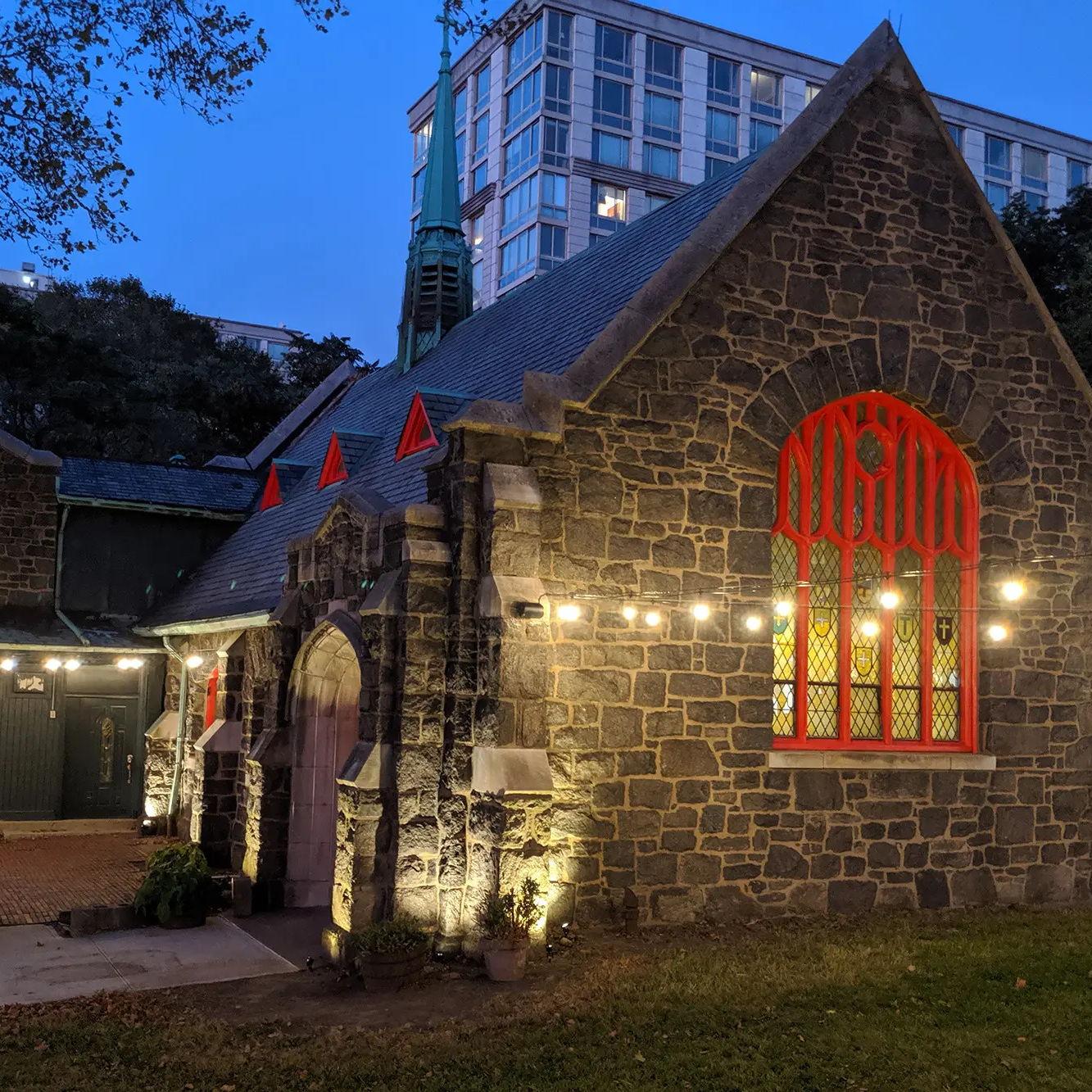
The Sanctuary stands on the site of the former chapel for the old Metropolitan Hospital, part of Roosevelt Island’s long history as home to New York City’s charitable and public-health institutions. The island, originally known as Blackwell’s Island and later, Welfare Island, housed hospitals, almshouses, and training schools that served some of the city’s most vulnerable populations. The chapel was built in the early 20th century as a small place of worship and reflection for patients, nurses, and staff of the hospital complex. Though modest in scale compared to the island’s larger institutions, it played an important pastoral role, offering quiet, beauty, and dignity amid the hardship of hospital life. As the island transitioned away from its institutional era in the mid-1900s, the hospital closed and most buildings were demolished or repurposed; the chapel survived and has since been restored as The Sanctuary, preserving a tangible link to the island’s humanitarian past.