Dargam & Edelina Joyce
Things To Do

Dead Sea
Lowest point on Earth, a salt-rich lake surrounded by desert beaches, mineral spas & oases.
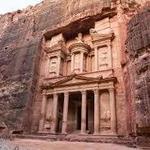
Petra
Iconic 2000-year-old city, including 45m-high Al Khazneh, carved into the red mountain rock. To see Petra is to have lived.
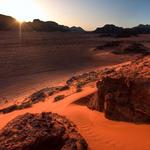
Wadi Rum
Where T. E. Lawrence roamed, where the Martian was filmed, stars and sunrises like you've never seen before.
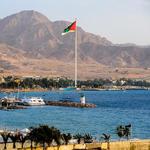
Aqaba
Red Sea sun and coral diving, Jordan’s seaport, the city liberated by Lawrence of Arabia.
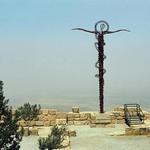
Mount Nebo
Mount Nebo is where Moses is said to have seen the Promised Land, a land he was himself forbidden to enter.
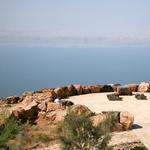
Dead Sea Panorama
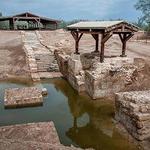
The Baptismal Site of Jesus Christ
The site of John the Baptist's settlement at Bethany Beyond the Jordan, where Jesus was baptized, has long been known from the Bible (John 1:28 and 10:40) and from the Byzantine and medieval texts.
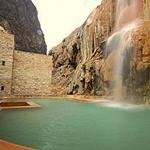
Ma'in Hot Springs
Located 264m below sea level in one of the most breathtaking desert oases in the world.
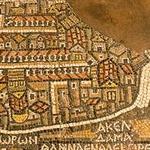
Madaba
Best known for its spectacular Byzantine and Umayyad mosaics, Madaba is home to the famous 6th century Mosaic Map of Jerusalem and the Holy Land. With two million pieces of vividly coloured local stone, it depicts hills and valleys, villages and towns as far as the Nile Delta.
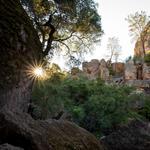
Moses' Spring
This spring is one of two places where Moses is believed to have obtained water by striking a rock.
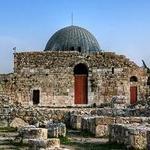
Amman
A sprawling city spread over 19 hills, or "jebels," Amman is the modern - as well as the ancient - capital of the Hashemite Kingdom of Jordan.
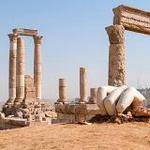
Amman Citadel
The Amman Citadel is a historical site at the center of downtown Amman, Jordan. Known in Arabic as Jabal al-Qal'a, the L-shaped hill is one of the seven jabals that originally made up Amman. Evidence of occupation since the pottery Neolithic period has been found.
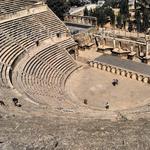
Roman Theatre
Amman's Roman Theatre is a 6,000-seat, 2nd-century Roman theatre. A famous landmark in the Jordanian capital, it dates back to the Roman period when the city was known as Philadelphia.
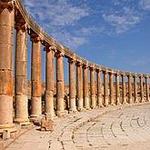
Jerash
The ancient city of Jerash, which boasts an unbroken chain of human occupation dating back more than 6,500 years, one of the cities of the Roman Decapolis, and the only oval piazza in the world.
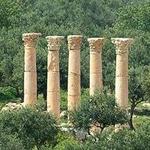
Umm Qais
Inhabited by all the ancient civilizations of the region Gadara of the bible, view the Golan Heights and Tiberius from this Northern vantage point.
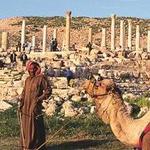
Pella
Pella is a favourite of archaeologists as it is exceptionally rich in antiquities.
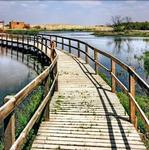
Azraq
Azraq is a unique wetland oasis located in the heart of the semi-arid Jordanian eastern desert, one of several beautiful nature reserves managed by the RSCN.
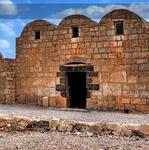
Desert Castles
Jordan's desert castles, beautiful examples of both early Islamic art and architecture, stand testament to a fascinating era in the country's rich history. Their fine mosaics, frescoes, stone and stucco carvings and illustrations, inspired by the best in Persian and Graeco-Roman traditions, tell countless stories of the life as it was during the 8th century.
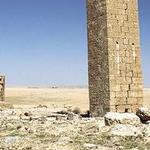
Umm ar-Rasas
Excavations in Umm Ar-Rasas have uncovered some of the finest Byzantine church mosaics, including a large carpet depicting Old and New Testament cities on both the east and west banks of the Jordan River. Another feature at Umm Ar-Rasas walled settlement is a 15m Byzantine tower used by early Christian monks seeking solitude.
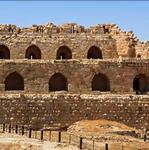
Kerak
An ancient Crusader stronghold, Karak sits 900m above sea level and lies inside the walls of the old city.
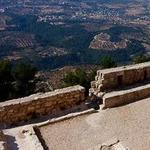
Ajloun
The marvels of nature and the genius of medieval Arab military architecture have given northern Jordan two of the most important ecological and historical attractions in the Middle East: the sprawling pine forests of the Ajlun-Dibbine area, and the towering Ayyubid castle at Ajlun, which helped to defeat the Crusaders eight centuries ago.
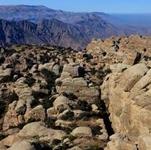
Dana Biosphere Reserve
Dana Biosphere Reserve is an area of staggering beauty, history, and biodiversity. The only reserve in Jordan that encompasses the four different bio-geographical zones of the country (Mediterranean, Irano-Turanian, Saharo-Arabian and Sudanian), it is a melting pot of species from Europe, Africa and Asia.
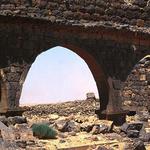
Umm el-Jimal
The eastern most of the major northern cities, Umm Al-Jimal is located at the edge of the eastern basalt desert plain, along a secondary road that was close to the junction of several ancient trade routes that linked central Jordan with Syria and Iraq.
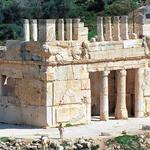
Iraq Al Amir
Located about 15km southwest of the town of Wadi Al-Seer, it has a population of about 6,000 people. Located on the hills, the area has many springs and is famous for its olive trees, in addition to other forest trees. About 0.5km south of the town is the historical site of Al-Iraq. It was built by a Persian prince in the 3rd century BC. There are many caves in the hills that date back to the Copper Age.
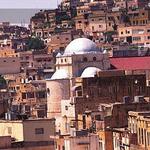
As-Salt
As-Salt was once the most important settlement in the area between the Jordan Valley and the Eastern Desert. Because of its history as an important trading link between the Eastern Desert and the west, it was a significant place for the region’s many rulers. The Romans, Byzantines and Mameluks all contributed to the growth of the town but it was at the end of the 19th and the beginning of the 20th century, during Ottoman rule, when As-Salt enjoyed its most prosperous period.
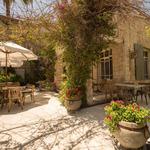
Sufra Restaurant
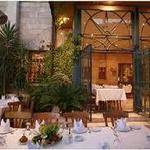
Fakhreldin Restaurant
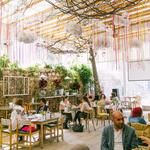
Shams El Balad
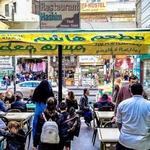
Hashem Restaurant
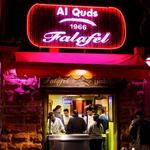
Al Quds Falafel
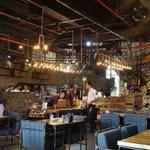
Foodsmith Grill
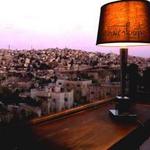
Cantaloupe Gastro Pub
Some argue Cantaloupe offers the best views in Amman, but one thing is certain: you can’t beat their roof deck for epic sunset cocktails. At their east Amman location on Rainbow Street, order up some tasty treats and wash them down with well-crafted cocktails while soaking up the classic view of three of Amman’s seven hills. Their second location, in new-school Abdali, sports a rooftop terrace with bird’s-eye-view of more modern western Amman. Hit them both to experience the full spectrum of rooftop views.
Copas Central
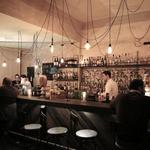
This little gem, hidden away on a circular street near the First Circle, is a favourite among expats and travellers for its hip artsy vibe. The waiters are friendly, the tapas menu is reliably delicious and the cocktails are legit. While the patio is small, sipping a cold drink under the towering leafy tree in the stone courtyard is a relaxing escape.
District Urban Rooftop
The Deck Lounge
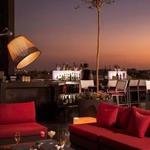
The Rotana – Amman’s first skyscraper hotel – opened in summer 2016, and introduced Amman to The Deck Lounge. This roof-like bar on the sixth-floor terrace offers vistas of West Amman and The Boulevard, in the centre of Amman’s shiny new shopping area, Abdali. With plenty of loungey couch seating, every kind of shisha you could want and a rotation of live music and DJs, this is a place to kick back and stay a while.
Rustic Bar and Eatery
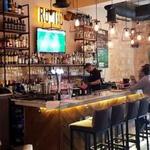
A beautiful execution of the old-meets-new trend in Amman, Rustic Bar & Eatery is housed in a historic building from the early 1900s, with contrasting streamlined interiors. This Jabal Weibdeh bar – and they’re adamant about being a bar, not a pub – features a patio anchored by 150-year-old olive tree brought from northern Jordan, chosen for its symbolism in the Arabian culture of peace and blessings. With great bartenders, tasty food focused on quality ingredients, and occasional weekend grill events, this is a stylish courtyard you’ll want to visit again and again.
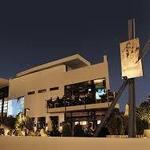
Blue Fig