Venue History
Travel Note
Jones Beach State Park opened on August 4, 1929
Speakers at the opening, which occurred during a "huge sandstorm," included then-governor Franklin Delano Roosevelt, former governor Alfred E. Smith, and the man who oversaw the project, chairman of the Long Island State Park Commission Robert H. Moses. Over one and a half million visitors came to the park in its first year of operation.
Travel Note
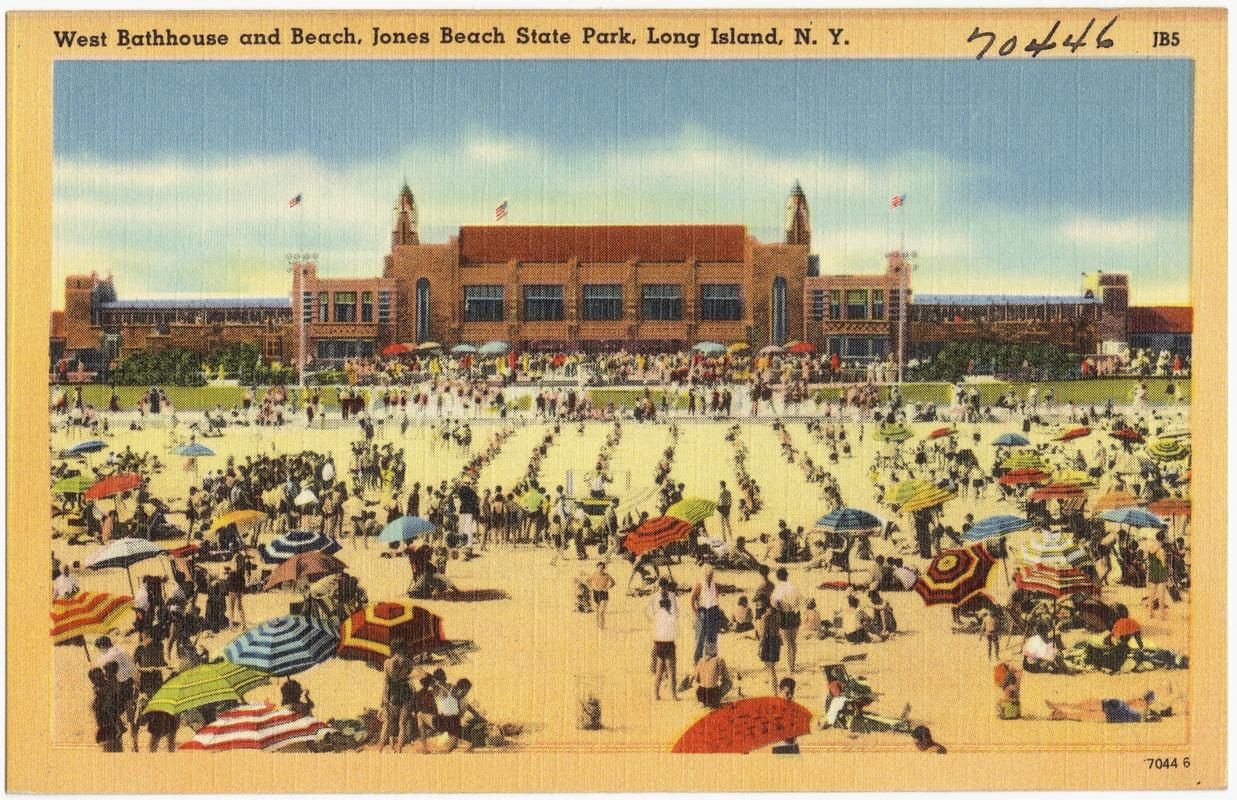
The venue is within the historic West Bathhouse building
The cornerstone for the West Bathhouse was laid by Franklin Delano Roosevelt in 1930 (one of the rare pieces of filmed footage capturing FDR walking was filmed at this ceremony). Designed as a structure in Beaux Arts style (favored during the so-called Gilded Age), with ornamental motifs reflecting the then-modern Art Deco sensibilities (frequently associated with the "Roaring Twenties"), this building, along with the East Bathhouse and Central Mall's iconic water tower, were designed by architect Herbert Magoon. New York City residents may recognize Magoon's work from the Sunset Play Center at 4200 7th Avenue in Sunset Park.
Travel Note
Gatsby on the Ocean is just the latest in a nearly 100-year dining hall history
The space now known as Gatsby on the Ocean, where the reception will be held, first opened in 1930 as the Marine Dining Room. A high-end dining space intended for VIPs visiting the beach and attendees of productions at the nearby Marine Theatre, guests were expected to change downstairs from their beach attire into formal suits or dresses to partake in the restaurant's gourmet offerings. At the outbreak of WWII, the Marine Dining Hall was converted into the USO Beach Club, boasting "the choicest pieces of furniture, sofas, divans, chairs, tables, smoking stands, writing tables and a piano." The 1950s saw the space converted into a more "casual" dining space, and the mid-century decades of the '60s and 70's embraced brighter colors and a cafeteria format. As the 20th century wore down, the former Marine Dining Room faced neglect. But in 2019, after a costly restoration project, the space was restored to its original Art Deco design and reopened as Gatsby on the Ocean.
Travel Note
FDR Isn't the Only Future President to Visit the Venue
1949 saw the release of the romantic-comedy film The Girl from Jones Beach, which starred future president Ronald Reagan, along with actors Eddie Bracken (Home Alone 2: Lost in New York) and Virginia Mayo (The Best Years of Our Lives). Directed by Peter Godfrey (Christmas in Connecticut) and written by legendary screenwriter I.A.L. Diamond (Some Like It Hot), the film was partly shot on location at Jones Beach State Park, and prominently features both the East and West Bathhouses. Records provided by the National Archives indicate that President Reagan screened the film during a retreat at Camp David in 1988, and according to author Mark Weinberg in the book Movie Nights with the Reagans, early in Reagan's post-presidency years, he reunited with Bracken and Mayo at his Los Angeles office to reminisce about their work on The Girl from Jones Beach, and the awkwardness of hoisting Mayo on their shoulders for the film's publicity photos.
Travel Note
Jones Beach has a Place in Literary History
No, it's not The Great Gatsby (that takes place on Long Island's North Shore). But the creation of Jones Beach factors prominently in The Power Broker, Robert Caro's massive and unsparing biography of the ruthless Robert Moses, which won the Pulitzer Prize in 1975. The chapter focused on Jones Beach, titled "A Dream," is frequently lauded by critics and scholars as one of the most remarkable, as Caro traces Long Island's history all the way back to the Ice Age. Clocking in at roughly 1344 pages, and weighing nearly four pounds, if you read The Power Broker at a pace of one page per day, starting on the wedding day, you will be done with it just before the decade ends!