Anthony & Vanessa
Things To Do

Mercado Municipal Martín González
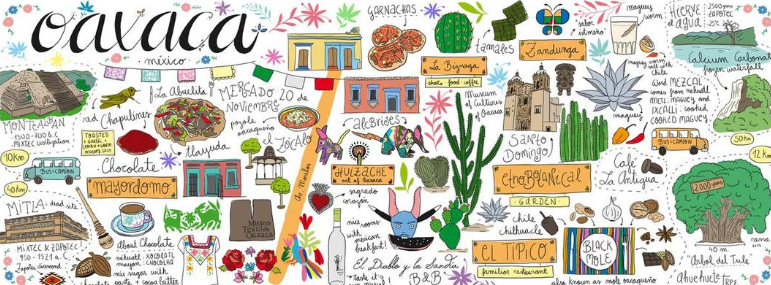
Tlacolula has a market day on Sunday that is a spectacular site and well worth a visit. On this one day of the week hordes of people come to town from nearby villages to buy, sell, and socialize. You'll find all kinds of goods for sale from one-of-a-kind artwork to locally produced coffee.

Templo de Santo Domingo
Santo Domingo church is Oaxaca’s most famous church and is understandably an immensely popular tourist attraction. It is home to The Santo Domingo Cultural Centre (Centro Cultural Santo Domingo de Guzmán), and Oaxaca’s Ethnobotanical Garden, which are two very popular attractions in their own right and well worth a visit.

El Árbol del Tule
The Tule Tree, or El Árbol del Tule, is a Montezuma cypress tree. It measures more than 119 feet around but is only 116 feet high. It's believed that the tree is about 2,000 years old. Local legend holds that the tree was planted 1,400 years ago by a priest of the Aztec storm god.

Hierve el Agua
Hirve el Agua is the best day trip you could possible take while in Oaxaca. These petrified waterfalls are a unique natural phenomenon formed by natural springs. Through the years, they have deposited minerals along the cliff edge that now resemble cascading waterfalls.

Yagul
Yagul is a splendid set of ruins just outside Tlacolula that houses the largest, most important ball game court in Oaxaca. Yagul consists of three main sections; a residential area, a ceremonial area, and a fortress from which it is possible to get a good view of the Yagul ruins and the valley.
San Pablo Villa de Mitla
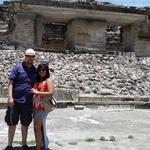
Mitla which means ‘Underworld’ in Zapotec is the second most important archaeological site in Oaxaca.It is generally believed that Mitla was established as a sacred burial site.

Zicatela, Puerto Escondido, Oaxaca
This beach is best known for its incredible waves and one of Anthony and Vanessa’s favorite beaches they’ve been to in Oaxaca. Puerto Escondido is globally known surf competition with surfers from Australia, Peru, and several other coastal countries around the world.

Puerto Ángel
Puerto Angel is a small town in a busy bay. Most hotels are away from the beach, either tucked into a canyon or perched above the bay. The beaches in town are unspectacular, but there are really alluring beaches in nearby coves, and it's easy to hire water taxis to explore them.

Santa María Huatulco
Las Bahias de Huatulco, most often referred to simply as Huatulco (pronounced "wah-tool-ko"), is a beach destination made up of nine bays with 36 beaches. Located on the Pacific coast of Oaxaca. Its biodiversity and pristine landscapes make Huatulco a favorite destination of nature lovers.
Pueblos Mancomunados Benito Juarez
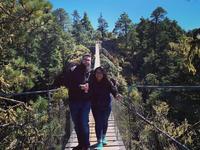
Benito Juárez in the Sierra Norte of Oaxaca is a picturesque village that makes up part of a conglomerate of villages known as the Pueblos Mancomunados (Jointly Responsible Villages) who are working to assure sustainable logging and supplement their income by providing ecotourism facilities. At the top of the mirador at Benito Juárez you can find a rather high lookout tower which you can climb up if you want to just get a bit higher to take a picture. There is also a long breathtaking hanging bridge.

Los Amantes Destileria
Para todo mal, mezcal. Para todo bien, tambien. For everything bad, mezcal. For everything good, the same. Mezcal is Oaxaca's smokey spirit of choice and one of the best places to try it is at the mezcaleria Los Amantes in Oaxaca City. The walls of the funky space in the historical district are lined with dozens of clay pots that were traditionally used to transport mezcal. Order a tasting flight at this tiny bar.
MEZCAL El Rey Zapoteco
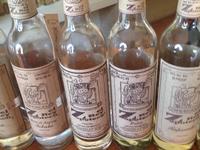
Those who know us are fully aware of our love of Mezcal. Mezcal is a distilled spirit made from the agave plant. There are nearly 200 types of the plant, and Mezcal can be made from more than 30 of them.
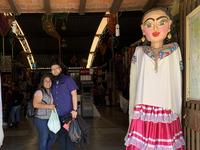
Artisan market
If you appreciate anything done by hand, this is the place to get it. However, there are many things supposedly handmade in Oaxaca are now being mass-produced in China and/or India, but most of those things are actually sold on the streets - perhaps more in the Benito Juarez market near the Zócalo
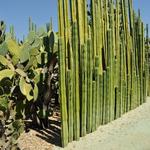
Jardín Etnobotánico de Oaxaca
The beautiful Jardín Etnobotánico (botanical garden) is located behind the Temple de Santo Domingo and hosts hundreds of indigenous species of plants native to the State of Oaxaca. You must have a guide to visit the gardens. To arrange your visit (with tours in English, German, or Spanish), contact etnobotanico@infinitummail.com.
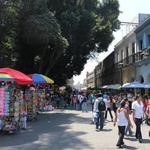
Zócalo Oaxaca
The Zócalo (main square) is the heart of the city and has been so since 1529. The Zócalo is a place to meet, to relax, get a shoeshine, or enjoy a musical performance. A number of cafes surround the Zócalo and sitting at a sidewalk table or by an upstairs window and watching the activities in the square is a popular pastime.
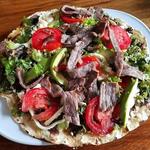
List of Foods pt. 1
*Chapulines - chah-poo-leen - Fried Grasshoppers - Are a local delicacy. Chapulines are thoroughly cleaned and washed out, then toasted on a comal a clay cooking surface, with garlic, lemon juice, and sal de gusano de maguey to create a sour-spicy-salty taste. *Quesillo - keh-SEE-yoh - Oaxacan cheese - Quesillo is often stored in long white ribbons that are wound, unwound and cut like a ball of yarn or trim at a fabric shop. It’s best to eat or use quesillo fresh, since storing it for any length of time in the refrigerator will alter its consistency. *Tlayudas - tla-u-da - Oaxacan pizza - A tlayuda consists of a large semi-dried tortilla, glazed with a thin layer of unrefined pork lard called asiento(you can request without asiento), and topped with frijol, tomatoes, avocadoes, and some variation of meat :chorizo, tasajo or cencilla, or shredded chicken tinga. It can either be served open, or when it’s cooked on a charcoal grill, folded in half.
List of Foods pt. 2
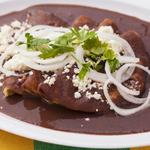
*Enfrijoladas - en-free-ho-LA-das - Bean Enchilades - Fried tortillas served with beans and sauce. The key in Oaxaca is that the beans are stewed with the leaves of the local avocado plant. Many say “It’s not real frijol if it doesn’t include avocado leaves.” *Memelas - A memela is corn round snack a little thicker than a tortilla, toasted on a comal and topped with all manner of stuff frijol, quesillo, bits of ground pork with spices or eggs, and various sauces of differing heat levels. *Barbacoa - Meat is made either of beef, goat or lamb. Which is cooked in an underground pit. The chile-marinated meat cooks slowly over a period of 6 to 8 hours. The broth is collected in a pot at the bottom of the pit and is used to make consomme which is served as an appetizer. Barbacoa is a special occasion meal customarily served on Sundays, and also at large family fiestas such as weddings.
List of Foods pt. 3
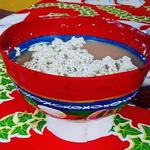
*Higaditos – Egg Soup – Traditional breakfast dish made and served on special occasions. Traditionally in Oaxaca, the base is chicken soup with bits of chicken mixed into the scrambled egg. It is flavored with salt, chiles, onion and garlic *Mole - moh-leh - Oaxaca is also known as the land of the seven moles: mole negro, coloradito, rojo, amarillo, verde, chichilo, and manchamantel. You'll find moles served on top of chicken, meat or enchiladas, as well as tucked inside empanadas and tamales. But not every mole is one that you'd eat every day. Like a party dress, some are reserved only for very special occasions. *Tejate - teh-HA-te - Indigenous drink - An indigenous drink from the Mixtec and Zapotec people also know as a drink of the gods. Made of corn, cacao, and other unusual bits like the seeds of the mamey and flor de cacao/rosita de cacao is both nutritious and refreshing drink.
Mario Come Oaxaca
Mario is an ambassador of Oaxaca taking a tour with Mario is experiencing the gastronomy, art, culture and textile design in Oaxaca. Take a look at his Instagram page for inspiration and reach out to Vanessa directly if you're interested in a tour with Mario