Angela & Luis

Things To Do
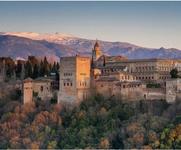
La Alhambra
The second most visited site in Europe: this breathtaking palace-city is a sophisticated blend of medieval Islamic, Renaissance Christian and modern architectural styles..

Zambra María la Canastera
Situated in the heart of the world-renowned Sacromonte quarter, our cave was founded by María Cortés Heredia "La Canastera", over 50 years ago. It is currently one of the most emblematic locations and one of the most important tourist attractions in Granada. In this cave there is typical Sacromonte singing and dancing. This place can be visited as a museum because it has been declared as such.
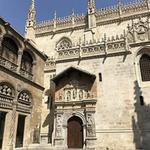
Catedral de Granada
Lying at the heart of the old town, Granada Cathedral is an imposing building due to its massive facade that looms over the square before it. Built on top of a mosque that was once in the same location, the cathedral is the second largest in the country; work began on it all the way back in 1518. With Renaissance, Gothic and Baroque elements incorporated into its design, it is impressive to behold. Five different architects contributed to its style as it took over 180 years to finish. The inside is equally spectacular, with stained glass windows, sculptures and El Greco paintings lining its walls. There are 13 distinct chapels which are dedicated to different saints.
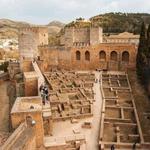
Alcazaba
The oldest part of Alhambra, Alcazaba dates back to the 13th century when it acted as a military citadel. Occupying a prominent hilltop, it was from here that the Moorish rulers could watch out over their territory, protected from any invaders by the huge walls around them. Nowadays, you can wander around the old ramparts, look at the foundations of ancient buildings, and marvel at the sheer size and magnitude of it all. The Alcazaba tower is definitely worth ascending to witness the fantastic views over Granada and the nearby Sierra Nevada Mountains.
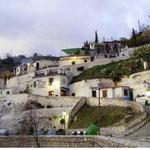
Sacromonte
East of Albayzín and in front of the Alhambra is another of Granada’s traditional neighbourhoods. After the city was retaken by the Catholic Monarchs Sacromonte became the home for the city’s gypsy community. The neighbourhood is on the precipitous slopes of Valparaíso amid pines and cactuses, and at some point in the 16th-century the settlers began to hew their homes from the rock-face. As you stroll past these dwellings you’ll notice how no two cave houses are the same, as their dimensions are determined entirely by the difficult terrain. Naturally, if you want to see a true flamenco performance, these caves are the real deal.
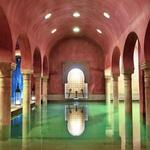
Arab Baths Hammam Andalusi
Soak up the serenity at Granada's Hammam Al Ándalus, magnificent Arabian baths located at the foot of the Alhambra palace complex. Spend 1.5 hours at your leisure, luxuriating in the opulently designed thermal baths and steam room. Sip refreshing mint tea and water as you unwind, then head to the Aroma Corner for a 15- 30 or 45 -minute relaxation massage, using your choice of oils. Alternatively, upgrade to a 30-minute Midra 30 or 45-minute Midra 45, both of which include an exfoliating body scrub. These baths were important in Moorish life: they were a key focal point for social activity, second only to the mosque. They help to give us a glimpse into day-to-day life in Arab-era Granada.
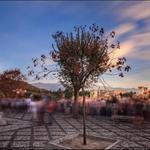
Plaza de San Nicolás
Granada's hilly landscape makes for fantastic vistas, and there are few better than the views offered at the Plaza de San Nicolas. Located in the Albaicín neighborhood, less than a mile north of the Paseo de los Tristes, Plaza de San Nicolas directly faces the Alhambra and the majestic snowcapped Sierra Nevada Mountain range that sits right behind it. Lush rolling hills and traditional clay-tiled rooftops fill space in between the vista's two focal points. That, combined with the plaza's decorative cobblestones, whitewashed church and lively buskers make for a truly picture-perfect moment. It is recommended to visit at night, when the Alhambra is lit up and the locals come by to drink, dance and play music.
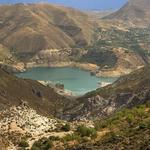
Sierra Nevada
The Sierra Nevada is a dramatic, rugged and extensive mountain range, the highest in Europe after the Alps and the most significant section of the Cordillera Penibética. The protected central area of National Park encompasses 85,883 ha of snowy summits, torrential rivers, sheer-sided gorges, stony scree slopes, glacial lakes. An outer protection ring denominated Natural Park of 86,335 ha between the National park and the the foothills such as Alpujarras in the south featuring cultivated terraces of almond trees and vegetables. Popular activities in the parks include skiing, hiking, mountain biking and summer camps. One can simply travel and discover its fauna and flora, see its lagoons and have an adventure in this vast area of land.