Indian Wedding Ceremony: A Cheat Sheet
Sequence of Events
Pre-Ceremony Baraat and Ritual
Baraat: On the day of the wedding ceremony, if you identify as a member of the groom's side or if you simply love to dance, please refrain from entering the mandir (temple) upon arrival. Theo will have a half-hour long Baraat (procession) celebration leading to the entrance of the venue equipped with our DJ and a Dhol (Indian Drum) player. Historically, Baraats symbolize the groom's joyful journey to his bride and the merging of families, marking the start of the wedding festivities. Aarti/Ponkvu: After the Baraat, a small ritual conducted by the bride's mother, will take place at the entrance, prior to the start of the ceremony. Alpa will greet Theo at the entrance and will perform an Aarti with a lamp and apply a Tilak (vermillion) on his forehead to bless him and ward off evil. Adhering to Gujarati customs since Zeel hails from the Indian state of Gujarat, a part of this ritual includes the Ponkvu, where Theo's future mother-in-law, will playfully attempt to pull the groom's nose to remind Theo to remain humble for her daughter and their future journey together. This ritual is conducted to welcome the groom and his family to witness and bless Zeel and Theo's union. Special Note: Please remember to remove your shoes and place them in the labeled/ designated location upon entering the mandir (temple). There will be a program available on each seat that explains the sequence and significance of the entire Gujarati ceremony in further detail.
Traditions To Look For
Indian Wedding Games
Joota Chupi, which literally translates to "shoe hiding" is a light-hearted game involving the families of the bride and groom. The groom removes his shoes before entering the mandap (the sacred altar for the religious ceremony). This moment is the "golden opportunity" for the bride's relatives to steal them. Typically, the sisters, cousins, and female friends of the bride are the ones who try to sneakily take and hide the shoes, whilst per the ritual, the groomsmen and groom's family members try to prevent the shoes from being stolen or even attempt to steal them back. After the wedding ceremony, the groom must then negotiate with the bride's relatives for their return. They typically demand a "ransom" in exchange for the shoes back. This ritual is a fun icebreaker that fosters interaction, laughter, and a friendly bond between the two sides of the new extended family. It is not about the money; it symbolizes the acceptance of the groom into the bride's family in a lighthearted manner. A race to the house keys. At the end of the Mangal Phera portion of the wedding ceremony, which involves circling the holy fire four times, each representing a life goal (Dharma, Artha, Kama, Moksha); a playful race takes place where the bride and groom rush back to their seats on the mandap. The winner is said to rule the household. Look to see who wins our race!
Fun Facts
Henna
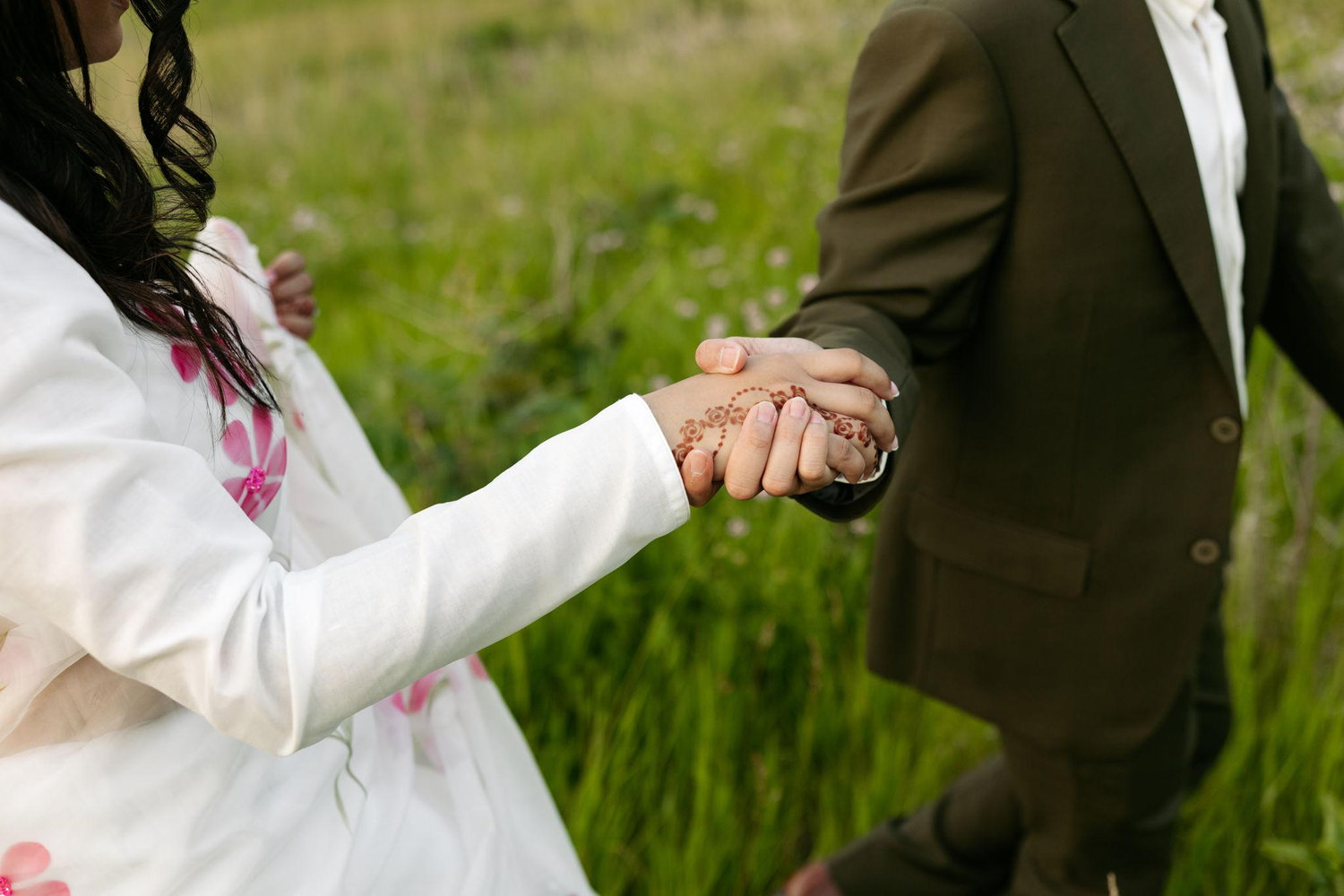
You might notice that the bride, her friends, her family and the closest members of her new family have their hands adorned with henna. Henna (mehndi) is used in Indian weddings for good luck, love, prosperity, and to ward off evil spirits, symbolizing blessings, beauty, and new beginnings. It is a natural and safe dye from the Lawsonia inermis plant, much like a temporary tattoo that fades after 1 or 2 weeks. Traditionally in Indian weddings, intricate designs are applied to the bride's hands and feet during a special ceremony. Old wives' tales about henna often center on bridal fortunes, suggesting a darker, longer-lasting stain means more love from the groom and mother-in-law. If you happen to catch Zeel during the wedding celebrations, ask to see her hands and try to find Theo's name in her henna which the henna artist will have sneakily concealed within her bridal henna design. The playful game of trying to find the groom's name within the bride's henna is another common Indian tradition that the groom will also partake in on the night of the wedding.