Things to do
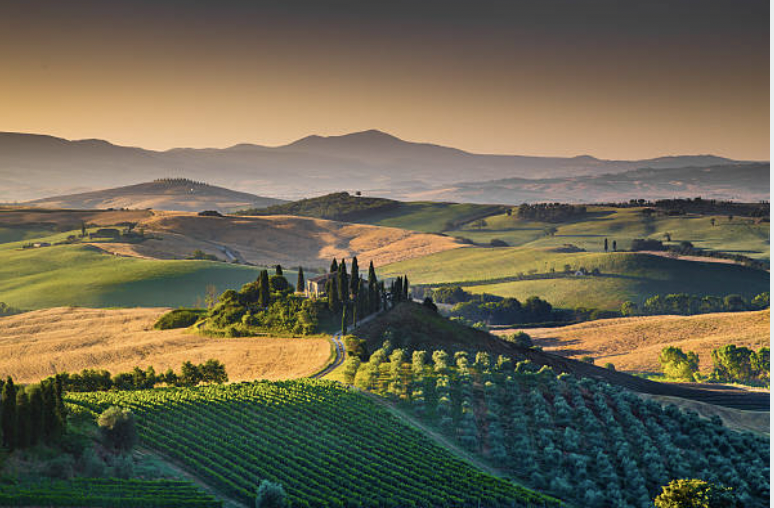
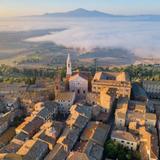
Pienza - Medieval Village
Pienza is a small architectural jewel of perfect proportions. Considered the ideal city of the Renaissance, it was built on the wishes of Pope Pius II, who was born in this area to parents who were members of a noble Sienese family. Recognised as a Unesco site in 1996, it is a marvellous testimony to the urban standards of the Renaissance: the rational organisation of its spaces and the unparalleled perspectives of its 16th-century squares and palaces captivate the visitor's gaze.
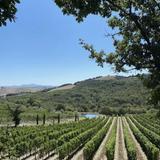
La Nascosta Winery
With its hypogeal architecture, the winery is perfectly positioned within the iconic hills of the Val d'Orcia dominating part of the winery's vineyards from above. Its location near the extinct Amiata volcano at an altitude of about 400 meters above sea level has provided the Mastrojanni family with the opportunity to create a winery not only devoted to classic San Giovese but also to great white wines with international grape varieties including Sauvignon Blanc, Chardonnay, Petit Manseng and Traminer. The La Nascosta tasting is indeed unique precisely because of its combination of great tradition and courageous innovation!
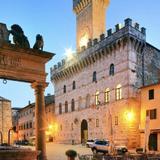
Montepulciano - Medieval Village
One of my parents favorite villages! Stop into Caffè Poliziano boasts a great panoramic terrace. Montepulciano is a medieval hilltop town in Tuscany, Italy. Surrounded by vineyards, it’s known for its vino nobile red wine. The Torre di Pulcinella is a clock tower topped by a figure of the Pulcinella, a commedia dell’arte character. On the Piazza Grande is the 14th-century Palazzo Comunale, with a tower offering views of the surrounding countryside.
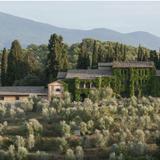
Biondi-Santi Tenuta Greppo Winery
One of the most popular wineries in the world, Biondi Santi's tours and tastings of its Brunello di Montalcino are superbly rated—for good reason.
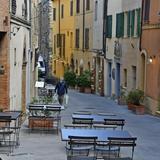
Montalcino - Medieval Village
Montalcino is a gem of history and art, buried deep in the hills of the Val D'Orcia. This medieval city immediately welcomes the visitor into its old medieval layout, scored as it is with straight, steep streets which have breathtaking panoramas waiting at the top. Montalcino is also known as the town that produces Brunello di Montalcino, one of the most famous wines in the world. In the mid-nineteenth century, a group of winemakers began to experiment with the indigenous Sangiovese grape, and came up with a wine able to withstand years of aging and improve over that time.
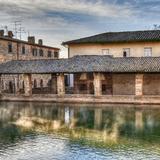
Bagno Vignoni Thermal Bath Old Town
Bagno Vignoni is very unique: nowhere else in Italy will you find its main central square has a pool filled with hot springs water. 49 meters long and 29 meters wide, the Renaissance-era piazza is built directly over the original source of hot springs as enjoyed by the Romans.
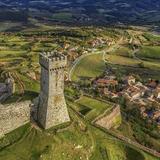
Radicofani - Medieval Village
In ancient times it consisted of four villages, one of which was of Etruscan-Roman origin called Viclanus. The history of the village is linked to the via Francigena. At the end of the 1200s it became the outpost of the famous bandit-gentleman Ghino di Tacco, remembered by Boccaccio and Dante, while in 1255 it had as many as six hospitals for pilgrims. Radicofani has kept its medieval character intact, with the fortress dominating the main village whose main road is the Via Francigena.
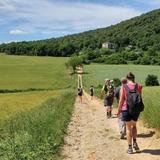
Via Francigena Trail
Following in the footsteps of the ancient pilgrims, we discover the Tuscan stages of the cultural itinerary that leads from Canterbury to Rome
Truffle Museum in San Giovanni d'Asso
The Truffle Museum in San Giovanni d'Asso is located in the cellars of the 14th-century Castello di San Giovanni, and presents you with an explanatory tour that twists and turns over 250 square metres.