Tim & Jennie

Things To Do
Rocamadour
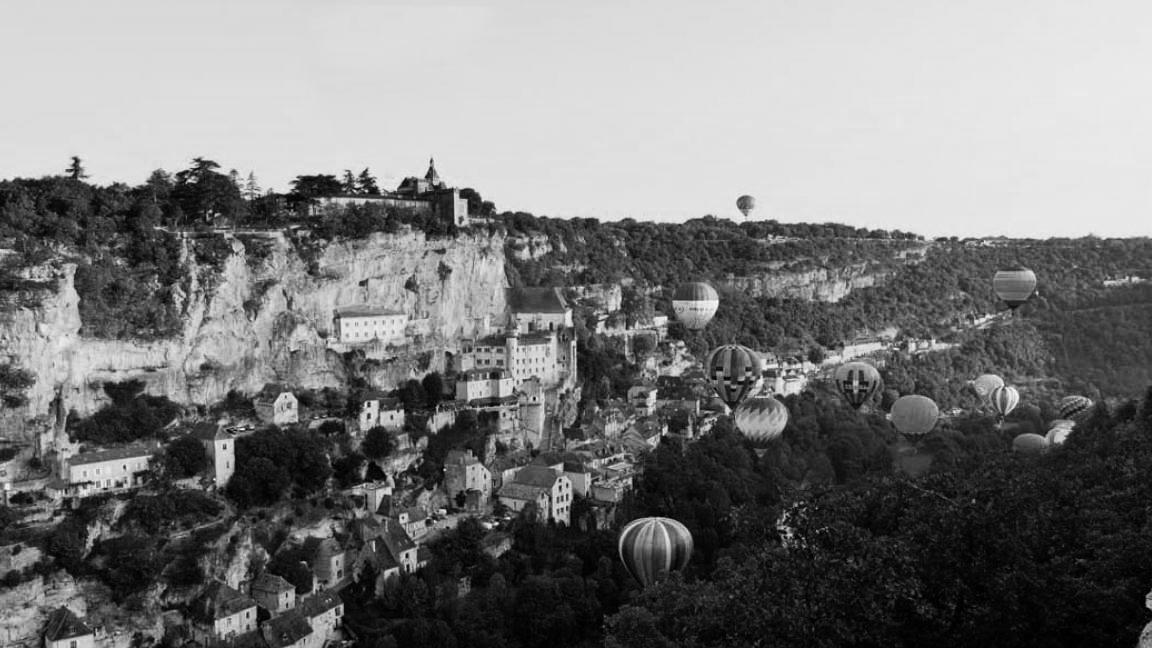
Rocamadour is a beautiful small clifftop village in south-central France 45 minutes east of Carlux. It is known for the Cité Réligieuse complex of religious buildings, accessed via the Grand Escalier staircase.
Domme
Domme is 30 minutes down stream from Carlux is one known to be one of ‘The Most Beautiful Villages of France’, it's golden yellow stone and impressive architecture are amongst the most well-preserved medieval townscapes to be found in the Dordogne Valley. Pass under the town’s fortified arches and explore the ramparts.
La Roque-Gageac
Situated at the foot of a towering limestone cliff along the banks of the Dordogne, La Roque-Gageac is just 35 minutes west of Carlux. It offers visitors a labyrinth of cobbled streets, a troglodyte fort and a Romanesque church that dominates the valley.
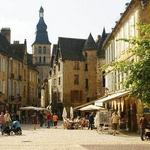
Sarlat-la-Canéda
Sarlat-la-Canéda is the closest town to Carlux and is a beautiful medieval town. Its central Sainte-Marie Church, redesigned by architect Jean Nouvel, hosts an indoor food market, and a glass elevator in the bell tower offers city views. Sarlat Market is fabulous selling local delicacies like foie gras and cheese.
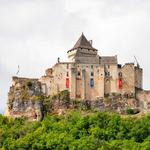
Castelnaud-la-Chapelle Castle
Found where the Céou River flows into the Dordogne, Castelnaud-la-Chapelle is a dominant fortress dating to the 1200s. During the Hundred Years’ War in the 1300s and 1400s it was allied to the English Plantagenets and faced off against the Château de Beynac, just across the Dore and controlled by the French. It’s recognised as a French Historical Monument for its gatehouse, keep and curtain walls woven with loopholes, all soaring over the river.
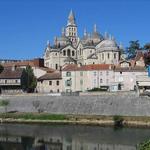
Périgueux Cathedral
Before you enter this 12th-century byzantine romanesque cathedral you have to approach it from Pont des Barris, and look across to see its crowd of domes and towers almost competing with each other. It’s no shock that this magnificent church is a UNESCO site, and with its byzantine-style Greek cross plan and many cupolas it hardly looks like few other churches in France – except, of course, for the Sacré-Coeur in Paris, which borrowed several design cues.
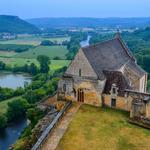
Place du Château de Beynac
On the north bank of the Dordogne and a few minutes downstream from Castelnaud-la-Chapelle, is this 12th-century castle built by the Barons of Beynac. Just one look at it and you’ll understand why attackers might have been put off: It’s on a vertical limestone crag, and even now visitors have a hard time getting up there! If you make it you’ll have the pleasure of a 30-minute guided tour which brings the austere romanesque keep to life.
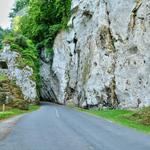
La Roque St. Christophe
These long terraces in the cliffs on the south bank of the Vézère provided a home for humans from 57,000 years ago until the 16th century. The site stands 80 meters above ground and stretches out for almost a kilometer. The earliest troglodytes merely dwelled in the natural cavities cut by the river, but over time human hands started to modify the spaces, boring into the soft limestone.
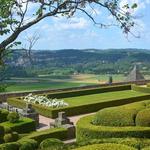
The Marqueyssac gardens
Périgord’s most popular gardens opened to the public in 1997 and are in the grounds of the Château de Marqueyssac, high on a ridge above the Dordogne. Back in the 1860s the estate’s owner planted boxwood trees in their thousands, and they were trimmed into the kind of outlandish forms that you see now. A maze-like circuit of paths through this magical garden lead to a belvedere 130 metres over the Dordogne, with one of the best views of the valley.
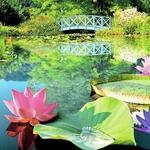
The Water Gardens of Carsac
From May to October this 16th-century park eight kilometres from Sarlat is in full bloom. The water gardens are on the bank of the Dordogne, cover three hectares and contain waterfalls, streams and ponds that you can navigate via Chinese-style zigzagging wooden walkways. There’s also a replica of the Japanese ornamental bridge in Monet’s garden. It’s a very meditative place, where you switch off for a few minutes, surrounded by water-lilies and lotus flowers, as well as koi carp, frogs and dragonflies.
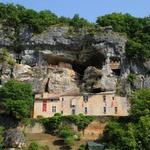
Strong House of Reignac
Of all the many castles in Périgord this one has to be the strangest and most mysterious. The Maison Forte is cut from a cliff on the Vézère Valley on a site that had been used for at least 20,000 years. The castle as we recognise it was built in the 1500s and is the only surviving cave castle in France. It is far grander inside that its tough outer appearance suggests.
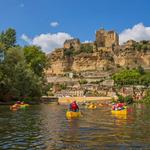
Canoeing on the Dordogne
It’s the only way to appreciate the full beauty of the valley’s picturesque villages, cliffs, farms, woodland and castles. In summer the currents are very light and you can find places to go ashore and have a swim. The whole time you can sight kingfishers, egrets and herons, and shoals of fish will glimmer beneath your boat. Vitrac is a good place to start, and there are companies that offer half-day, whole-day or even weekend-long rentals.
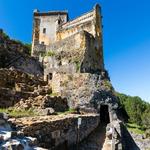
Commarque Castle
This castle was built some time before the 1100s to defend the intersection of the Périgueux to Cahors and Brive to Bergerac trade routes. Getting there is a quest of its own, as you have to weave your way up the hillside along a 600-metre woodland path. What greets you near the top are the magnificent semi-ruined keep and outer buildings, all clinging to a rock. It’s a thrill to investigate all the nooks and crannies in the ochre-tinted walls, and to climb the donjon tower for stunning panoramas of the green Dordogne countryside.

Dordogne Cuisine
This Dordogne Valley is rich with culinary delights and is famous for its black truffles and foie gras! There are hundreds of restaurants spread across the region to be explored and enjoyed!!
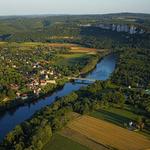
Fishing on the Dordogne
The Dordogne river is one of the most famous 2nd category rivers in France (486km long) and the only river in France whose entire basin has been classified as a World Biosphere Reserve by UNESCO. Fishing is a hugely popular activity and the fish are bountiful with an abundance of healthy and quality brown and rainbow trout, salmon, pike, zander and black-bass to name but a few. With spectacularly beautiful natural scenery as your backdrop, fishing in the Dordogne River is a fishermen’s dream.
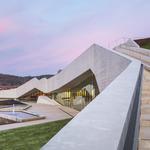
Lascaux IV: The International Centre for Cave Art
The new Lascaux IV Caves Museum is situated at the intersection of two unique landscapes, between a densely-forested, protected hillside and the agricultural Vézère Valley. Snøhetta’s design conceives the museum as a fine cut in the landscape, inviting visitors into a curious world of prehistory.
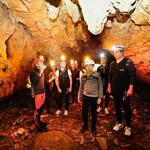
Caving in the Dordogne
For adventure lovers of all ages and under the watchful eye of an experienced professional instructor all the family can get stuck in to black water caving as you float through a cave on underground rivers. There are a number of caves and chasms dotted throughout the Dordogne Valley and Compagnie Sports Nature is the leading company to guide you through them.
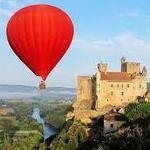
Ballon rides along the Dordogne Valley
Just before the sun sets, or first thing in the morning – after a moment’s preparation –, you’ll take off for an unforgettable discovery of the magnificent Dordogne Valley and its castles. The Montgolfière et Châteaux team is enthusiastic to share this hot air balloon adventure with you, and to reveal to you the very best views of the crown jewels of the Périgord Noir. The balloon gently glides above the castles and floats over the river with the breeze, offering you the most amazing ride you can imagine… A truly memorable feeling of weightlessness!!