Sydney & Maksym


Cultural Info
![Rushnyk [рушник]](https://images.zola.com/336f1ffb-d2fe-441a-a280-d200576282dc?h=150)
Rushnyk [рушник]
The rushnyk is a Ukrainian embroidered or woven towel, which is usually used for a decorative or ceremonial purpose. In Ukraine, in old times, the rushnyk accompanied a person throughout his or her life and played a prominent role in the wedding rituals. During the wedding ceremony, the rushnyk is spread before the couple, and the couple stands on it. The use of the rushnyk symbolized the hope that the newlyweds never face poverty or "stand on a bare earthen floor" and that they are happy together. Tradition dictates that whomever steps on the rushnyk first will be the head of the family. Of course, Ukrainian folk wisdom declares that the man is always the head of the family--but it is the woman that is the neck that turns the head! :-)
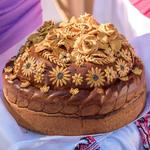
Korovai
A wedding korovai is a traditional Ukrainian bread, which symbolizes blessings for a couple's wedding. This is placed on a rushnyk at the wedding. During the wedding, the rushnyk is also used to join together (to tie together) the hands of the bride and the groom, symbolically uniting their destinies, creating a close union of two people based on love, affection, loyalty and spiritual unity. Korovai is traditionally baked from wheat flour and decorated with symbolic patterns. The bread has no set design, and the style and ornamentation of the korovai varies by region. At the climax of the wedding, the korovai was shared with all the guests.

Borscht
We apologize in advance that we are not serving borscht at the wedding. Not sure if you noticed our hashtag "#kimchiborscht2022". We wanted to inform you of the cultural reference that we made on this hashtag. Borscht is a sour soup common in Eastern Europe and Northern Asia. The most common borscht known in Canada is the one of Ukrainian origin, made with red beetroots as one of the ingredients, hence the red color.

Kimchi
We apologize in advance that we are not serving Kimchi at the wedding. From the "#kimchiborscht2022" hashtag, Kimchi is a traditional Korean side dish of salted and fermented vegetables. It is eaten as a side dish with almost every Korean meal. The most common kimchi is made of napa cabbage and is known to be spicy. However, there are more than 100 different type of kimchi that doesn't follow the standard.

Hanbok
Hanbok is a traditional Korean clothing. It is no longer used daily, but for a celebration some may wear this outfit. At a Korean wedding, you may see the bride or groom and their parents wearing Hanbok.
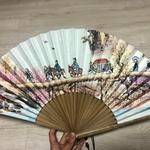
Wedding favor
Our wedding favor will be a Korean traditional fan which is made of hanji and bamboo. On this fan, the picture depicts a groom taking his bride (inside a Ga-ma, traditional vehicles carried by porters) to his house after their wedding which happened at her place.