Venue
Twin Lakes State Park
1976
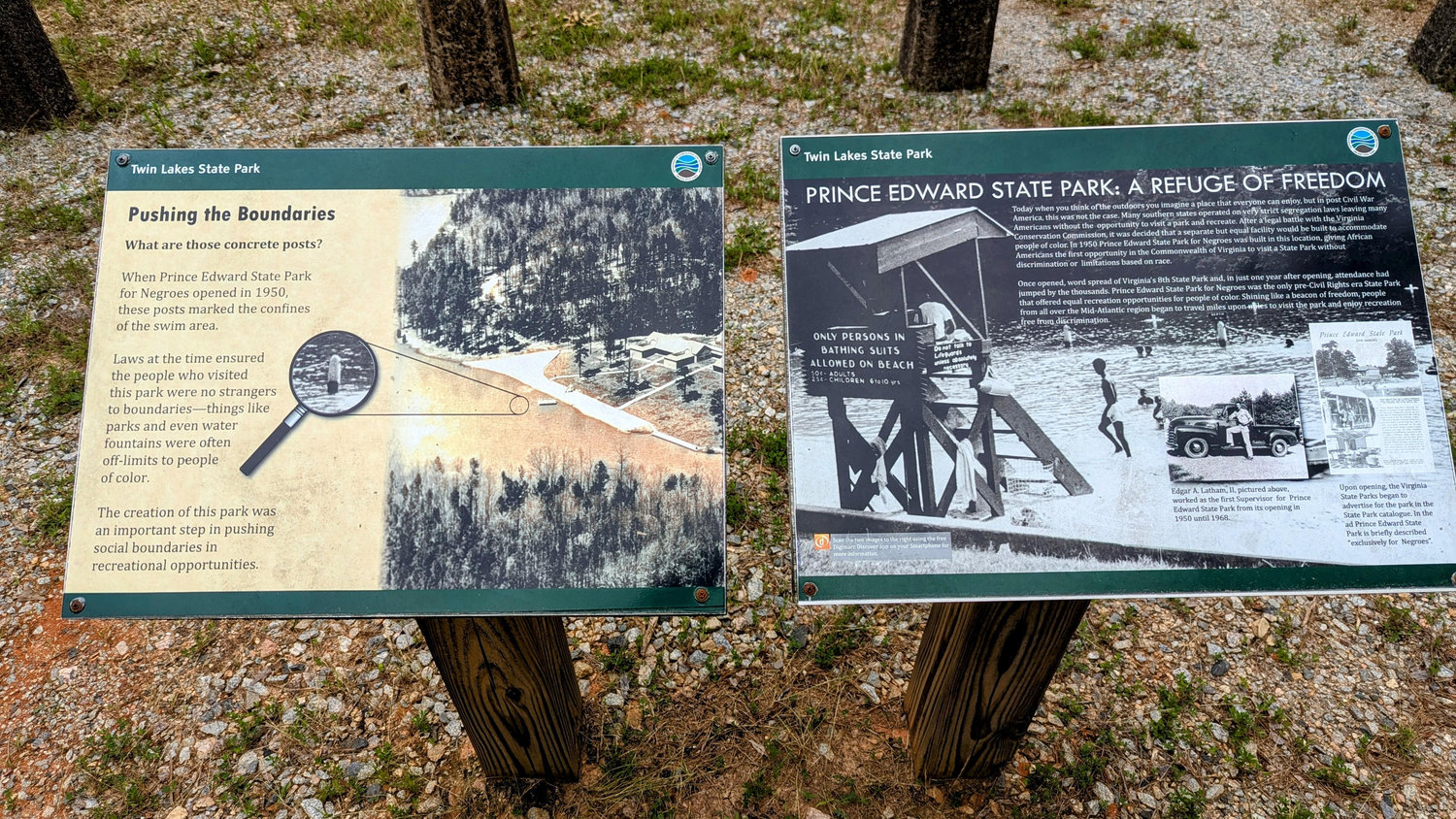
Twin Lakes originally consisted of two separate parks: Goodwin Lake and Prince Edward Lake. Both parks were developed in the 1930s as part of New Deal-era efforts to create recreational spaces for the public. However, due to segregation laws, these parks were established as racially separate facilities. Prince Edward Lake was designated for Black visitors, while Goodwin Lake served white visitors. This separation persisted for decades, reflecting the entrenched segregation of the Jim Crow South. In the 1940s and 1950s, both parks gained popularity among local communities, but with vastly unequal resources and support. Following the Civil Rights Movement and the eventual desegregation of public spaces, the two parks were combined in 1976 into a single entity: Twin Lakes State Park. This merger symbolized a move toward unity and equal access to public lands. The combined park now spans over 500 acres and features both lakes, which remain central to the park's recreational offerings today. Activities such as swimming, fishing, hiking, and camping attract thousands of visitors each year. In addition to its natural beauty, the park plays an educational role, with interpretive programs that explore its complex social history.
Cedar Crest Center
1950
The Cedar Crest Conference Center stands on the Prince Edward Lake side of what is now Twin Lakes State Park, built atop the original facilities of the Prince Edward State Park for Negroes. That side was developed as one of Virginia’s four New Deal–era Recreational Development Areas (RDAs) between roughly 1933–1939. Civilian Conservation Corp crews specifically constructed the dam, cabins, bathhouse, and other amenities there. After M. Conrad Martin’s successful lawsuit in 1948 challenging segregation in state parks, Virginia allocated about $195,000 in 1949 for improvements to Prince Edward Lake’s side. By 1950, the area reopened as “Prince Edward State Park for Negroes” featuring six concrete-block cabins, bathhouse, a restaurant/nightspot, cabins, and a pumping station. The restaurant and dance hall became especially popular with communities across Virginia and beyond . The structure that served as a lakeside restaurant, concession stand, and dance hall was later repurposed into what’s now known as the Cedar Crest Conference Center. Guided “Cedar Crest” historical tours have been hosted since at least 2020, highlighting the center’s pivotal role as a cultural and social hub during segregation. A Civil Rights Trail historic marker was added in 2020, as part of the Virginia Civil Rights in Education Heritage Trail, noting the site’s significance in Black recreational history.
