Caroline & Alexander
Things To Do
Schwebebahn
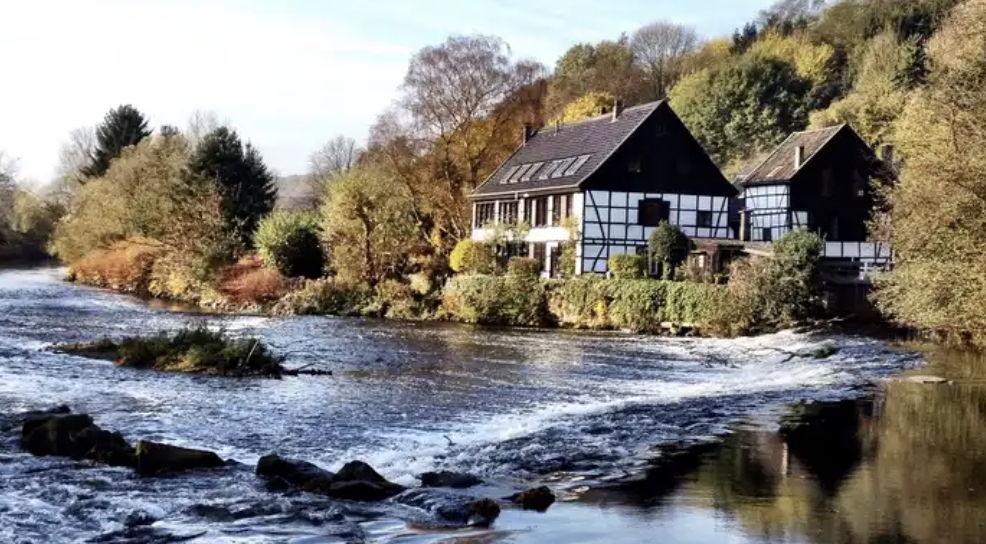
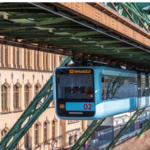
Buy a ticket at street level and take a ride on the Schwebebahn, Wuppertal's iconic suspended railway. The "Volkshochschule" station is just a 5-minute walk from the Vienna House hotel. You can ride the entire length of the track and back, but be sure to exit at the end of the line and transfer to the opposite side of the tracks (go back down to street level and then up the other side). The Schwebebahn is the world's oldest electric elevated railway with hanging cars and is a one-of-a-kind system in Germany. The train runs along a route above the Wupper River, with parts of the track crossing over the street. It now carries 80,000 passengers daily. In 1950, the Althoff Circus staged a publicity stunt by placing a baby elephant on the train. As the elephant bumped around, she fell out of the car and into the Wupper River but luckily wasn't hurt. Since then, the elephant, Tuffi, has become Wuppertal's mascot. This train is famous worldwide as one of the safest forms of transportation.
Neanderthal Museum
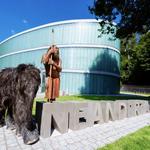
You might not have known that the famous Neanderthal man was found only a short distance from Wuppertal. Located at the site of the first Neanderthal man discovery in the Neandertal, it features an exhibit centered on human evolution. It is a fantastic museum that has english and german auditory guides and a cafe at the very top of the museum. It is located in beautiful nature and a walk/hike around is highly encouraged. You can pass the original excavated site where fossils of Neanderthal man were found on a stroll. In the garden area there are many attractions along the labelled paths such as Art trail "Human Traces”. Further, towards the Game reserve, the aurochs and the wild horses can be seen.
Müngstener Brücke
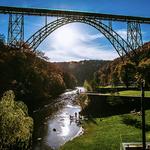
Müngsten Bridge is the highest railway bridge in Germany and a world heritage site. The bridge is 107 metres (351 ft) high and spans the valley of the river Wupper, connecting the cities of Remscheid and Solingen. First drafts for a bridge connecting the two cities go back as far as 1889, preparatory work began in 1893 and the bridge was finished in 1897.
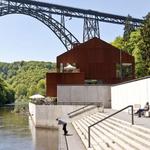
Müngstener Brücke - BRÜCKENPARK
If you have a rental car we recommend to come and check out the Brückenpark and the many hiking trails around it. At the feet of the railway bridge lies the Brückenpark Müngsten, a landscape park in the midst of deep forests and protected nature. From meadows, beaches and viewing balconies above the water, there are always new views of the giant of steel. Haus Müngsten (café, bistro, restaurant) at the entrance to the park fits perfectly into the landscape with its facade of weatherproof structural steel. The suspension ferry takes you from the bridge park to the other bank of the Wupper by muscle power.
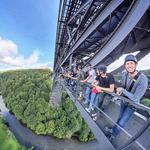
Müngstener Brücke - BRIDGE WALKWAY
If you feel adventurous and are not afraid of heights this is for you! 777 steps lead upwards, along the gigantic bridge arch. The destination: a platform at a height of 100 meter, just below the highest point of the 107-meter-high Müngsten Bridge. From there, a breathtaking view opens up into the valley, to the Wupper, and over the heights: Since 2021, a bridge walkway opens up Germany's highest railroad bridge impressively and completely new. You walk in a group, with helmet and harness, led by a guide.
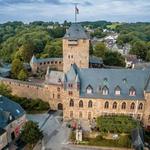
Burg Castle
Burg Castle (German: Schloss Burg), located in Solingen, is the largest reconstructed castle in the German state North Rhine-Westphalia and a popular tourist attraction. At the beginning of the 12th century (after 1133), Count Adolf III of Berg built Schloss Burg on a mountain overlooking the river Wupper. On the night of 26 November 1920 a large fire destroyed much of the castle. Subsequently, visitors had to pay entry fees and the money was used to restore and rebuild the castle for a second time (after decay required a first rebuilt). Great to have a wander around and grab a typical Bergische Waffel. This is the equivalent of afternoon tea in the area and offered by many restaurants surrounding Burg Castle. The waffle is traditionally served with hot cherry compot and vanilla ice cream. From Burg Castle you can hike to the Müngstener Brücke and the Brückenpark.
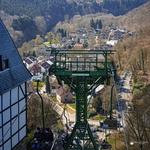
Burg Castle - Cable car
There is a small two seater open cable car that brings visitors from the castle down to the valley or back up.
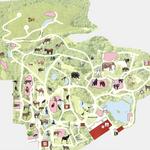
Wuppertal Zoo
Wuppertal Zoo is a 24-hectare (59-acre) zoo with about 5,000 animals from around the world, representing about 500 species, including apes, monkeys, bears, big cats, elephants, as well as birds, reptiles, and fish. During World War II, Zoo Wuppertal was not as badly damaged as other German zoos and in 1946, the Zoo Banqueting Hall hosted British war crimes trials. Located on hill slopes, Wuppertal zoo is really beautiful and well managed. It is also know as the "green zoo" because of the many trees and greenery that the zoo is situated in.