
A Guide to Our Jewish Wedding
Sunday, May 24, 2026
Wedding
5:00 pm
180 Piermont Rd, Closter, NJ 07624, Closter, NJ 07624
This event is black-tie optional… but strongly encouraged. You’ll thank us when you see the photos. // Esmoquin y traje de largo
Please join us for cocktail hour at 5:00 PM, followed by the Bedekin promptly at 6 PM.
Kabalat Panim & Chassan's Tisch - Greetings
5:15 pm
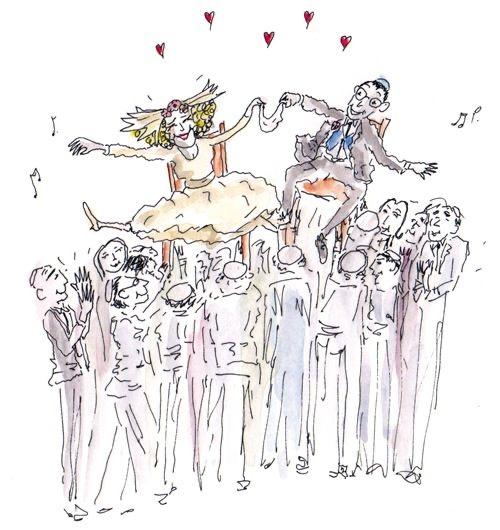
This pre-ceremony reception gives Almudena and Adam an opportunity to greet guests alongside a "smorgasbord" of delicacies. Adam will be at "the Tisch," a table where drinks and songs flow freely. At the Tisch, the Ketubah or marriage contract is signed. During Kabalat Panim, Almudena will be seated on a raised platform where she will receive well-wishers and give blessings to those who ask. Esta recepción previa a la ceremonia brinda a Almudena y Adam la oportunidad de dar una cálida bienvenida a sus invitados con un variado cóctel. Adam participará en el "Tisch", donde el novio, acompañado de familiares y amigos, comparte comida, bebida y cantos en torno a una mesa, mientras se firma la ketubá, el contrato matrimonial judío. Entretanto, durante el Kabalat Panim, Almudena estará sentada en un trono, donde recibirá buenos deseos y ofrecerá bendiciones a quienes se las pidan.
Bedekin - Veiling
6:00 pm
After Kabalat Panim, Adam will be danced from the Chassan's Tisch to Almudena for the Bedekin. The origins of this ceremony are rooted in the biblical story of Jacob and Rachel, underscoring the deep meaning in choosing one's life partner. At the Bedeken, Adam will approach Almudena and place a veil over her head, after which the parents will bless the bride. Finally, Adam will be danced out of the room, accompanied by joyous singing, and the guests will leave to the sanctuary for the wedding ceremony. El "Bedeken" es un ritual ashkenazi en una boda judía en el que el novio cubre el rostro de la novia con un velo poco antes de la ceremonia bajo la Jupá. Este acto simboliza un gesto de protección, recordando la historia bíblica de Jacob y Raquel para enfatizar la importancia de la elección de la pareja y la espiritualidad del matrimonio. A continuación, Adam será acompañado entre bailes y cantos alegres, mientras los invitados se preparan para acompañar a la pareja hacia la Jupá.
Chuppah - Wedding Canopy
6:15 pm
Following the procession, Almudena and Adam stand together under the Chuppah, or canopy. Mirroring Abraham's tent, the Chuppah has no walls. This symbolizes the open and welcoming home the couple hopes to create, one in which all are invited with hospitality. Bajo la Jupá, Almudena y Adam sellarán su unión. Este dosel nupcial, sostenido por cuatro pilares y abierto por todos sus lados, simboliza el hogar que juntos comienzan a construir. Inspirada en la tienda del patriarca Abraham, la Jupá representa la hospitalidad y la presencia de Di-s, envolviendo a la pareja en un espacio sagrado donde florecerá el amor y donde siempre habrá refugio para quienes entren en él.
Hakafot - Circling
6:15 pm
At the start of the Chuppah ceremony, Almudena will circle Adam seven times. In Judaism, the number seven holds special meaning, representing completion and holiness. It also invokes creation, in which God created the universe and all life within it in seven days. Here, the circling reflects a different kind of creation, one where the two souls of the bride and groom become one. Dentro de la Jupá, Almudena girará entorno a Adam, siguiendo la tradición de las Hakafot. Este antiguo ritual, en el que la novia da siete vueltas alrededor del novio, simboliza la creación de un nuevo mundo. El número siete, sagrado en la tradición judía, recuerda los días de la creación y representa su plenitud y espiritualidad. Con cada vuelta, se sella el encuentro de dos almas que, al unirse, dejan de ser mitades para convertirse en una sola.
Kiddushin - Betrothal
6:30 pm
The Hakafot are followed by blessings over a cup of wine, from which Almudena and Adam will both drink. Wine is often used in Judaism to mark important events, and a marriage is certainly no exception. After the blessings, Adam will place a ring on Almudena's finger. This formally marks their sacred commitment to one another. Después de las Hakafot, se recitan las bendiciones sobre una copa de vino, de la cual beberán Almudena y Adam. El vino, símbolo de alegría en el judaísmo, acompaña en los momentos más importantes, y esta ceremonia no es la excepción. Tras las bendiciones, Adam colocará un anillo en el dedo de Almudena, sellando así su compromiso. En ese instante, sus caminos se unirán para siempre, dando comienzo a un hogar construido sobre el respeto y su amor infinito que los guiará a lo largo de sus vidas.
Nisuin - Marriage
6:45 pm
Following Kiddushin, the Ketubah (Marriage Contract) will be read. The text of the Ketubah outlines the husband's obligations to his wife. Although it may seem old-fashioned now, the Ketubah is very progressive for an ancient document! The Sheva Brachot (Seven Blessings) are then recited by family. These blessings once again parallel the seven days of creation. Con el "Nisuin", se procederá a la lectura de la "Ketubá", el contrato matrimonial que refleja el compromiso y la responsabilidad mutua de la pareja. Su contenido es sorprendentemente progresista para ser un documento tan antiguo, ya que establece las obligaciones del marido hacia su mujer, incluyendo su responsabilidad de velar por el sustento y bienestar familiar. A continuación, la familia recitará las Sheva Brachot, las Siete Bendiciones, que evocan los siete días de la creación.
Glass Breaking
7:00 pm
To conclude the ceremony, a glass will be shattered under the Chuppah. This is meant to evoke the Roman destruction of Jerusalem in the year 70 C.E.– the moment that Jews became an exiled people. Immediately before the glass is shattered, an ancient psalm will be sung, encouraging all Jews, even in their happiest moments, to never forget Jerusalem. Para concluir la ceremonia, se romperá una copa bajo la Jupá. Este gesto nos invita a detenernos un momento para recordar la destrucción del Templo de Jerusalén por los romanos en el año 70 E.C., el momento en que el pueblo judío se convirtió en una nación exiliada. Justo antes de romper la copa, se recitará un antiguo salmo para apreciar que incluso en los momentos de mayor alegría, debemos llevar siempre en el corazón la memoria de nuestro pasado.
Yichud - Togetherness
7:00 pm
Adam and Almudena will then be danced to a private room where, away from the noise and chaos of the wedding, they will share their quiet first moments together as husband and wife. Tras la celebración bajo la Jupá, los recién casados serán acompañados entre cantos y danzas a una sala privada, donde podrán compartir en intimidad sus primeros momentos como marido y mujer.