Wed & Guillermo


Things To Do
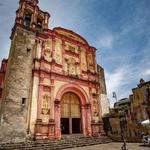
Catedral de Cuernavaca
Founded by the Franciscans, it was established in 1525 by the group of 12 Franciscans who began evangelizing in Mexico. In fact, it was only the fifth one to establish itself. Towards 1574 this cathedral of baroque style was already finished in spite of undergoing some modifications throughout century XVII. What you can now observe is the intact construction of that time, with its atrium being the central part of the whole.
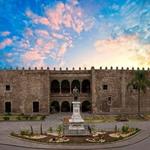
The Palace of Cortes (Museo Regional de los Pueblos de Morelos)
In order to use it as a residence, Hernán Cortés ordered the construction of this imposing palace that enjoys a medieval architecture that resembles a fortress. Throughout its history it has been a Catholic temple, palace of the conqueror, prison, palace of the Republic and seat of the State Government. Since 1974 it is the museum that still persists today, showing pieces from the pre-Hispanic period and the arrival of the Spaniards.
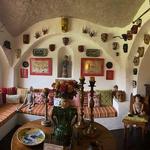
Robert Brady Museum
Next to the Cathedral of Cuernavaca is the House of the Tower, which contains a unique collection of paintings and decorative arts from around the world gathered by Robert Brady, a lover of the plastic arts and a regular collector who in 1962 came to live to Cuernavaca. The place has important works by Rufino Tamayo, Frida Kahlo, Miguel Covarrubias, Maurice Prendergast, Marsden Hartley and Graham Sutherland, among his most outstanding pieces are Mexican colonial furniture, pre-Hispanic figures and art from Africa, Oceania, India and far East.
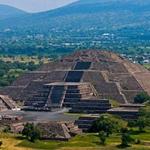
Teotihuacán Pyramids
Visit the Teotihuacán ruins, climb the sun and moon pyramids, tour reservation recommended ~50min drive from Mexico City
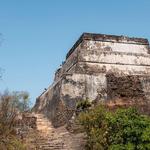
Tepoztlán
The town is famous for the remains of El Tepozteco temple built on top of the nearby Tepozteco Mountain, as well as for the exotic ice cream flavors prepared by the townspeople.

Jardines de México
Explore the vibrant beauty of Jardines de México, the world's largest flower garden.

Las Estacas Parque Natural
Mexican nature reserve known for its beautiful, clear river and diverse recreational activities. Visitors can enjoy swimming, snorkeling, kayaking, paddleboarding, and diving in the river, as well as relax in heated pools and jacuzzis. There's also a zip line and a spa.

Chapultepec Castle
The National Museum of History is the site that holds the memory of the history of Mexico, from the conquest of Tenochtitlan to the Mexican Revolution. Its rooms show a diversity of objects representative of four centuries of the history of Mexico. The museum is located in the Castillo de Chapultepec, whose construction began in 1785 during the government of the Viceroy of New Spain, Bernardo de Gálvez. Although it was created for rest home, over time it was adapted to different uses: it was a military school, imperial residence with Maximilian and Carlota (1864-1867), presidential residence and, since 1939, headquarters of the National Museum of History.
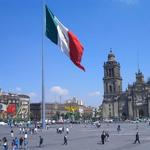
Plaza de la Constitución
Plaza de la Constitución (Zócalo) is the main square in Mexico City and a prominent landmark in the heart of the city. It's a large public space steeped in history, surrounded by the Cathedral, Tenochtitlan ruins, & Palacio Nacional.
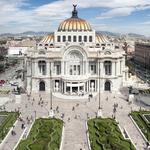
Palacio de Bellas Artes
Renowned art nuveau and art deco cultural center that hosts folkloric Mexican dances, murals, art exhibitions and more.

Turibus
Turibus is a great option to explore CDMX.