Paula & Trevor
Things To Do
History of Cartagena
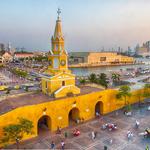
Cartagena is a colonial city on Colombia’s Caribbean coast. The historic walled city remains alongside the ultramodern skyscraper-filled Bocagrande. Cartagena is famous for its culture, history, and colorful buildings. The city was founded in 1533, by Spanish Commander Pedro de Heredia. The Spanish poured huge amounts of money into the city’s defenses, including the famed wall. At that time, the port was the largest in the Americas. In 1741 the Queen of England ordered invasions of every Spanish port in the Caribbean. After the invasion, the city fortified further, and rebuilt its defenses to become the most protected port in South America. Cartagena played a significant role in Colombia gaining its independence - in 1811 it was the first city to declare independence from Spain. Today, Cartagena has rapidly expanded and is now home to over 1 million people. Despite all these changes the Walled City remains unchanged, with its colonial architecture and historic buildings preserved.
Explore The Old City
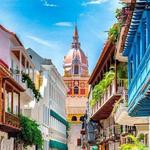
You’ll find tons of colorful colonial architecture, flowers, artists, and plenty of street vendors (the best street vendors you will find are around the Cartagena Cathedral — Catedral de Santa Catalina de Alejandría de Cartagena de Indias — on Calle 34.) Be sure to check out the Torre del Reloj, the historically important and monument-filled Plaza Aduana, the vibrant Plaza Santo Domingo with its Botero statue, the leafy green Plaza Bolivar that’s frequently filled with dancers and performers, and Plaza de los Coches where you’re sure to experience an authentic night in Cartagena. While you’re out exploring, make sure to check out The Palace of Inquisition, The Gold Museum, and the Church of Santo Toribo. If you are interested in a walking tour, there are many listed through Trip Advisor or you can ask your hotel to set one up.
Café del Mar
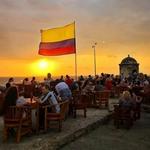
From this restaurant, you will enjoy a great view of the city of Cartagena on an open air terrace. Watch the sun set on the old wall overlooking the ocean with live saxophone music. Make sure to get there ahead of time to get a seat.
Castillo de San Felipe de Barajas
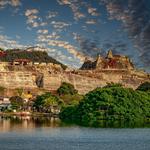
Wander through the tunnels of the San Felipe de Barajas Castle to discover the interior of the “guardian of Cartagena.” Cartagena was always a desirable conquest for pirates and enemies of the Spanish Crown; and for this reason, the defense of the city from these threats was a question of priority for its inhabitants from the first decades of the existence of the city. Once the primitive nucleus of Cartagena and the outlying district of Getsemaní were fortified, there was a need to erect a structure on San Lázaro Hill that would prevent an enemy attack from its peak, since the hill dominated the walls and the only entrance to the city, the Media Luna Entrance in Getsemaní. In addition, this hill was the intermediate point between the city and the nearby Popa Peak, where some heavy guns and canons were installed between 1769 and 1780 to cross fire with the castle and make an enemy attack more difficult from the large beach of Playón Grande in Pie de la Popa.
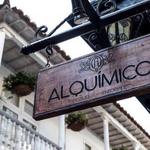
Grab a Drink at Alquímico
Anyone remotely hip ultimately gravitates to this Old Town bar with a pharmaceutical theme. Occupying a gorgeous colonial building, the bar is spread over three floors: the ground floor is a sleek, low-lit lounge perfect for an aperitif, while upstairs there's a kitchen and pool table. One more floor up is the always packed roof-terrace bar, serving imaginative aguardiente cocktails.

Take a Boat to Playa Blanca
Playa Blanca is undoubtedly one of Colombia’s most beautiful beaches. Located on Baru island, it is 45 minutes by boat from Cartagena port, or around a two-hour car journey from the main city. Crystal-clear waters lap the perfectly white sand and visitors have the option to spend a day relaxing on this incredible beach or, should that not be enough, you can also stay over night. Go for the day and make the most of some delicious fresh fish served alongside coconut rice. Or even stay the night and appreciate the beach in complete stillness and silence once all the day trippers leave. Either way, a visit to this beach is a must for anyone spending more than a day in Cartagena.

La Cevichería
Regarded as one of the best ceviche and fish restaurants in the whole city, head to La Cevichería for a break from all the Fritos (fried food) you’ve been eating and experience some incredible Peruvian-Colombian fusion food. Expect fresh fish, exciting flavors, lots of lime and some seriously good cocktails. The place is eternally busy and you’ll have to wait for a table.
Café Havana
Cuba in Colombia. Live Music, Energy, Drinks. Estimate Cost for Havana Nights is $50.
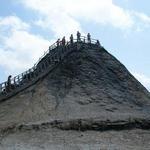
El Totumo Mud Volcano
Just 45 minutes from Cartagena. An active volcano in which you can take a swim—that is, in a bath of naturally-heated mud that cleans, nurtures and heals your entire being. The adventure only concludes, however, after sliding down the exit stairwell into an idyllic lagoon to wash off.
Walking Tours
The best way to see the Old City of Cartagena is on one of the free walking tours. With a knowledgeable local guide, you’ll spend a few hours meandering through the city streets while learning about its fascinating history.