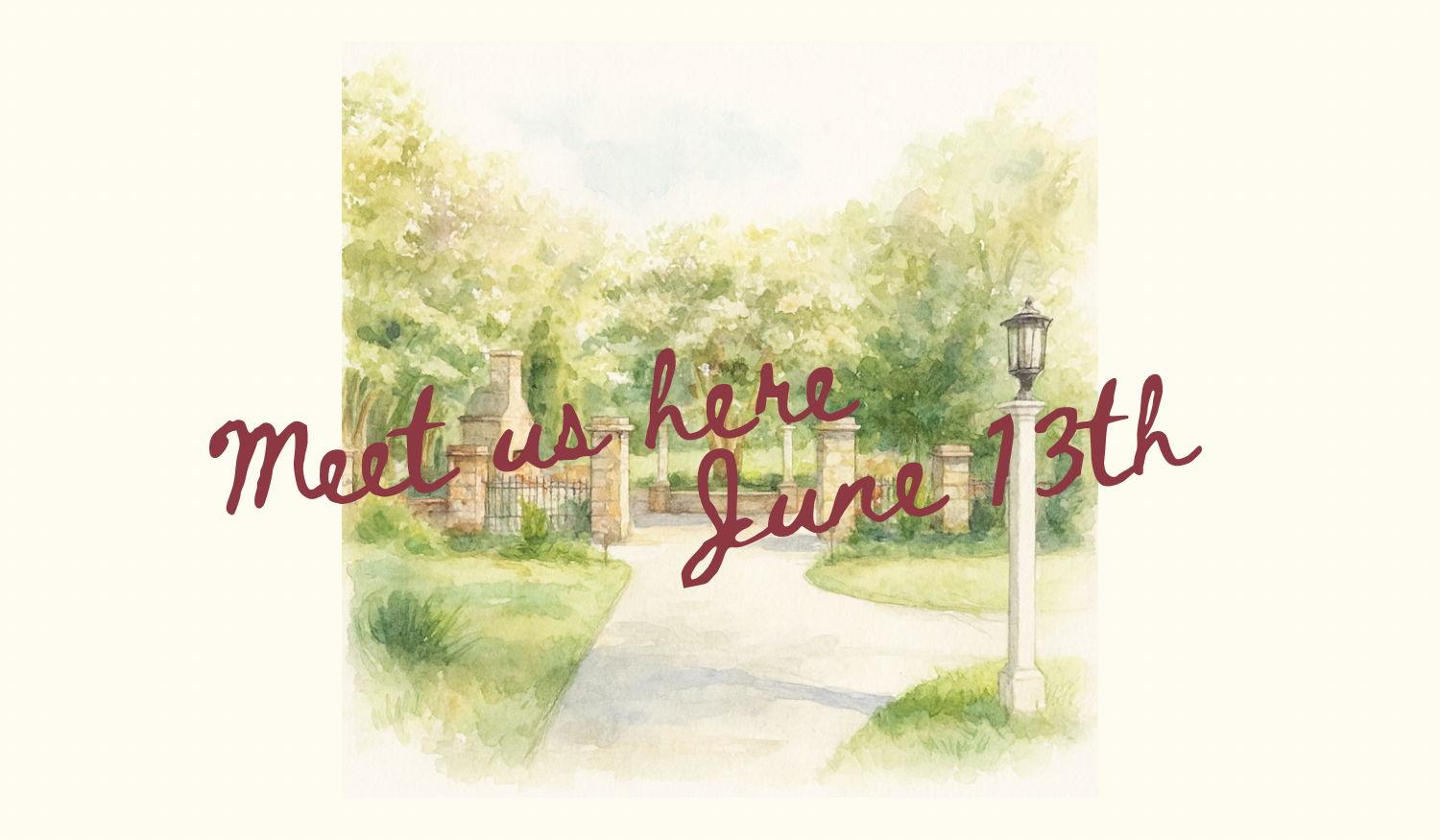
we’re getting married!
Eli York Davis
Molly Odell Walton
Macca Villa
Murfreesboro, TNJune 13
2026Our Love Story
I think about the day we met often. Eli was a senior, and me a junior. Class had just let out, and students were scattering in every direction under the sweltering Tennessee-August heat. I remember wearing a tank top with comfy shorts and my high-top Vans. He wore basketball shorts and a T-shirt, no backpack in sight, looking like he rolled straight out of bed and into the sun. I must’ve stood out—probably because practically jogging back to the sorority house for an event I was already late for. Eli now says I was impossible to miss. He swears the sweat dripping down my long legs made it look like I was glowing. Before I ever saw his face, I heard his voice behind me, talking on the phone—low, steady, and somehow calming the frantic pace of my thoughts. Only later would I learn the truth: the call was staged, a shameless attempt to get closer. And embarrassingly enough, it worked. As soon as he “hung up,” he matched my pace. It took me a second to register what was happening. When I finally turned enough to see his face—I didn’t say a word. He did. “Why are you walking so fast?” The question threw me off my mission. “Why are you so nosy?” is what I wanted to reply with. But looking at his face changed my mind. He had soft brown eyes that folded shut when he smiled, like even his joy needed somewhere soft to rest. He stood there waiting for my answer, watching me with a familiar softness—like I was an old friend he was catching up with, not a stranger he’d ambushed on the sidewalk. He was several inches taller than me, his shoulders slouching just enough so our faces aligned. “I’m late for a recruitment event,” I finally said, reluctantly handing over the truth. Who was I to lie to this handsome stranger? “Why are you walking so fast?” My question made him laugh. And honestly? I couldn’t tell you what else we talked about. The whole exchange couldn’t have lasted more than 45 seconds. But I remember two things: his name was Eli, and I gave him my real phone number—a rare act of trust back then. It’s strange to look back now and realize how much chaos surrounded that moment. I was running late, trudging through the first week of a brutal semester, and still healing from a season of my life that had worn me down. My life was chaos. I was shattered and broken, trying my best to scramble and put the pieces back together before anyone noticed. And somehow, in the middle of all that, this stranger made me feel… forgiven. Not for something I’d done to him, but for everything I’d done to myself. It was a deep, disarming kind of forgiveness—like finally being able to stop treading water long enough to breathe. And for weeks afterward, before I saw him again, I found myself craving that feeling. Six years later, I finally understand why. He gave me peace. Reassurance. Confidence. He didn’t want to fix me—he wanted to know me. He sat with my pain. He dug into my memories, the ones I used to avoid, and kept gently picking until they didn’t hurt anymore. Until I stopped feeling ashamed. Until I was proud of how far I’d come. And that’s the thing about Eli—he’s been through so much. He’s battled demons that would hollow most people out. But instead of turning bitter, he chose love. Unconditional, unflinching love. I didn’t know it then, but that 45-second walk changed everything. Sometimes the biggest turning points begin on an ordinary August day, under the Tennessee sun, with a stranger pretending to be on the phone.