Ceremonies
Our Story
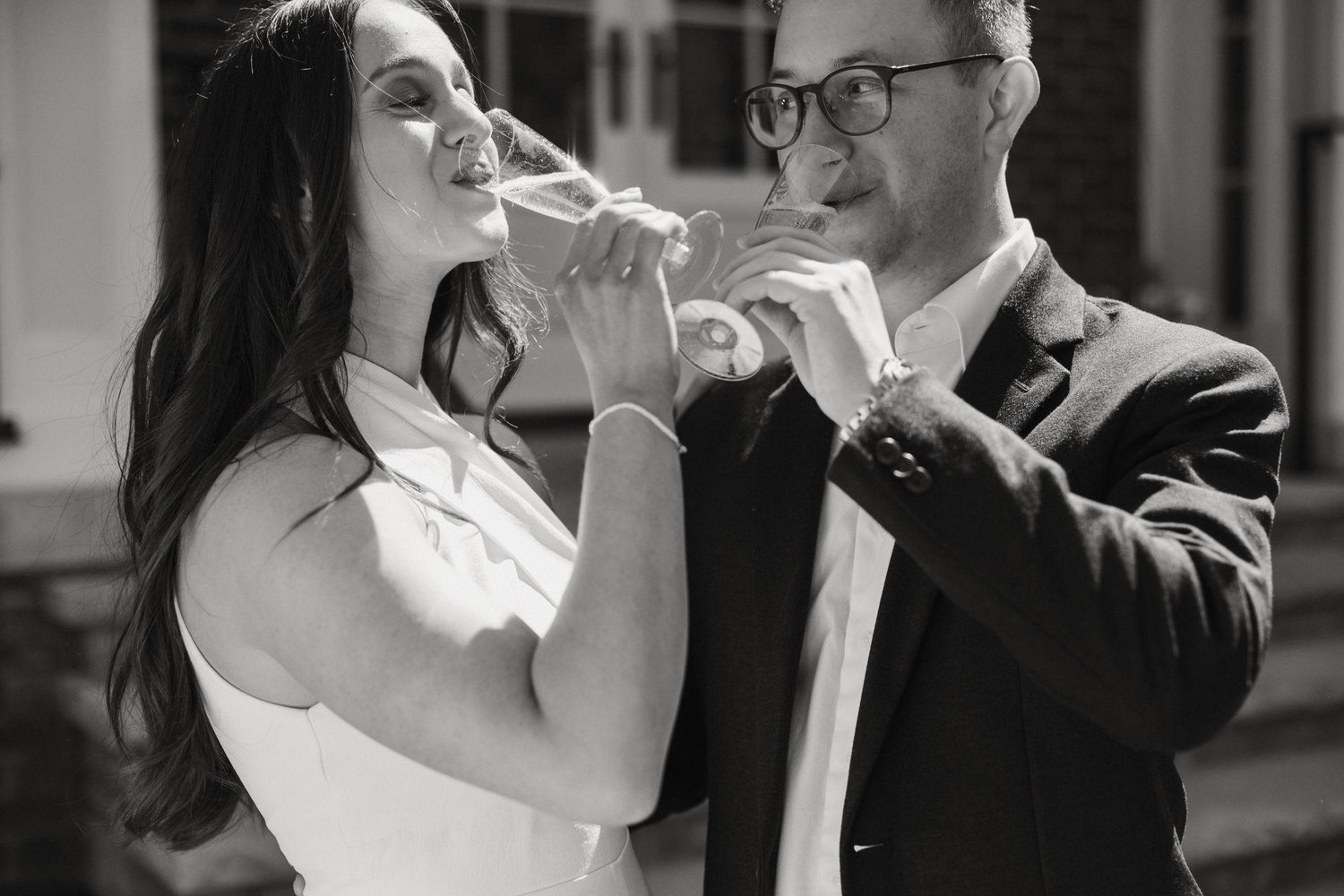
Bashert, Yiddush for “destiny", is often used to describe when soulmates find each other. It is said that before a child is born, Hashem has already prepared their “match”, and when the time is right, they will find one another. Our grandparents, Otto and Goldi, both grew up in Makó, Hungary, a town of ~35,000 people, ~2,000 of whom were Jewish. After the Holocaust, only a handful of their community survived. That their descendants would one day find their way to Canada, find each other, and choose to build their lives together…Bashert.
Kabbalat Panim
We will welcome our guests with two celebrations. Female friends and family can offer their blessings to Talia at the Kabbalat Panim. Ethan will welcome male friends and family with a l’chaim at the Tish. We will then sign two documents: • The Tena’im is the engagement agreement that marks the moment our families formally bind themselves to the marriage. Once signed, our match is official and our moms will break a plate to signify that some things, like an engagement, can never be made whole once broken. The plate we are breaking is from the restaurant where we had our first date and got engaged. • The Ketubah is the marriage contract that outlines Ethan’s obligations to Talia. It is designed to protect Talia by guaranteeing her rights during the marriage. Beyond a contract, it is a promise written and witnessed, that we enter our marriage with care and intention, and commit to building a life together, rooted in love, respect, and shared values.
Bedeken
Ethan will be escorted to Talia by the groom's party, singing Od Yishama. The lyrics which translate to “There shall yet be heard in the cities of Judah and in the streets of Jerusalem, the voice of joy and the voice of gladness, the voice of the groom and the voice of the bride”, were first used by the prophet Jeremiah after the destruction of Jerusalem and the first temple. They remind us that even in times of heartbreak and loss, joy is always around the corner. The song also symbolizes that our wedding is a moment where we choose to rebuild the Jewish people. Once together, Ethan will veil Talia as an ode to the story of Jacob, who intended to marry Rachel but was deceived into marrying her sister, Leah, when the bride was incorrectly veiled. Our parents will then offer us blessings. Weddings are full of energy and joy. The Bedeken is meant to be a quiet pause before the celebration, and remind us that marriage is about a commitment to who we are beneath the surface.
Chuppah
Open on all sides, the Chuppah represents the home we hope to build: rooted in tradition, filled with warmth, and always open to family and friends. Our Chuppah will be covered by Ethan’s grandfather’s Talit as a symbol that our first roof together should carry forward our family history. After walking down the aisle, Talia will circle Ethan seven times to remind us of the days of creation and symbolize that a wedding is its own act of beginning. It also reminds us that when the Jews first entered Israel after leaving Egypt and conquered Jericho, the city walls fell in seven days. Like Jericho, we will take this as a final opportunity to ensure any remaining walls between us fall easily. Under the Chuppah, we will start with two blessings. The first is the blessing over wine, which is the traditional way to welcome moments of holiness and celebration. The second expresses thanks for the sacred bond of love and partnership.
Ceremony
Ethan will place a ring on Talia’s finger and say “Harei at mekudeshet li” (behold you are consecrated to me). These words are the heart of the ceremony and mark the moment our marriage is considered sacred. Talia’s ring will be a single, simple, unbroken circle, as a reminder that our marriage too should be simple and built on who we are, rather than our material possessions. We will then read the Ketubah and friends and family will recite the Sheva Brachot, honouring the sanctity of marriage, expressing gratitude for love, and hope for joy and the continued flourishing of the Jewish people. Finally, Ethan will break a glass as a reminder of the destruction of Jerusalem and the fragility of relationships. In this moment of pride, we recognize that joy and hardship are forever intertwined, commit to treating our marriage with care and intention, and agree that despite whatever challenges lie ahead, we will build our lives together in celebration with our bashert. Then we celebrate!