NICOLE LEWIS & EDWARD NULLNICOLE LEWIS & EDWARD NULL
Places to Visit / ToursPlaces to Visit / Tours
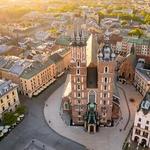
Rynek Główny | Main Market SquareRynek Główny | Main Market Square
Rynek Główny, Kraków’s Main Market Square, is the largest medieval square in Europe and the heart of the Old Town. Surrounded by medieval, Renaissance, and Baroque landmarks, it has been a bustling center of life since the 13th century. Visitors can stop at a café to watch horse-drawn carriages pass across the cobblestones and admire the lively atmosphere. On the hour, listen for the hejnał, the traditional bugle call from St. Mary’s tower, first played in 1392. PRO TIP: Be sure to try Kraków's signature snack — the obwarzanek! A crunchy golden-brown bread ring, sprinkled with toppings such as salt, sesame, and poppy seeds. Vendors are located throughout the Main Square and Old Town.
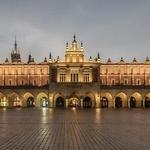
Sukiennice | Cloth HallSukiennice | Cloth Hall
One of Rynek Główny’s highlights is the Sukiennice, or Cloth Hall, a Renaissance masterpiece with origins in the 13th century, when it served as the hub of Kraków’s trade. Today, its vaulted arcades are lined with stalls offering souvenirs, handicrafts, and amber jewelry — a Polish specialty. After browsing, enjoy a meal in the Sukiennice Restaurant or relax with a drink on the terrace, where the Market Square unfolds before you.
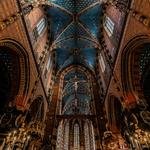
Mariacki | St. Mary's BasilicaMariacki | St. Mary's Basilica
Just across the square stands St. Mary’s Basilica, the city’s most iconic church, with its distinctive twin Gothic towers. A small admission fee grants access to its breathtaking interior, home to one of Europe’s finest Gothic altarpieces. Inside, the brilliant blue vaulted ceiling, glowing stained glass, and the monumental altar — the largest medieval artwork in Poland — tell vivid stories from the life of the Virgin Mary.
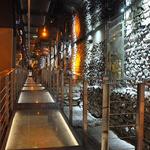
Rynek Underground MuseumRynek Underground Museum
Beneath the Cloth Hall lies Rynek Underground, a fascinating museum that takes visitors deep below the Market Square into Kraków’s medieval history. The galleries lead past reconstructed market stalls and workshops, while original cobblestones uncovered during a 2005 archaeological dig provide a tangible glimpse into the city centuries ago.
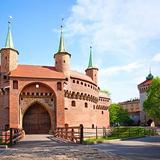
Barbakan | Saint Florian’s GateBarbakan | Saint Florian’s Gate
A short walk from the square brings you to the Barbakan and St. Florian’s Gate, built to protect the city after the Tatar attack of 1241. Once divided by a moat, these medieval defenses marked the main entrance to Kraków and the beginning of the “Royal Route” to Wawel Castle. Today, St. Florian’s Gate is an enduring symbol of the Old Town and the gateway to Floriańska Street, one of the city’s most popular thoroughfares.
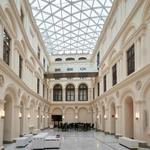
Czartoryski MuseumCzartoryski Museum
Tucked just inside the city walls near the Floriańska Gate, the permanent exhibition at the Czartoryski Museum displays the most valuable art collection in Poland, and one of the most valuable in all of Europe. The museum houses one of Leonardo da Vinci's best-known works, the Lady with an Ermine, and other highlights including antiquities, sculptures, and a rich collection illustrating Poland's history.
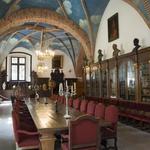
Collegium Maius | Jagiellonian UniversityCollegium Maius | Jagiellonian University
Jagiellonian University, the oldest university in Poland and one of the oldest in the world, counts Nicolaus Copernicus and Pope John Paul II among its alumni. Founded in 1364 by King Casimir III the Great, the Collegium Maius — the university’s oldest surviving building — features the original library, common room, Copernicus treasury, lecture hall, and a musical clock that chimes daily at 9:00, 11:00, 1:00, 3:00, and 5:00. Tickets sell quickly, so it’s recommended to reserve at least a week in advance.
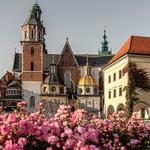
Wawel Royal CastleWawel Royal Castle
No visit to Kraków is complete without exploring Wawel Royal Castle, the historic home of Polish kings and queens until the 1600s. A symbol of Poland’s national identity, the castle has served as coronation grounds, military barracks, a hospital, and more. Perched atop Wawel Hill overlooking the Wisła River, this expansive 14th-century complex features numerous exhibitions, including the State Rooms and Royal Apartments.
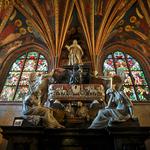
Wawel CathedralWawel Cathedral
Adjacent to the castle stands the 14th-century Wawel Cathedral, one of Poland’s most important religious sites and the burial place of monarchs and national heroes. Karol Wojtyła, later Pope John Paul II, once served here as bishop. Visitors can also explore the Royal Crypts and climb the steep wooden stairs to see the massive St. Zygmunt Bell, rewarded at the top with sweeping views across Kraków.
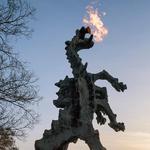
Wawel DragonWawel Dragon
Just down the hill on the Wisła River side of the castle lies Smok Wawelski, the legendary Wawel Dragon. According to legend, the dragon lived in a cave beneath the hill and terrorized Kraków before being defeated by a clever shoemaker, who fed it sheep stuffed with sulfur. Today, visitors can explore the limestone cave and see the fiery dragon statue, which breathes real flames. PRO TIP: Across from Wawel Castle, Pod Wawelem serves hearty Polish dishes with live music and a warm, Eastern European flair. A longtime family favorite, it’s the perfect place to recharge with a Tyskie (or two).
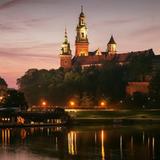
Wisła RiverWisła River
The Wisła River, Poland’s longest and Europe’s ninth-longest at 1,047 kilometers (651 miles), flows directly beneath Wawel Hill. A vital part of Polish history and culture, the river stretches from Kraków to Warsaw and out to the Baltic Sea at Gdańsk. Its banks offer scenic walkways, green spaces, and boat cafés, making it a perfect place to enjoy views of this iconic waterway and the castle above.
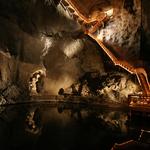
Wieliczka Salt MineWieliczka Salt Mine
Wieliczka Salt Mine, just 25 minutes from Kraków, is one of the city’s most popular day trips. In use for over 700 years until 2007, this vast underground complex features galleries, labyrinths, an underground lake, statues carved from rock salt, and St. Kinga’s Chapel, sculpted entirely from salt. We highly recommend setting aside a few hours to explore this remarkable subterranean world.
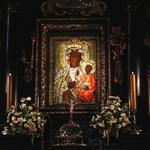
Black MadonnaBlack Madonna
Our Lady of Częstochowa, housed at the Jasna Góra Monastery in Częstochowa, 2 hours from Kraków, is one of Poland’s most venerated icons. Believed to have been painted by Luke the Evangelist and brought from Constantinople, it has been worshipped for over 600 years. Pilgrims travel here to pray, and the monastery walls are filled with relics commemorating countless miracles granted in this sacred place. Follow the link below to book your tour, including a visit to the Pope John Paul II Family Home.
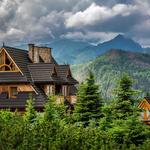
ZakopaneZakopane
Zakopane, around 1 hour 45 minutes from Kraków, is the gateway to the Tatra Mountains and Poland’s capital for winter sports. To make the most of this picturesque town, a scheduled tour is recommended. Sample local specialties such as cherry vodka, smoked cheese (oscypek), and Polish gofry — waffles topped with cream and sauces. Browse mountainside shops, ride the funicular to Mt. Gubałówka, and relax in the thermal springs.
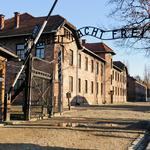
Auschwitz-BirkenauAuschwitz-Birkenau
Auschwitz-Birkenau, about 1 hour 15 minutes from Kraków, is a deeply moving memorial and museum that offers a sensitive and powerful insight into the Holocaust. The site preserves the memory of the atrocities committed by the Nazis during WWII and is one of the most important places to visit in Europe. Guided tours and transportation are widely available, making it accessible as a day trip from the city.