Things To Do
Carl & Monica's Picks
We've saved some of our favorite spots in Ortigia to a Google Maps list. Click on the link below to open the list and click the Save button to subscribe for easy access on your map.
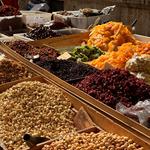
Old Market of Ortigia
Open-air street market with vendors selling fresh produce, spices, fish, and more. We usually stop by at least once a day! Great for groceries, culinary treasures, lunch, or a midday snack. We especially love the sandwiches at Caseificio Borderi and the seafood at Ristorante La Lenza – but there are many other options, and you really can't go wrong. The market is open every day except Sunday, from about 7am until 2pm. Some stalls, especially those selling fish, may pack up before the official closing time.
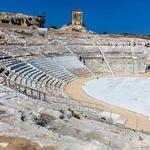
Greek Theater
Built in the fifth century BC, the Greek Theatre is one of the largest in the world. It is set within the Archaeological Park of Neapolis, which houses several other impressive Greek and Roman Remains as well. You'll need at least 90 minutes to explore the entire park, but the theater ruins are the main attraction. The park is a good 30-40 minute walk from Ortigia, offering a chance to explore more of Syracuse on the way there/back. Alternatively, jump on the Siracusa D’Amare (€1 per person, buy on board) bus for locals and tourists which does a regular loop of the city and includes a stop at the ruins. Since it is an open-air park, it does involve lots of walking – so be sure to wear a hat, sunscreen, and comfortable shoes.
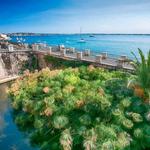
Fountain of Arethusa
The Fountain of Arethusa is a beautiful freshwater spring that gushes out at the seashore, forming a small lake inhabited by fish and plants. It is one of the only two existing wild papyretic springs in Europe, dating back thousands of years. You can easily pass by while walking around – and it's worth a visit both during the day and at night.
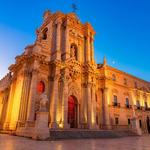
Syracuse Cathedral (Duomo)
In a diversion from the typical Duomo found in Italian cities, Syracuse’s Cathedral was actually built upon the skeleton of a more than 2000-year-old temple dedicated to the Greek goddess of Athena. Converted to a church when the island was evangelized by St Paul in the 7th century, there are a couple of hints to its long history for those that choose to go inside. If you wish to enter Syracuse Cathedral it’s €2 for adults or free for various concessions. As with all churches in Italy, visitors should wear appropriate clothing (no shorts, tank tops, hats, or vests) and act in a way which does not impact negatively upon those who visit the church for religious reasons.
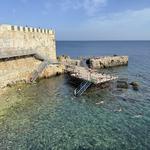
Solarium Forte Vigliena
One of several popular swimming spots around the island. Usually there is a platform set up to provide some surface area for sunbathing. You can access it by taking the staircase directly from the street.
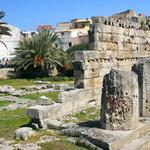
Temple of Apollo
Just around the corner from the market are the ruins of the Temple of Apollo – one of the first temples built by the Greeks in Syracuse (early 6th century BC), the oldest Doric temple in Sicily and the oldest stone temple in the West. It also happens to be directly across from our favorite late-night cocktail bar, BOATS.
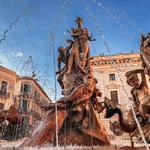
Fountain of Diana
Located in the grand Piazza Archimede is Giulio Moschetti's Art Nouveau masterpiece, Fontana di Diana. There are also a number of little outside cafes in this area, so it’s an excellent spot to grab a drink. The fountain sculpture is a depiction of the famous legend of Arethusa. In the centre of the fountain stands the figure of Diana (named Artemis in Greek mythology) with a bow and a dog, typical elements of the hunting goddess and protector of Ortygia in Greek times. At her feet is Arethusa escaping while on the verge of turning into a spring. On the side, Alpheus appears astonished by what is happening to his love.
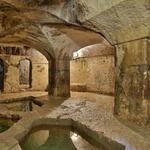
Bagno ebraico - Mikveh
Buried deep beneath the Alla Giudecca Hotel, a fascinating historical remnant of Ortigia's Jewish quarter is an ancient miqwe, or ritual bath - reputedly Europe’s oldest. They offer tours every hour or half an hour depending on the time of year.
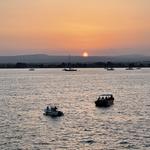
Lungomare Alfeo
Take a golden hour stroll along Lungomare Alfeo – Ortigia's seaside promenade – on the western coast of the island. There are a handful of bars offering a sunset view (Sunset Bar & Mikatú are the most popular) – the drink prices are marked up and the bars themselves aren't anything special, but it's a lovely setting. You might need to arrive early if you want to snag a table for the "sunset moment".
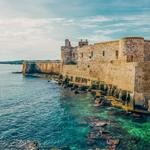
Maniace Castle
Built in the 13th century and named after the man who reconquered Syracuse from the Arabs in 1038, it’s been used as royal residence, a prison, and a defensive fortification. Now it offers views, historical insights, and sometimes host exhibitions.
Boat Tours Around Ortigia
Rival boat operators set up stalls by the bridges to Ortigia and at Largo Porta Marina, but their prices are almost always the same: around €20 per person for the hour-long trip, with the potential to combine two trips in one at a slightly reduced rate. Most tours last around an hour, and there are a number of different options, the most popular being a trip around the island or the option to visit some limestone caves (and have a swim). If you prefer to book a tour in advance, there are plenty of options on websites like GetYourGuide.com, some include food and drinks as well. It is also possible to rent a small boat of your own, if you prefer to be in the captain's seat. In my experience, all that's needed is cash and a driver's license. You can book at one of the stalls set up by the bridges entering Ortigia.
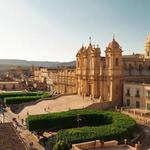
Noto (Day Trip)
Epitomising the definition of Sicilian Baroque, this is a town to explore as the sun begins to fall, when the sandstone walls of these 18th century masterpieces glow ochre and Noto comes alive. Noto is meant to be enjoyed in the late afternoon glow, over cups of icy granita and cones of famous ice cream. That’s why it’s also such a perfect base from which to explore this truly unique region in south-eastern Sicily - it is ideally situated to visit the area’s best sand beaches as well as a number of other stunning Baroque towns, so you can out and about and explore during the day and then be back in time to enjoy Noto at its finest!
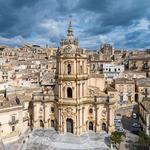
Modica (Day Trip)
Forty minutes drive from Ragusa or Noto, and nestled within a valley formed by four hills, lies the spectacular town of Modica. One of eight UNESCO Heritage ‘Val di Noto’ towns and cities in south-eastern Sicily whose architectural landscape changed forever following the devastating earthquake of 1693, the medieval old town once carved into rock has been replaced by stunning baroque facades, extravagant churches and beautiful palaces; the old and new connected by a maze of narrow streets and staircases.
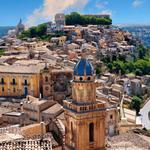
Ragusa (Day Trip)
Like much of this region of south east Sicily, Ragusa was reborn following the devastating earthquake of 1669. Sitting high above what used to be is Ragusa Superiore, a classically modern Sicilian hilltop town of rational straight lines. Not without its architectural draws or old school charm (including the city’s official cathedral), it is however the historical centre - or Ragusa Ibla - which so enthrals most who cross the city limits. A warren like maze of cloistered and clustered streets lined with honey colored buildings, grand squares and grander palazzi, towering churches and wide boulevards, all so perfectly, elegantly Baroque in design. So perfect in fact that, along with seven other towns and cities in the Val di Noto, Ragusa is a UNESCO World Heritage site.
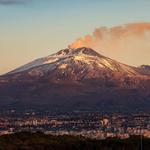
Mount Etna (Day Trip)
On the east coast of Sicily, Mount Etna is Europe’s most active volcano and a UNESCO World Heritage site - it’s also a popular traveller attraction. All roads lead to Rifugio Sapienza, or ‘Etna South’, where there is a visitor centre and car park. Mount Etna can be fully explored year-round with a tour or you can visit certain areas independently. Summit tours are the most popular option. They start at 9 am, last for around six hours, and cost €50 - €100 per person. Etna is at high altitude (over 2,500 meters above sea-level), and you need appropriate clothing and footwear - it’s an easy hike but not something for your flip-flops and beachwear. Etna has been incredibly active over the last year or so, and as such it is frequently not possible to access the summit due to safety concerns.