FAQs
Question
What time should I arrive for the Morning Ceremony?
Answer
Grab and Go breakfast will be available starting at 8:00 AM in the Winemaker Hall Wedding Festivities will begin promptly at 9:00 AM with Baraat at the Barrel Tower!
Question
I’ve never been to an Indian wedding ceremony before. What should I expect?
Answer
Wedding events and details: Baraat is the groom's procession into the wedding ceremony, signifying an age-old tradition where the groom would travel an average of five to seven days to his bride's home. Ponkhnu is a fun tradition in which the bride's mother performs aarti, feeds the groom sweets, and blesses him. She then attempts to pull the groom's nose in jest to remind him to be humble. The groom tries to escape the nose-pulling and everyone laughs. Madhuparka is when the bride's mother leads the groom to the mandap. She then offers the groom Panchamrut(blessed beverage). All this while, the bride's sisters scheme and implement the joota chhupai (shoe stealing) ritual. Antarpaat is a cloth that's drawn between the bride and the groom once the bride enters the mandap so he cannot see her. Kanyadaan is a tradition where the father of the bride gives away his daughter. Hasta Milap -the wedding priest ties the holy knot by joining the groom's shawl and the bride's saree, symbolizing the unification of two souls. Mangal Pheras is when the couple takes four circles around the holy fire while chanting mantras. The four pheras each signify "Dharma", "Artha", "Kama", and "Moksha", respectively, and are the four pillars of a happy married life. After every round, the brother of the bride hands them puffed rice to be offered to the sacred fire. Saptapadi ritual is one of the most crucial ones in a Gujarati wedding. The bride and the groom now take seven steps together while taking seven vows of holy matrimony. The seven vows include the promises to love, respect, take care of each other, plan a family, and be eternally together. Sindoor daan, Mangalsutra & Kansar - First, the groom applies vermillion (sindoor) to the bride's hair mid-parting. He then ties the holy Mangalsutra around the bride's neck. Finally, the newly married couple feeds sweets to each other,. ceremony ends and the newlyweds touch their elder's feet and seeking their blessings.
Question
What should I wear?
Answer
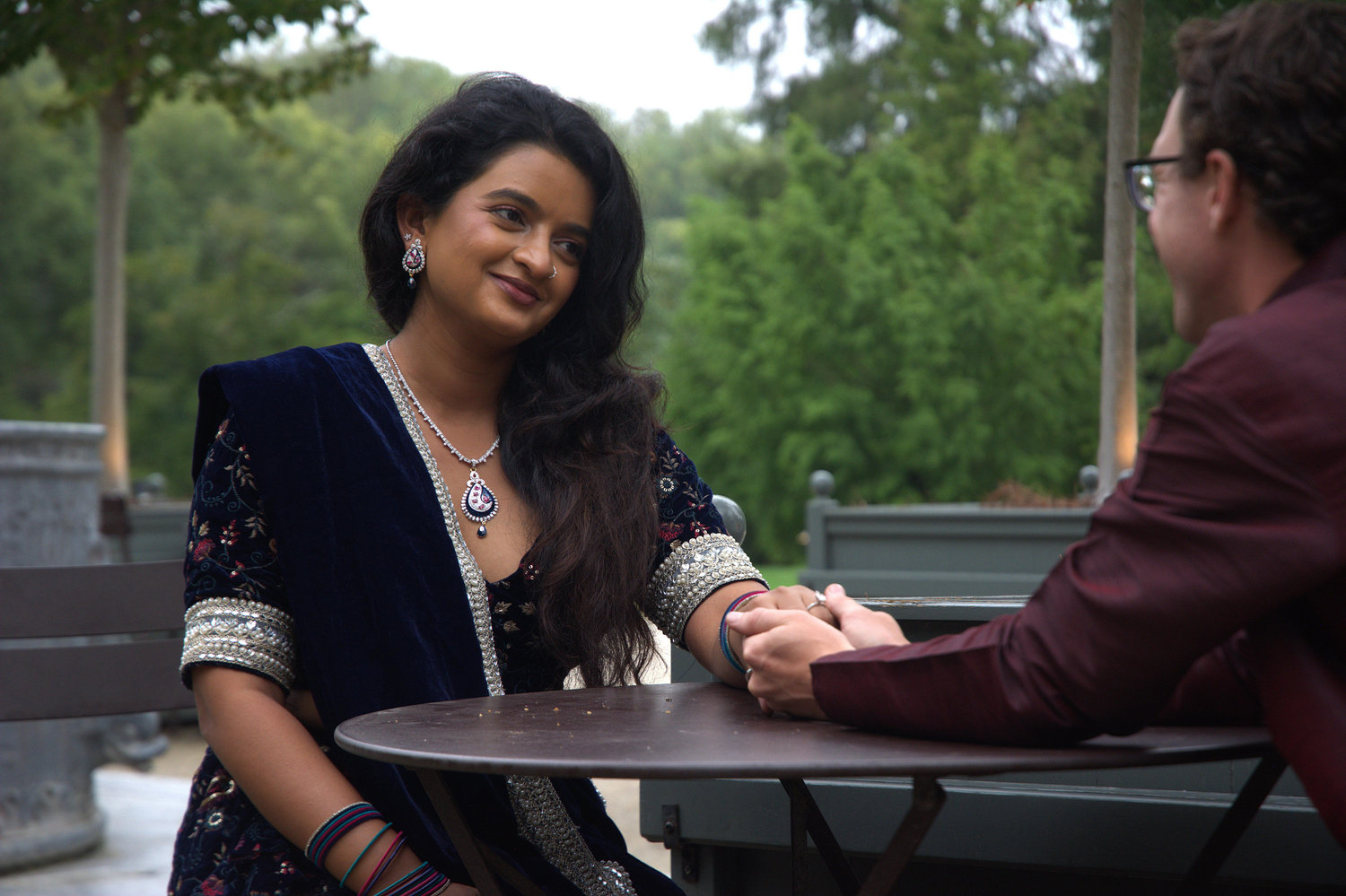
There are several different types of Indian outfits, and there is no specific requirements for what types of outfits should be worn to which events. In addition, guests are not expected to wear Indian attire. For the Wedding Ceremony, we encourage guests to wear outfits that are bright and bold and don't be afraid to accessorize (Avoid black, white, burgundy - suits of this color are fine) The dress code for the Reception will be formal evening attire Desi or American. (Please avoid silver, white.) Men's Outfits: Kurta-Pajama: The kurta is a loose-fitting, knee-length, long-sleeved tunic which has no cuffs or collar, open side-seams, and a central split in the neckline. With loose-fitting trousers called pajamas. Sherwani: Formal, longer garment with a structured silhouette, typically reaching below the knees. Women's Outfits: Salwar Kameez: A pair of trousers (called salwar). Customarily the pants are long and loose-fitting through the leg and narrow at the ankle/cuff. And are worn with a loose-fitting, knee-length, long-sleeved tunic (called a kameez). Women often wear a dupatta scarf/shawl with a salwar kameez. Lehenga Choli: Though there are many different styles of skirts and shirts/blouses in Indian fashion, the most popular and recognizable combination is probably the lehenga choli. Wearing the lehenga choli style involves pairing a lehenga (a long, often pattern or embroidered, flared skirt) with a choli (a blouse that is tightly fitted at the waist). Typically this style of Indian clothing for women is worn for a wedding and special occasions. It is also commonly paired with a chunri shawl/wrap. Sari (aka Saree): The sari is probably the most well-known and beloved item of Indian clothing for women. They are made by draping the length of fabric (from 3.5-9 feet long) over and around the body. Draping a saree can be a challenging process so please be aware before purchasing. Luckily nowadays most stores sell pre-draped sarees for convenience.
Question
I am excited to attend an Indian Wedding and want to shop for Indian Outfits, Where do I start?
Answer
There are several options for purchasing Indian attire in advance of the big day: Please avoid White, Black, Red, Burgundy and Gold for the morning ceremony. In Person: Oak Tree Rd, Iselin, NJ 08830 has a variety of Indian clothing shops where you can go in and try on outfits. I recommend the below two shops: Nazranaa - 16 Marconi Ave, Iselin, NJ 08830 Stylish Chakra Outlet - 1130 Somerset St, New Brunswick, NJ 08901 (please note: the entrance is on the side of a warehouse and this is an outlet location so it may be a little harder to find) Online: There are lots of new sites everyday selling Indian Attire here are some of my favorite options. Please choose custom sizing to get more tailored measurements and sizing up is always the better option as returns are a challenge for online sites. You can always get it tailored here to fit better. Budget Option: https://www.mirraw.com/ Standard - Higher Pricing Options: https://www.lashkaraa.com/ Kids: https://littleorhni.com/ Also on above websites There are other online stores as well however please read return policy, check sizing and reviews before any online purchase as it can vary by store and even clothing item. Do not hesitate to reach out to Malvika (551-206-9252) or Steve with any questions! Malvika may also have clothing items you can borrow or even keep upon request :)
Question
What time should I arrive for the Evening Reception?
Answer
Cocktail Hour begins at 5:00 PM with an open bar on the Vineyard Deck. Evening Reception will start promptly at 6:00 PM in the Vineyard Ballroom. After Party will be CASH BAR at 11 PM at Taste in the Venue.
Question
Additional Questions
Answer
Please feel free to text Malvika at 551-206-9252 for any questions you have leading up to the day!