Laura & Bradley
Things To Do
Cuauhnáhuac Regional Museum, Palacio de Cortés
Built in 1526, is the oldest conserved colonial-era civil structure in the continental Americas. The architecture is gothic mudejar, typical of the early 16th century colonial architecture. The building began as a fortified residence for conqueror Hernán Cortés and his aristocratic second wife, Doña Juana Zúñiga. It was built in 1526, over a Tlahuica Aztec tribute collection center, which was destroyed by the Spanish during the Conquest. Cortés replaced it with a personal residence to assert authority over the newly conquered peoples.
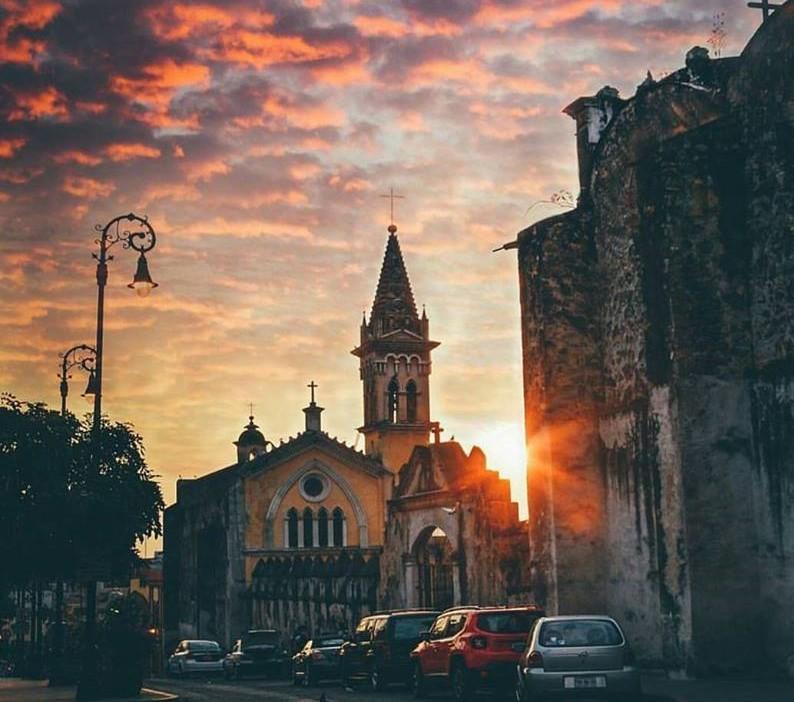
Catedral de Cuernavaca
Roman Catholic church of the Diocese of Cuernavaca, located in the city of Cuernavaca, Morelos, Mexico. The church and its surrounding monastery is one of the early 16th century monasteries in the vicinity of the Popocatepetl volcano, built initially for evangelization efforts of indigenous people after the Spanish conquest of the Aztec Empire. By the 18th century, the church of the monastery began to function as the parish church of the city and in the late 19th century, it was elevated to the rank of a cathedral.
Jardín Borda
The Borda Garden is one of the most famous monuments in Cuernavaca, it was the residence of rich families since the colonial times, it was chosen by its location beside the Cathedral of Cuernavaca and by its main road (now Morelos Avenue); this road comes from Acapulco, crosses Cuernavaca, Mexico City and ends in Veracruz. By this road passed the richness the Nao of the Orient brought to New Spain and also was the residence where many famous travelers were lodged. Don Jose Borda was the builder of the residence, he also donated to Taxco the beautiful Santa Prisca church and its Parvis Square. Don Jose de la Borda used this residence such as rest home and rest of silver caravans that came from Taxco to Mexico City.
La Casona Spencer
Museum, bookstore and restaurant
Bons Café
One of the nicest and cutest coffee shops and restaurant in Cuernavaca, located downtown Cuernavaca Morelos is a great option to have some fresh drinks and food if you´re visiting the Monuments in the area.
Casa Hidalgo
Good Restaurant to eat mexican food near downtown Cuernavaca
Tepoztlán
The town is a popular tourist destination near Mexico City. Is famous for the remains of El Tepozteco temple built on top of the nearby Tepozteco Mountain, as well as for the exotic ice cream flavors prepared by the townspeople If you like nature and hiking Tepoztlan is a good place to go to, you can climb the mountain and find the ruins on the top of the mountain, if you get hungry after climbing the Tepozteco is a good idea to visit the Market and find a variety of tacos, quesadillas, tlacoyos, huaraches,prehispanic food and beverages, hand made tortillas, natural fruit water and even crickets during cricket season. Don´t forget to visit the Church and its seeds mural and if you´re looking for arts and crafts go during the weekend and walk around its main street.
Tepoznieves
My favorite ice cream shop. They have ice cream and sorbet flavors you never imagined, and you can ask for a sample if you´re not sure of its flavor, the best part is you can have 2 scoops. Get one or two if you´re visiting Tepoztlan.
El Ciruelo
Delicious mexican food and amazing view of the mountains
Estacas
mineral spring, day spa and natural reserve located in the town of Tlaltizapan, in the state of Morelos, Mexico. The natural reserve is a protected area for plants and wildlife since 1998; the protected area has 652.17 hectares. Perfect to swim, snorkeling and hiking
Xochicalco
Xochicalco is an exceptionally well-preserved example of a fortified political, religious and commercial centre from the troubled period of 650–900 that followed the break-up of the great Mesoamerican states such as Teotihuacan, Monte Albán, Palenque and Tikal.
Museo Siqueiros
La Tallera used to be David Alfaro Siqueiros' workshop, and in recent years it has become one of the most important art spaces in Mexico.[1] It is located in the city of Cuernavaca, Morelos. In the artist's own words: "the space was born of an idea that Diego Rivera and I had since 1920, that is, the creation of a real workshop for Mural Painting; here the different techniques, materials, paintings, perspectives and geometric aspects will be rehearsed"
Mexico City Metropolitan Cathedral
The Metropolitan Cathedral of the Assumption of the Most Blessed Virgin Mary into Heavens (Spanish: Catedral Metropolitana de la Asunción de la Santísima Virgen María a los cielos) is the seat of the Roman Catholic Archdiocese of Mexico.[2] It is situated atop the former Aztec sacred precinct near the Templo Mayor on the northern side of the Plaza de la Constitución in Downtown Mexico City. The cathedral was built in sections from 1573 to 1813 around the original church that was constructed soon after the Spanish conquest of Tenochtitlan, eventually replacing it entirely. Spanish architect Claudio de Arciniega planned the construction, drawing inspiration from Gothic cathedrals in Spain.
Palacio de Bellas Artes
The first National Theater of Mexico was built in the late 19th century, but it was soon decided to tear this down in favor of a more opulent building in time for Centennial of the Mexican War of Independence in 1910. The initial design and construction was undertaken by Italian architect Adamo Boari in 1904, but complications arising from the soft subsoil and the political problem both before and during the Mexican Revolution, hindered then stopped construction completely by 1913. Construction began again in 1932 under Mexican architect Federico Mariscal and was completed in 1934. The exterior of the building is primarily Neoclassical and Art Nouveau and the interior is primarily Art Deco. The building is best known for its murals by Diego Rivera, Siqueiros and others, as well as the many exhibitions and theatrical performances its hosts, including the Ballet Folklórico de México.
Palacio Postal
The Palacio de Correos de México (Postal Palace of Mexico City) also known as the "Correo Mayor" (Main Post Office) is located in the historic center of Mexico City, on the Eje Central (Lazaro Cardenas) near the Palacio de Bellas Artes.[1] It was built in 1907, when the Post Office here became a separate government entity. Its design and construction was the most modern of the time, including a very eclectic style mixing several different traditions into a very complex design.[2][3] In the 1950s, the building was modified in a way that caused stress and damage, so when the 1985 earthquake struck Mexico City, this building was heavily damaged. In the 1990s, restoration work has brought the building back to original construction and appearance.
Templo Mayor Museum
The Templo Mayor (Spanish for "[the] Greater Temple") was the main temple of the Aztecs in their capital city of Tenochtitlan, which is now Mexico City. Its architectural style belongs to the late Postclassic period of Mesoamerica. The temple was called the Huēyi Teōcalli [we:ˈi teoːˈkali][1] in the Nahuatl language and dedicated simultaneously to two gods, Huitzilopochtli, god of war, and Tlaloc, god of rain and agriculture, each of which had a shrine at the top of the pyramid with separate staircases.
Cafe De Tacuba
Delicious mexican food in a historic building near downtown mexico city, great option to eat if youre visiting the monuments downtown.
Sanborns Madero Centro
The Casa de los Azulejos or "House of Tiles" is an 18th-century palace in Mexico City, built by the Count del Valle de Orizaba family. The building is distinguished by its facade, which is covered on three sides by blue and white tile of Puebla state. The palace remained in private hands until near the end of the 19th century. It changed hands several times before being bought by the Sanborns brothers who expanded their soda fountain/drugstore business into one of the best-recognized restaurant chains in Mexico. The house today serves as their flagship restaurant.
Gran Hotel Ciudad de México
Built during the peak of the Porfiriato regime and located ideally at the heart of the capital, the “Gran Hotel Ciudad de México” in Mexico City is one of the most fascinating corners of this great metropolis. Its impressive Art Nouveau Architecture and every single detail in its decoration, from its luxurious Louis XV Chandelier in the entrance to its emblematic Tiffany Stained Glass, one of the four biggest in the world, will make you feel part of five centuries of history, staying in the most iconic hotel of the city in a classic luxury atmosphere, where every detail has been curated and with a unique service. Beautiful place to eat while visiting downtown mexico city
Nacional Monte de Piedad Headquarters
The Nacional Monte de Piedad is a not-for-profit institution and pawnshop whose main office is located just off the Zócalo, or main plaza of Mexico City. It was established between 1774 and 1777 by Don Pedro Romero de Terreros, the Count of Regla as part of a movement to provide interest-free or low-interest loans to the poor. It was recognized as a national charity in 1927 by the Mexican government.[1] In the first decade of the 21st century, it is a fast-growing institution, with over 200 branches all over Mexico and plans to open a branch in every Mexican city. Despite having gone through considerable modifications, it once was part of the estate owned by Hernán Cortés (1485–1547). In the area were the "Old Houses" of Moctezuma II's father, Axayacatl (1453?-1483).
Paseo de la Reforma
Paseo de la Reforma is a wide avenue that runs diagonally across the heart of Mexico City. It was designed by Ferdinand von Rosenzweig in the 1860s and modeled after the great boulevards of Europe,[1] such as the Ringstraße in Vienna and the Champs-Élysées in Paris. After the French intervention in Mexico overthrew the constitutional President Benito Juárez, the newly crowned Emperor Maximilian made his mark on the conquered city. He commissioned a grand avenue linking the city center with his imperial residence, Chapultepec Castle, which was then on the southwestern edge of town.
Museo Nacional de Antropología
National Museum of Anthropology Musee National Anthropologie-Entree.jpg Museum's front entrance, depicting: MUSEO NACIONAL DE ANTROPOLOGÍA Established 1964 Location Mexico City, Mexico Coordinates 19.426°N 99.186°W Type Archaeology museum Visitors 2,336,115 (2017)[1] Public transit access Auditorio Station (line 7) Website www.mna.inah.gob.mx The National Museum of Anthropology (Spanish: Museo Nacional de Antropología, MNA) is a national museum of Mexico. It is the largest and most visited museum in Mexico. Located in the area between Paseo de la Reforma and Mahatma Gandhi Street within Chapultepec Park in Mexico City,[2] the museum contains significant archaeological and anthropological artifacts from Mexico's pre-Columbian heritage, such as the Stone of the Sun (or the Aztec calendar stone) and the Aztec Xochipilli statue.
Chapultepec Castle
It is located in the middle of Chapultepec Park in Mexico City at a height of 2,325 meters (7,628 ft) above sea level. The site of the hill was a sacred place for Aztecs, and the buildings atop it have served several purposes during its history, including that of Military Academy, Imperial residence, Presidential home, observatory, and presently, the National Museum of History.[3] It is the only royal castle in the Americas.[4] It was built at the time of the Viceroyalty as summer house for the viceroy. It was given various uses, from the gunpowder warehouse to the military academy in 1841. It was also used as the official residence of a sovereign: the Mexican Emperor Maximilian I, and his consort Empress Carlota, lived there during the Second Mexican Empire. The first Emperor Agustín de Iturbide did not serve long enough to establish an imperial residence.
Coyoacán
The name comes from Nahuatl means “place of coyotes,” which was dominated by the Tepanec people. Against Aztec domination, these people welcomed Hernán Cortés and the Spanish, who used the area as a headquarters during the Spanish conquest of the Aztec Empire and made it the first capital of New Spain between 1521 and 1523. Consisting now of 29 blocks, it is one of the oldest neighborhoods in Mexico City, located 10 km south of the Zocalo (main square) of Mexico City. This area is filled with narrow cobblestone streets and small plazas, which were laid out during the colonial period. Food there is delicious and you can spend the whole day eating, my favourite place is the food market; If you decide to eat there I recommend the quesadillas, sopes and the esquites in the evening, for desert you can go to helados siberia or some churros and hot chocolate at one of the many coffee shops around the area.
Museo Casa Estudio Diego Rivera and Frida Kahlo
House-Studio of Diego Rivera and Frida Kahlo is one of the most important cultural landmarks of Mexico City, both for being the place of residence and studios of two of the most important artists of the twentieth century, as well as being the first construction of the modern movement in the American continent.
Casa Estudio Luis Barragán
FOR THE ARCHITECTS: I recommend to visit this place if you´re interested in mexican architecture, however it might be hard to get there, make sure you make a reservation first and don´t bother on bringing your cammera, taking pictures is forbiden
La Condesa
Condesa–Roma, one of the most architecturally significant and bastion of the creative communities of the city. Features a large number of restaurants, nightclubs and shops, definetely a must go.
University City UNAM
The National Autonomous University of Mexico (Spanish: Universidad Nacional Autónoma de México, - literal translation: Autonomous National University of Mexico, UNAM) is a public research university in Mexico. It ranks highly in world rankings based on the university's extensive research and innovation[10][11][8][12][13]. UNAM's campus is a UNESCO World Heritage site that was designed by some of Mexico's best-known architects of the 20th century. Murals in the main campus were painted by some of the most recognized artists in Mexican history, such as Diego Rivera and David Alfaro Siqueiros.
Lake Xochimilco
These lakes were the home of many Mesoamerican cultures, including the Teotihuacanos, the Toltecs, and the Aztecs. Due to its shallow waters and the freshwater springs that lined the south shore of the lake, Lake Xochimilco was the center of Chinampa agriculture in the centuries of the pre-Columbian era. After the Spanish conquest of Mexico in 1521, the Spaniards' destruction of the dams and sluice gates in the 1520s, as well as the sharp declines in the native population, led to the near abandonment of the Chinampa gardens. Xochimilco Lake remnants are part of large urban parks in Mexico City, with water-based and land recreation. Colourful trajineras (rafts) take groups of people on the remaining canals for pleasure.
San Juan Teotihuacán
Apart from the pyramids, Teotihuacan is also anthropologically significant for its complex, multi-family residential compounds, the Avenue of the Dead and its vibrant murals that have been exceptionally well-preserved. Additionally, Teotihuacan exported fine obsidian tools that are found throughout Mesoamerica.