

Things To Do
The Resource Exchange
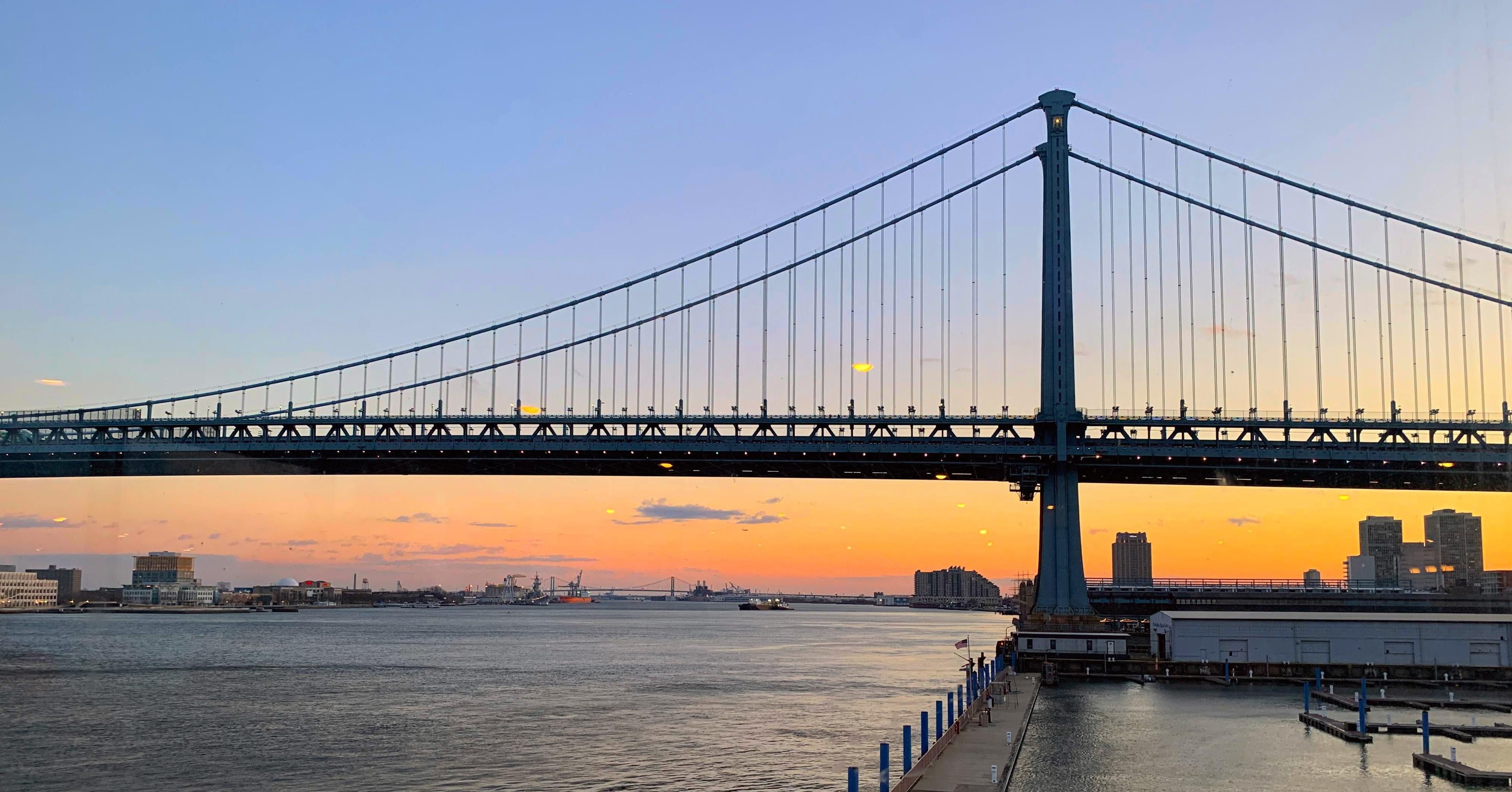
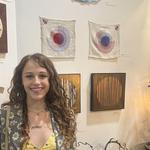
Check out two of Kira’s embroideries (top right) that are hanging with other local artists’ work in the gallery space at this art supply and decor resale store. Resource Exchange is a nonprofit shop, gallery, and workshop space that focuses on creative reuse, recycling, and resource conservation. This is in a fun neighborhood called Fishtown with lots to do. Head to Frankford Avenue for restaurants and shops, Dottie's Donuts has great vegan donuts, and a little further south are some of our favorite restaurants: Pizzeria Beddia (Italian style pizza and awesome cocktails), Frankford Hall (fun German beer garden), and Fette San (our favorite barbecue in the city).
Philadelphia Murals
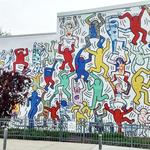
Philadelphia is home to more than 4,000 murals and is known as the “Mural Capital of the World.” Have a scroll through the linked website with a good overview of various categories of murals and where to find them. Every neighborhood in Philadelphia is bound to have public art so wherever you find yourself in the city for Kira and Mason’s big day, open google maps and see what’s nearby. One of them in South Philly’s Point Breeze neighborhood is Keith Haring’s only surviving in situ collaborative public mural called “We The Youth” painted with high school students from Philly and New York in 1987 to commemorate the bicentennial of the United States Constitution! It was never intended to be permanent however, it has undergone several restorations over the years as it is quite beloved.
Eastern State Penitentiary
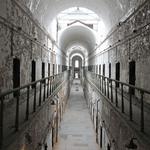
Opened in 1829, Eastern State Penitentiary has a complex history. Originally intended to encourage its prisoners to feel shame for their crimes through hard labor, Eastern State now tells the story of criminal justice reform in America. They are committed to educating visitors about the past, present and future of our prison system. It’s an architectural wonder, paranormal hotbed, and museum full of exhibits, artwork and materials for all visitors. This one comes highly recommended by Kira and Mason! It was one of their favorite local museums in their old neighborhood (Fairmount/Brewerytown).
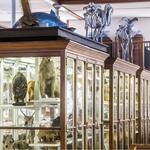
Wagner Free Institute of Science
Have you ever dreamed of stepping back in time and exploring a 19th century natural history collection? I have great news for you. You can do that in 2025 at the Wagner Free Institute of Science! Started by a naturalist William Wagner who hosted free, informal lectures in his house talking about his personal collection. The meetings grew so rapidly that he had a building constructed to host a larger audience as well as house his specimens. From the Institute’s completion in 1865 to his death in 1885, Wagner regularly held free lectures for anyone to attend. Biologist Joseph Leidy was then brought on as head of the Institute and he greatly expanded the collection, organizing it based on Darwin’s theory of evolution and that original order has been preserved to this day! Live your dark academia fantasies and learn about how science museums were.
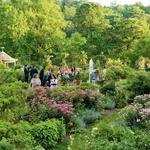
Morris Arboretum & Gardens of the University of Pennsylvania
Connected to the University of Pennsylvania is a 92-acre arboretum featuring outdoor sculptures, extensive gardens, and activities for all ages. It is home to Philadelphia’s oldest trees, rare plants, and so much more. There is an event planned for Sunday October 12 at 3 pm, the day after the wedding, called Roots & Remembrance: Reclaiming Plant Knowledge & Cultural Heritage where horticulturalists and historians will explore ancestral plant knowledge.
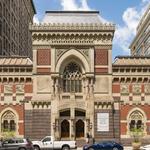
Pennsylvania Academy of the Fine Arts
PAFA was founded in 1805 as the first museum and school of fine arts in the country. Beginning in the 1840s, PAFA has provided women artists with exclusive use of the sculpture gallery for their own works during specific days of the week, an incremental step for supporting women in the field. In the 1860s, female students could take anatomy drawing classes and access the school’s library which few other institutions allowed. The current building pictured below opened in 1876 as part of the Philadelphia Exposition and is a rare surviving example of Victorian architecture influenced by Second Empire, Gothic Revival and Renaissance Revival styles. PAFA only recently stopped granting bachelor’s and master’s degrees in 2024 but is still offering continuing education, certificate programs, and a bachelor’s in conjunction with the University of Pennsylvania.
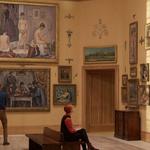
Barnes Foundation
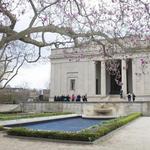
These next two, The Barnes Foundation and The Rodin Museum are directly across the street from one another! Albert C. Barnes started the foundation in 1922 with the goal of teaching people how to look at and think about art. The guy led an interesting life, and made most of his money manufacturing antiseptics but required that his factory workers, mostly People of Color, take art appreciation classes at work and stopped production for about two hours each day so they could discuss painting and philosophy. As he rapidly collected works of art, Barnes purchased some land in Merion, PA to offer free art appreciation courses. He was quite progressive and collected not only well-known artists like Cezanne, Renoir, Matisse, etc., but also African masks and indigenous art and displayed them together. The collection moved to Center City in Philadelphia in 2012 and is dedicated to art education and outreach for all ages.
Rodin Museum
The famous French sculptor chose Philadelphia’s 1876 Centennial Exposition as the first display of his works in the United States. He was disappointed his sculptures didn’t receive much fanfare at the exposition and likely never would have guessed Philadelphia would one day hold the largest collection of Rodin’s work outside of the Musée Rodin in Paris. The museum and its collection are the result of one of Philly’s most prominent philanthropists, Jules E. Mastbaum, who started collecting Rodin’s sculptures after a trip to Paris in the 1920s. He amassed more than 200 sculptures and 600 drawings. The collection was transferred to the City of Philadelphia and opened in 1929 and is managed by the Philadelphia Museum of Art.
Temple University Shoe Museum
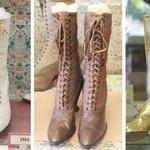
There’s a shoe museum in Temple University’s School of Podiatry! There’s about 1,000 shoes from ancient Egypt to the present and you can see them for free. You only need to reserve a time slot in advance to tour the museum on the website: They are open Monday-Friday 9am-5pm.
Philadelphia Museum of Art
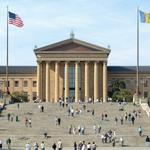
Started in 1874, the museum began with the Great Centennial Exhibition in Fairmount Park. They have since extended their collection to over 200,000 items. Their focus is broad with collections of Black, queer, historical, and contemporary artworks/objects. Information about hours and admission can be found here. It also features the iconic Rocky steps, along with a statue of him nearby.
JFK Plaza (Love Park)
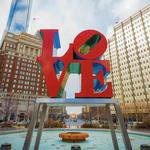
Philadelphia is known as the City of Brotherly Love and that sentiment is embodied in Robert Indiana’s iconic LOVE sculpture which now sits at the center of Love Park near City Hall. The sculpture is based on a painting Indiana did in 1968 and he translated the design into a large 3-D form for the U.S. Bicentennial in 1976 and lent it to the city of Philadelphia. The aluminum structure was then purchased by a local businessman and donated to the city. Fun fact: Kira and Mason have a Lego LOVE sculpture of their own in their apartment!
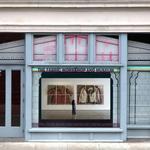
The Fabric Workshop and Museum
The FWM, a short walk from Love Park and City Hall, is dedicated to fostering contemporary artists as they experiment with new mediums and materials in their artwork, most notably, textiles. Founded in 1977 by Marion “Kippy” Boulton Stroud, the workshop/museum is known for innovative exhibitions and encouraging artists to try techniques and media that are unfamiliar to them. FWM offers education for metropolitan populations of all ages, training for textile industry workers, and a fabrication workshop for their acclaimed Artists in Residence program. They currently have two exhibits that recently opened. One is “Living Temple: The World of Moki Cherry,” a retrospective on the Swedish textile artist. There is also “Lisa Alvarado: Talisman for a Theater of Resilience,” which focuses on Alvarado’s multisensory artwork that combines visual art and vibrational sounds. Admission is free with a suggested donation of $5. One of Kira's favorites!
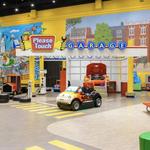
Please Touch Museum
Great for kids of all ages and a fun, low key museum experience for adult! Another item on this list with some tie to the 1876 Centennial Exposition, the museum now sits in the historic Memorial Hall which once served as the exposition’s main building. The Please Touch Museum is all about hands-on learning for kids. There are a number of temporary and permanent exhibits as well as a calendar full of events. The events are ticketed and need to be scheduled in advance separate from the regular admission price. The outside is a very classic Victorian facade and the inside has such variation with play areas that look like cartoon cities mixed with areas that have typical museum exhibit vibes. It’s extremely cute and looks like a lot of fun!