FAQs
Question
What if I can't make it to Italy but still want to celebrate?
Answer
We know a destination wedding is a big ask, and we truly appreciate any effort to join us. If travel isn’t possible, please know we completely understand. We will also be celebrating closer to home with a gathering in Austin in Spring 2027 after our civil ceremony, and we hope to celebrate together there! Details on the Austin Reception to come.
Question
Which airport should we fly into?
Answer
Villa Pitiana is located near the small village of Donnini. The closest airport is the Florence airport, about 60’ kilometers (45 minute drive). The Villa is also 90 kilometers (1 hour 35 minute drive) from Pisa Airport. The Bologna airport is also an option (1 hour 45 minute drive away from the Villa). You can also fly into the airport in Rome and take a train from Rome to Florence, but will still need to arrange a car or taxi to get to the Villa from Florence. Trenitalia (Le Frecce) and Italo are two high speed train operators that feature routes from Rome to Florence (its around 1.25 to 1.50 hours on the train). We recommend booking refundable tickets in advance (in case of any flight delays). We've taken trains using both companies and they're great! Keep in mind, driving a rental car from Rome to the Villa would take about 3 hours, which is why we recommend train as the fastest route from Rome.
Question
How do we get to the Villa from the Florence airport?
Answer
Taxi, Private Driver, or Car Rental Taxi - The cost ranges from $100-150 euro, so we recommend carpooling with other guests so you can divide the cost. https://apptaxi.it/en/florence/ https://www.4242.it/ no English version https://www.4390.it/ no English version Please note - both in Florence airport and in Florence central station there are TAXI STATIONS available for travelers. The situation is different for the return journey: it is not possible to call a taxi from Florence at the last minute, as Florence is about 45 minutes away. A taxi must be booked largely in advance. So, we recommend booking your taxi to leave the Villa on check out day in advance (at least a week or so before). Please also keep in mind that Florence taxis will not be available for transfers from S. Ellero station to Villa Pitiana. S. Ellero is a very small commuter station, and there are no taxis waiting there. Other Great Alternatives: Car rental – maximum flexibility and parking at the Villa is free of charge. Adrian and Katherine rented a car when they visited the Villa for the first time, it was a simple drive from the Florence airport to the Villa and back. There are quick youtube videos that can show you what the different Italian street signs mean, etc. Private Car hire with driver* – local drivers with private 7 seats vans – higher cost but possibility to share with other guests – MUST be reserved in advance – as soon as possible * MIRIAM AND ERIKA TAXI miriam.service@yahoo.com FRANCO VARVARITO +39 338 337 6959 – WhatsApp only **We are also looking into arranging a shuttle bus for guests that arrive in Florence on the same day, details to come.
Question
In need of a travel planner? Use Molly Strange!
Answer
My good friend is a travel agent and I've used her for many occasions! If you want to book certain tours or hotels booked she can send you links or handle it for you. She can also do in depth travel planning for a fee (and it's very worth it!!). https://axustravelapp.com/shared/itinerary/a018d4f1-6791-40c4-9b4c-f8f4a62f3f2c
Question
Should I update my passport?
Answer
While 3 months is the official legal requirement, the U.S. Department of State and airlines strongly recommend that your passport has at least 6 months of remaining validity to prevent unexpected issues. Apply for a new adult passport here: https://www.usa.gov/apply-adult-passport Renew your adult passport here: https://www.usa.gov/renew-adult-passport --- Do I need a travel visa? No Tourist Visa Required: U.S. citizens can stay in Italy (and the rest of the Schengen Area) for up to 90 days within any 180-day period without a visa.
Question
Can I expect strong wifi in my room?
Answer
Because Villa Pitiana is located in the countryside and features historic architecture dating back to the 16th–18th centuries, Wi-Fi service in some guest rooms may be a bit less robust than what we’re accustomed to in the U.S. That said, connectivity is strongest in the main lobby area, which offers comfortable seating and workspace for anyone who needs to use a laptop or stay connected.
Question
Can we bring our kids?
Answer
While we love your little ones, our wedding ceremony and reception are an adults-only celebration.
Question
What's the history of the Villa? (Part 1)
Answer
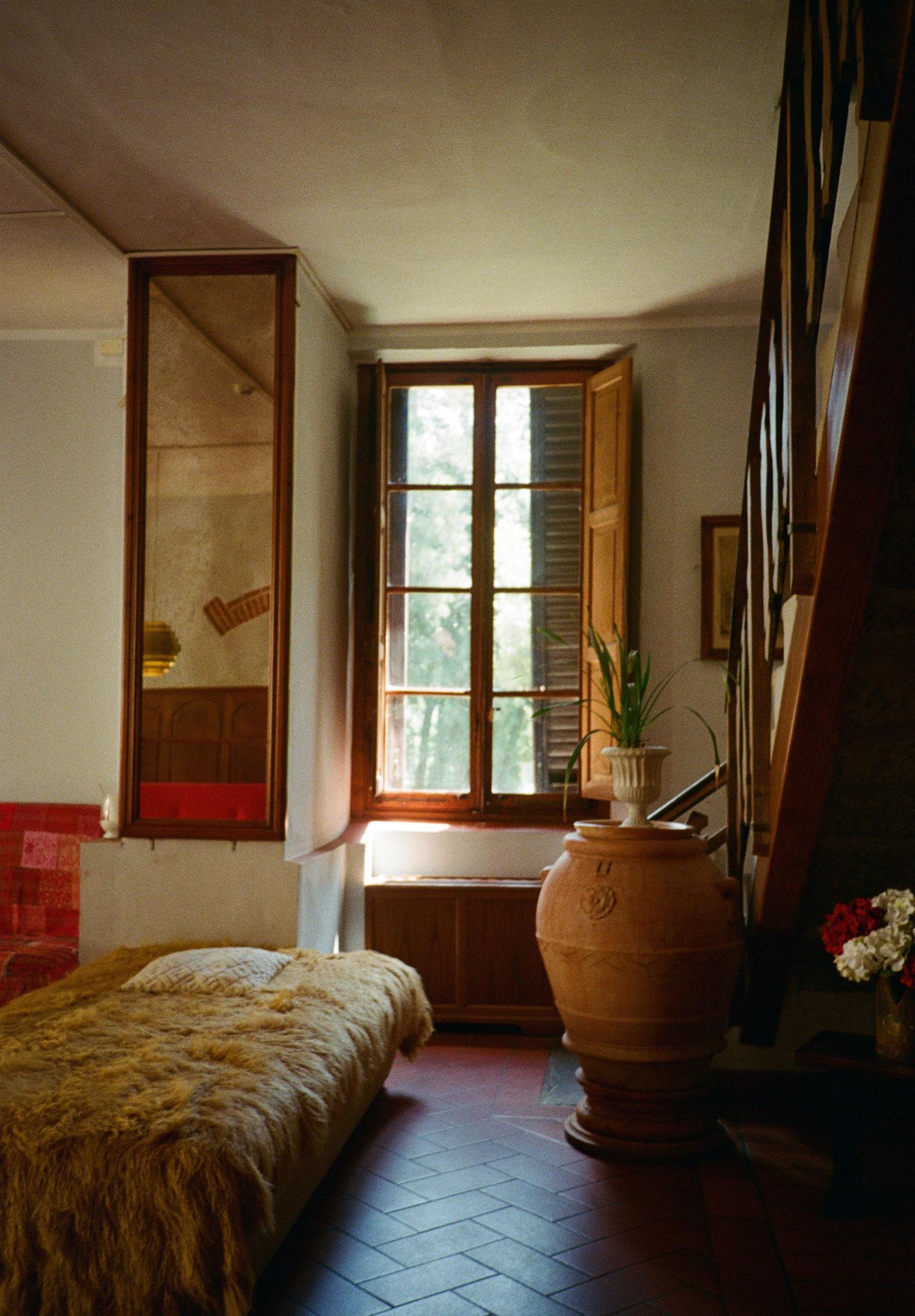
Villa Pitiana is situated at 430m above sea level and its imposing structure divides the last olive groves of Valdarno from the centuries old trees of the Vallombrosa Forest. On 3rd July 1039 the Abbess Itta of the convent of S. Ellero donated the land in Vallombrosa to S. Giovanni Gualberto but to maintain them had to add a farm with vegetable garden and vineyards in Pitiana. Halfway through the 13th century Pitiana’s strategic position made it a bone of contention in the Florentine Guelph-Ghibelline struggles. The oldest part of Villa Pitiana, dating back to the 14th century, is certainly a “casa da signore” as these fortified buildings were called, characterised by the presence of a high tower not unlike the tower-houses of S.Gimignano. In the summer of 1483 Lorenzo il Magnifico de’ Medici tried in vain to purchase Villa Pitiana from General Biagio Milanesi. From the 15th to the 17th centuries, Tuscan agriculture underwent one of its most difficult periods. Political power was now under the control of merchants and bankers and commercial activity was subsidised to the detriment of farming. Always in this period there was a significant trend to transform the tower-houses into private villas.
Question
History of Villa Pitiana (Part 2)
Answer
Pitiana underwent a vast restoration in the Renaissance: in 1610, as shown by the date on a slab of stone, the rear wing was added with its three-floor facade. From the same period is the late-Mannerist coat-of-arms with the staff of S. Giovanni Gualberto and the mitre (symbol of the bishopric dignity of the abbot of Vallombrosa) in the larger courtyard of Pitiana. In 1808 when Tuscany was annexed to the Napoleonic Empire, the Abbey of Vallombrosa was suppressed and all its possessions including Pitiana were alienated to private owners to replenish the state coffers – except Vallombrosa Forest which remained state property. Eventually, Villa Pitiana passed into the possession of the Counts Grottanelli, name still mentioned in many old maps. At the end of the 19th century Pitiana farm was definitively transformed into a villa with its splendid facade, although the rear part continued until recent times to be a farmhouse (Fattoria). The new part is, architecturally speaking, still in the academic style of Renaissance origin influenced by the work designed and carried out in Florence by Giuseppe Poggi towards 1865-70. In 1931 other work was carried out as recorded in writing on the right portal of the entrance hall. It was probably the conclusion of the work begun in 1897 with the restoration of medieval parts and interior modifications.
Question
What's the Park?
Answer
Villa Pitiana park originates from the 19th century renovations which changed the estate from a farmhouse to a Villa. The arboretum is rich of non-native trees, as typical of English arboretums during the end of the 19th century. Located inside the park surrounding the Villa, the arboretum is one of the most important in Tuscany together with the one in Vallombrosa. The park is also rich of herbs typical of the area: Milfoil, Sorrel, Asparagus fern, Camomile, Sow-thistle, Dandelion, Juniper, Mint, Calamint, Burnet. A list of the major trees is available at the Reception, in addition to a wide range of documents on plant species at your disposal in the Villa library.