Things To Do

Corcovado
Christ the Redeemer is a monumental statue of Jesus Christ located in Rio de Janeiro, Brazil. It stands atop the Corcovado Mountain in the Tijuca Forest National Park, overlooking the city. The statue is an iconic symbol of both Rio de Janeiro and Brazil as a whole and is considered one of the Seven New Wonders of the Modern World. The statue’s elevated position offers panoramic views of Rio de Janeiro, including famous landmarks such as Sugarloaf Mountain and Copacabana Beach. How to visit Christ the Redeemer: The best way to arrive is by going to Corcovado train station via uber/taxi to the Cosme Velho neighborhood. To purchase train tickets in advance please use this link https://www.tremdocorcovado.rio/.

Sugarloaf Mountain
Sugarloaf Mountain or Pão de Açúcar is a striking peak located in Rio de Janeiro, Brazil. It is one of the city's most recognizable landmarks and offers some of the most spectacular views of the surrounding area. How to arrive: The best way to go is by taking two cable cars or "Bondinho do Pão de Açúcar." You can Uber or take a taxi straight to the ground station by entering “Sugarloaf cable car” into the address bar. The first cable car leaves from the ground station in Praia Vermelha to Pão de Açúcar, with a stop at Morro da Urca, a smaller peak that nestles between the two points. To purchase tickets in advance please use this link: https://bondinho.com.br/

Jardim Botânico
The Jardim Botânico or Botanical Garden in Rio de Janeiro is one of the oldest botanical gardens in the world and is located in the southern part of the city. The garden houses more than 6,500 species of plants, including a remarkable array of tropical and subtropical species. Some of its main attractions include the greenhouse, the Japanese garden and the lagoon. To purchase tickets in advance please use this link: https://jbrj.eleventickets.com/#!/home

Parque Lage
Parque Lage is a picturesque public park located in the Jardim Botânico neighborhood of Rio de Janeiro, Brazil. The park covers approximately 128 acres of beautifully landscaped gardens, several ponds, fountains and a well maintained walking trail. The park is free to the public and features a charming cafe where visitors can relax and enjoy refreshments while taking in the beautiful surroundings.

Museu do Amanhã
The Museu do Amanhã (Museum of Tomorrow) is a striking and innovative science museum located in Rio de Janeiro, Brazil. Opened in December 2015, the museum is known for its futuristic design, interactive exhibits, and focus on sustainability and the future of humanity. It is situated in the revitalized Porto Maravilha area of Rio de Janeiro, near the waterfront and the iconic Praça Mauá. Its location provides stunning views of Guanabara Bay and the surrounding cityscape.

Leblon Beach
Leblon Beach is one of Rio de Janeiro's most prestigious and picturesque beaches, located in the upscale neighborhood of Leblon in the southern zone of the city. The beach offers stunning views of the surrounding natural beauty, including the iconic Dois Irmãos (Two Brothers) mountains that rise majestically behind the neighborhood. The setting sun creates beautiful vistas, making it a popular spot for watching the sunset.

Copacabana Beach
Copacabana Beach is one of the most iconic and famous beaches in Rio de Janeiro, Brazil, renowned for its vibrant atmosphere, stunning natural beauty, and cultural significance. The beach offers picturesque views of the surrounding landscape, including the dramatic peaks of the Sugarloaf Mountain and the Morro do Leme. The beach features a famous black-and-white patterned sidewalk called calçadão, designed by the landscape architect Roberto Burle Marx.

Forte de Copacabana
The Copacabana fort is a historic military fortification situated at the southern end of Copacabana Beach in Rio de Janeiro, Brazil. This landmark offers both historical significance and panoramic views of the city and coastline. The fort is easily accessible from Copacabana Beach and is open to the public. The Copacabana fort houses the famous Confeitaria Colombo, which is a cafe celebrated for its traditional Brazilian and Portuguese pastries and cuisine.
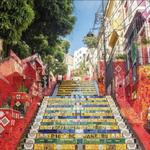
Escadaria Selarón
The Escadaria Selarón, also known as the Selarón Steps, is situated in the neighborhoods of Santa Teresa and Lapa. The colorful mosaic tiles staircase is considered a major cultural landmark. The mosaics include patterns and symbols that reflect Brazilian culture, as well as a mix of abstract designs. Many tiles feature Brazilian flags, indigenous motifs, and symbolic elements that represent the country’s diverse heritage.