Indian Attire
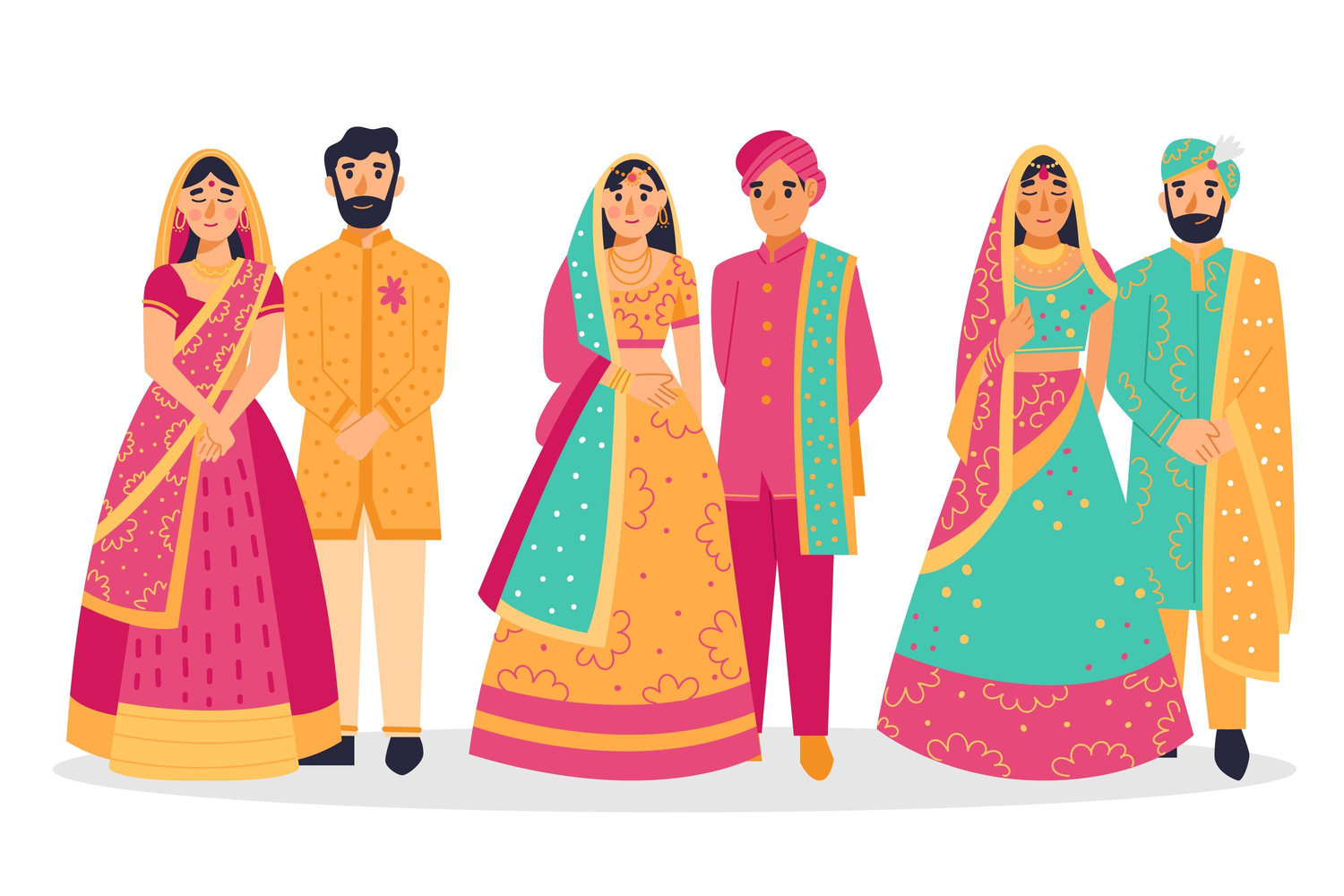
Lashkaraa
House of Indya
Mirraw
Saree
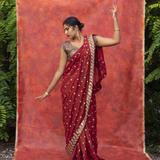
For women: A long piece of fabric, usually around 6-9 yards, draped elegantly around the body, often worn with a blouse and petticoat. There are pre-stitched sarees, which would be more like a skirt and blouse. I recommend pre-stitched so you don't have to worry about wrapping yourself.
Lehenga Choli
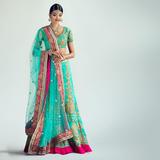
For women: A lehenga is a long, pleated skirt paired with a fitted blouse called a choli. This ensemble is often worn with a dupatta (a long scarf or shawl) draped over the shoulders.
Anarkali Suit
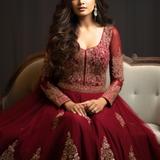
For women: A floor-length frock-style dress with a fitted bodice and a flared skirt. It is often heavily embellished and comes with a matching dupatta.
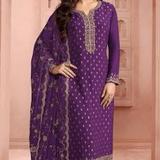
Salwar Kameez
For women: A traditional outfit consisting of a long tunic (kameez) paired with loose trousers (salwar) and a matching scarf or shawl (dupatta).
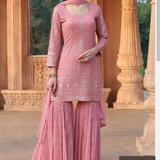
Sharara or Gharara
For women: These are wide-legged trousers with a flared, tiered skirt effect, typically worn with a long kurta or blouse.
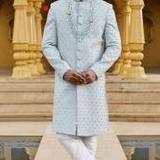
Sherwani or Achkan
For men: A long coat-like garment, often elaborately embroidered. It is paired with a churidar (tightly fitting pants) or straight-leg trousers.
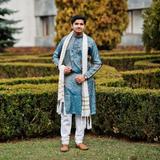
Kurta Pajama
For men: A kurta is a knee-length tunic that is worn with a pajama (loose-fitting trousers) or churidar.
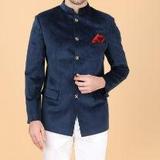
Bandhgala or Jodhpuri Suit
For men: A formal jacket-style garment similar to a suit jacket but with a traditional Indian twist. It’s typically worn with trousers and is a popular choice for a more contemporary wedding look.
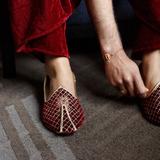
Juttis/Mojaris
Traditional footwear, often embellished, worn by both men and women during weddings. American style dress shoes, flats, and heels are also commonly worn and acceptable. Out of all the Indian attire I would say this is the least "needed" but if you wish to fully dive into the culture you are welcome to wear Indian-style shoes as well.