Jewish Traditions

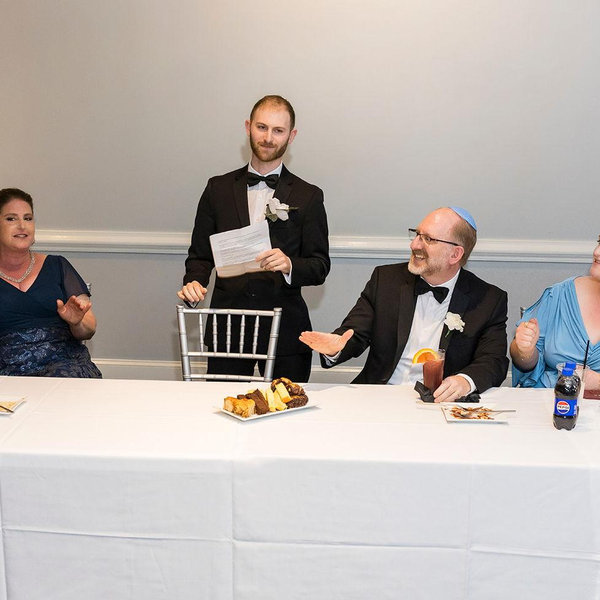
Tisch
Pre-Chuppah Celebration
The Tisch is a lively pre-ceremony gathering for the bride and groom, held separately. During this tradition, Jacob and Hadassah will be surrounded by friends and family, sharing words of Torah, singing joyous songs, and enjoying food and drink. Guests will have the opportunity to attend both Tisch's if they so choose. The atmosphere is joyful and full of energy.

Kabbalat Panim
Pre-Chuppah Reception
The Kabbalat Panim (Hebrew for “receiving the faces”) ceremony is a tradition centered around the bride. On the wedding day, Jewish custom likens the bride and groom to a king and queen. In recognition of this, Hadassah sits in a throne-like chair during this time, where she is greeted and wished well by guests.
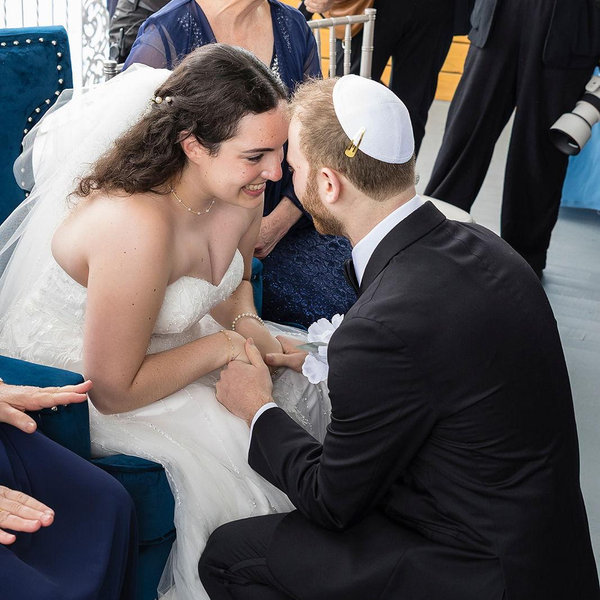
Bedeken
Veiling Ceremony
As the Kabbalat Panim and Jacob's Tisch wind down, Jacob will be escorted over to Hadassah through song and dance to perform the Bedeken. Inspired by the biblical story of Jacob, who did not see his bride’s face beforehand and mistakenly married his betrothed's sister, Leah, Jacob will lower Hadassah's veil over her face. This will set Hadassah apart from all others on the special day.
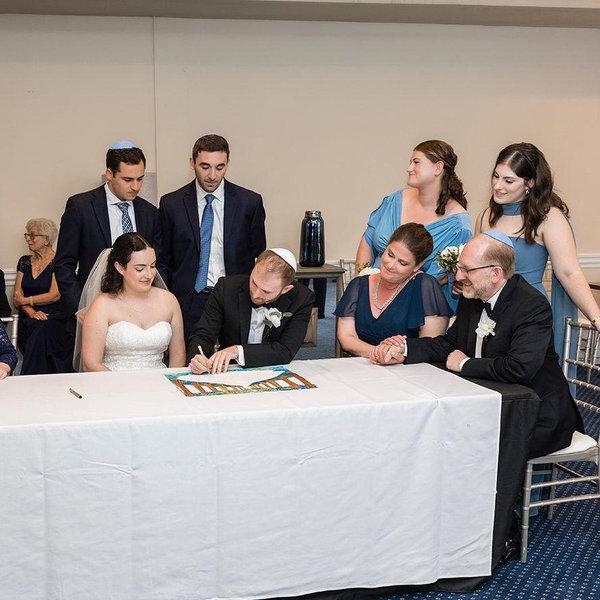
Ketubah
The Jewish Marriage Contract
At the end of the Bedeken, Jacob and Hadassah will sign their Ketubah. The Ketubah is a Jewish marriage contract with ancient roots. Jacob and Hadassah's Ketubah highlights their commitment to each other. It will be signed before the wedding ceremony by two witnesses.
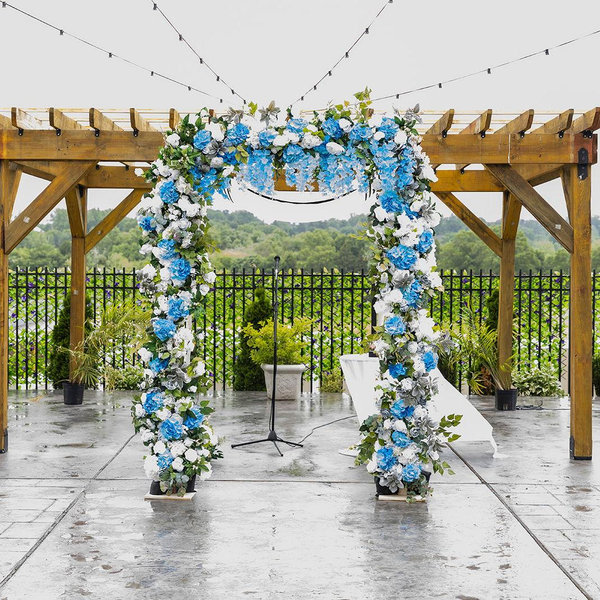
The Chuppah
Wedding Canopy
The ceremony takes place under a wedding canopy on four posts, known as the Chuppah. The Chuppah symbolizes the home that Jacob and Hadassah will create together in their married life. Its open walls signify that family and friends, old and new, will always be welcome.
Kittel
White Robe
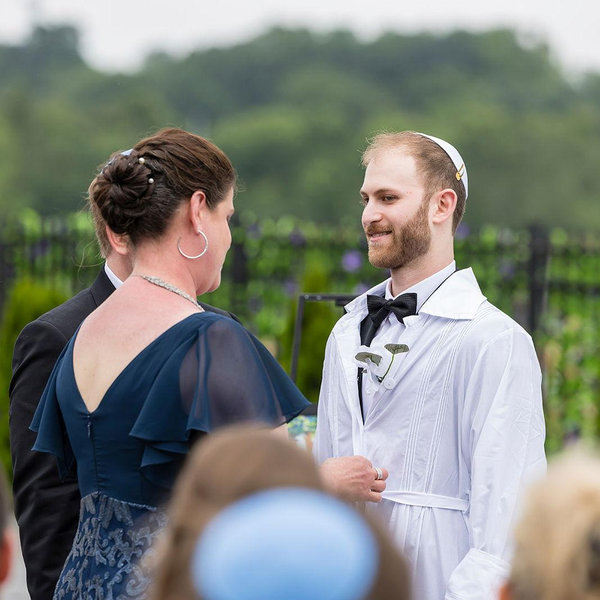
Once they reach the chuppah, a white robe called a Kittel will be placed on Jacob by his parents. The kittel symbolizes purity, humility, and the desire to approach important events with a clean slate. It represents Jacob's commitment to starting his married life with a pure and humble heart.
Hakafot
Circling
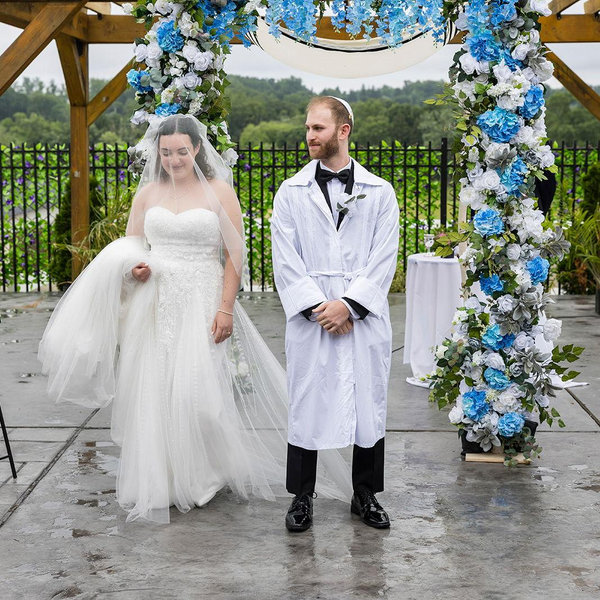
It is traditional for the bride to circle the groom seven times at the beginning of the wedding ceremony, symbolically building a wall of love around their relationship. Seven represents the most sacred of all numbers in Judaism and also symbolizes the wholeness and completeness that they cannot attain separately.
Erusin
Blessing over Wine & Ring Exchange
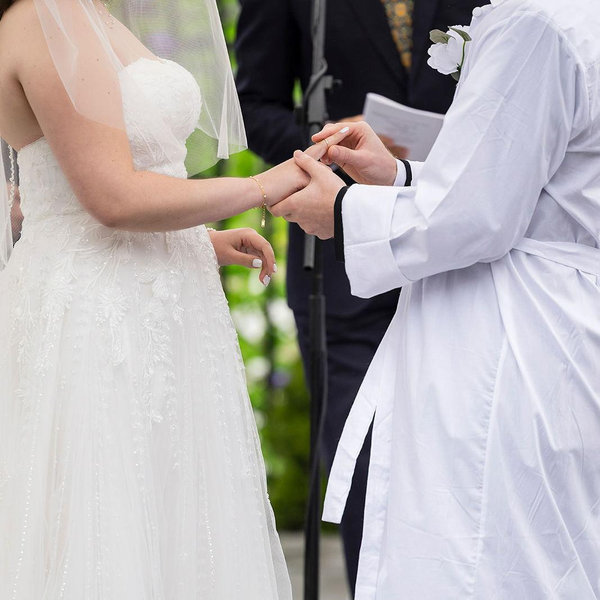
Erusin is the first stage of a traditional Jewish wedding where the bride and groom become legally bound to one another. The tradition begins with the blessing over the wine . Then Jacob and Hadassah will exchange wedding bands as a sign of their commitment to one another and announce their declaration to each other. In accordance with Jewish tradition, these rings are unembellished and placed on the right index finger, which is believed to be connected by a special line directly to the heart.
Sheva Brachot
Seven Blessings
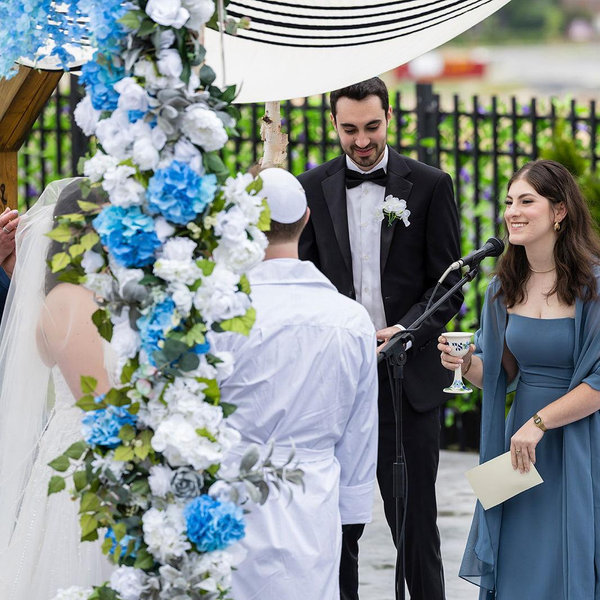
Seven blessings are recited over a cup of wine. These blessings include praise for G-d, a prayer for peace in Jerusalem, and a prayer to ask that Jacob and Hadassah's married life be filled with joy. These blessings will be recited in both English and Hebrew by guests whom the couple hopes to honor as important to their growth and identity as Jews. Throughout the Sheva Brachot, everyone will be encouraged to sing together.
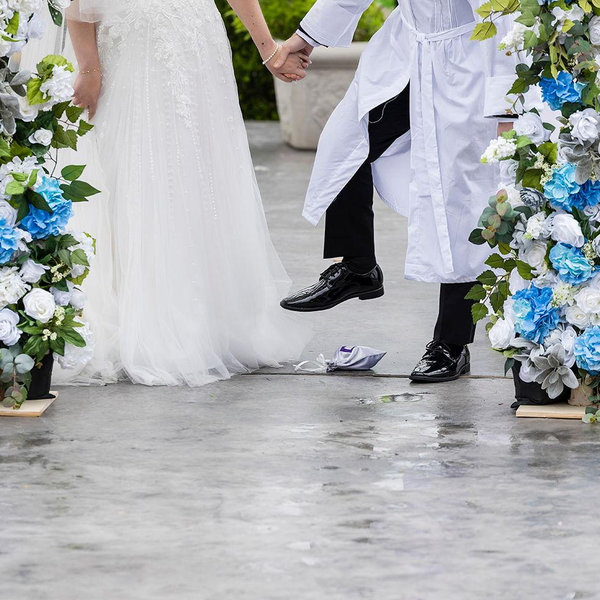
Breaking of the Glass
Mazal Tov!
At the conclusion of the ceremony, Jacob will break a glass under his foot in memory of the destruction of the Holy Temple in Jerusalem. The broken glass also reminds us of the delicate nature of marriage, which must always be nurtured. As the glass breaks, it is customary for the wedding guests to shout “Mazal Tov”, a wish of congratulations and good luck. At the conclusion of the ceremony, Jacob and Hadassah will be escorted inside through song and dance.
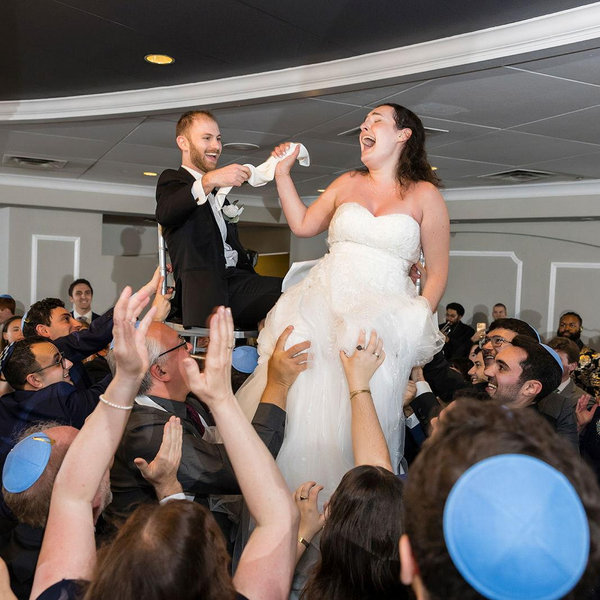
The Hora
Jewish Dancing
The Hora is an exuberant circle dance that’s the centerpiece of Jewish celebrations. Wedding guests begin the hora by dancing in circles around the newlyweds. In the center of the circles, the bride and groom will do-si-do with guests. Later, guests hoist up the bride and groom on separate chairs while both holding a napkin. Meanwhile, the guests continue to celebrate the married couple and dance around them.
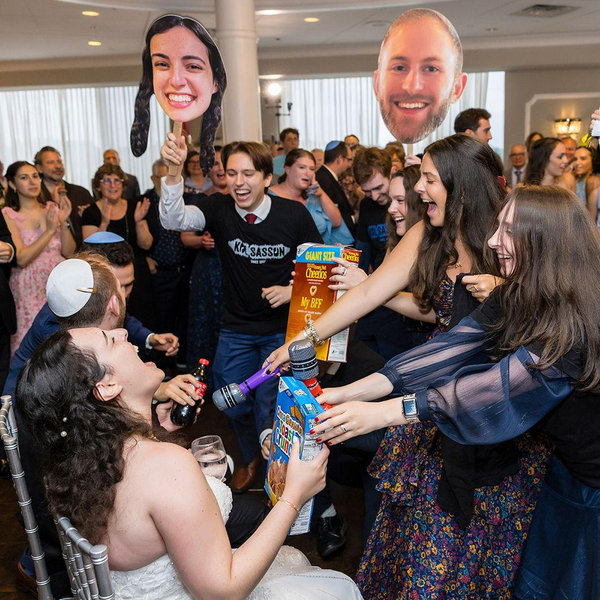
Schtick
Revelry
Schtick is a Jewish custom of entertaining the bride and groom during the Hora that kicks off the reception. Jacob and Hadassah will be invited to sit in chairs on the dance floor as the party and dancing continue. This will be your cue (as an individual or a group) to gather and we will then take turns entertaining the newlyweds. All guests will have the opportunity to shower Jacob and Hadassah with love, laughs, and memories. We encourage you to think about your relationship with Jacob and Hadassah and bring moments, inside jokes, and joys you share with them both to life. Oftentimes, groups of friends or family from various aspects of their lives will plan together to coordinate ideas, bring props, or arrange a dance. Shtick also allows for improv! You might feel inspired by the moment and join in on Shtick on the spot. Just remember - Shtick happens while music is still playing and the entire crowd is dancing, singing, and clapping around the couple. Therefore, Shtick is best executed visually; anything verbal will be difficult to hear.
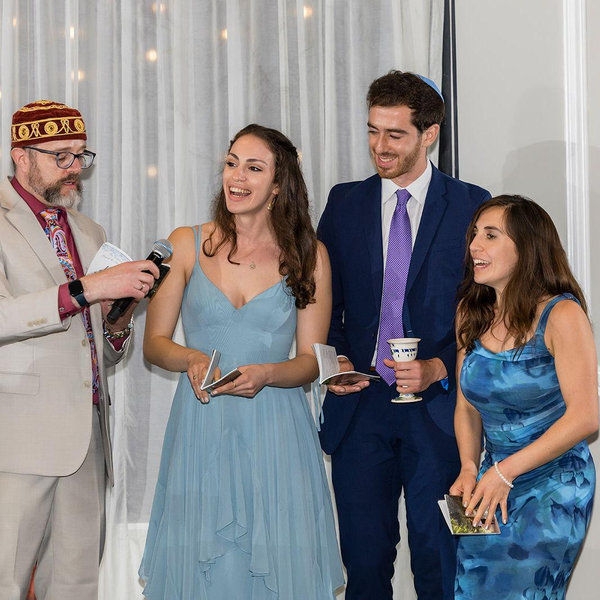
Benching
Sheva Brachot #2
At the end of the reception, we will thank G-d for the food we have eaten and take a moment to continue celebrating the bride and groom with another round of seven blessings.