Orthodox Traditions
Question
The Eastern Orthodox Wedding Ceremony
Answer
The Eastern Orthodox wedding ceremony is an ancient rite full of profound symbolism and meaning. The couple is led through the ceremony by their priest and their Sponsors, a best man and maid of honor who remain important figures in the couple's life. Most rituals are performed three times to represent the Holy Trinity. Marriage is a sacrament in the Orthodox Church because it reveals the heavenly kingdom to the world through the couple and their life together. Marriage is not a state of life, but a stage in the life of Christ for the couple, an essential dimension of their salvation.
Question
Betrothal Ceremony
Answer
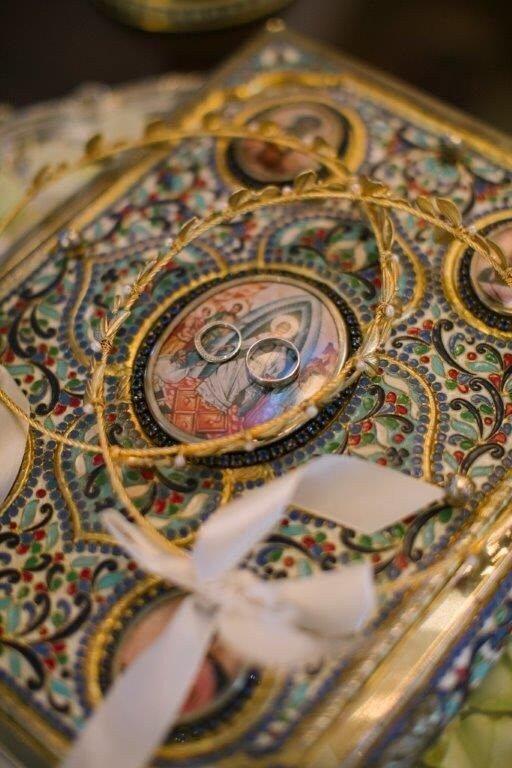
Eastern Orthodox weddings begin at the back of the church with a betrothal ceremony in which the rings are blessed. After reciting blessings and Bible passages, the priest makes the sign of the cross while holding the rings and declaring the betrothal. The priest may hold the rings in his hands while pressing the bride and groom's foreheads three times each. Then, either the priest or the Sponors exchanges the rings between the couple's fingers three times, signifying that the weakness of one will be compensated by the other.
Question
Candles and Hand-holding
Answer
After the rings are exchanged (or sometimes beforehand), the priest gives the couple lit candles to hold in their left hands for the remainder of the service. The burning flames symbolize the couple's spiritual willingness to receive God's blessings. The priest also joins the couple's right hands as he prays for their marriage. The bride and groom continue to hold hands during the ceremony as a symbol of their oneness.
Question
Crowning
Answer
The Crowning is the centerpiece of the Eastern Orthodox marriage ceremony. Garland wreaths are often fashioned into ornate crowns as a symbol of glory and honor. Crowns can also be made of orange blossom, myrtle leaves, semiprecious stones and metals, or threads of gold and crimson, which represent the royalty of marriage. The sponsors present the couple with two crowns joined by a white ribbon, symbolizing the couple's unity. The priest places the crowns on the couple's heads while they face the altar, then the crowns are swapped between the couple's heads three times. According to ancient custom, the crowns are to stay with the couple for life (some couples are even buried in them!)
Question
The Scripture Readings
Answer
There are two readings from the New Testament. The first is from St. Paul’s Epistle to the Ephesians (5:20-33), where he exhorts married couples “to be subject to one another out of reverence for Christ.” The second reading is from the Gospel of John (2:1-11), the account of Christ's miracle at the wedding at Cana.
Question
The Common Cup
Answer
After the priest reads the scripture readings, the bride and groom take three sips of wine from a shared cup. The ritual of the common cup is based on the wedding of Cana of Galilee, where Jesus turned water into wine. The cup represents life and symbolizes the couple's mutual sharing of joy and sorrow. As they drink wine from the common cup, they are reminded that from that moment they will share everything, doubling their joys and dividing their sorrows.
Question
The Dance of Isaiah
Answer
Following the common cup ritual, the priest (and sometimes the sponsors too) leads the couple three times around the altar on which a Bible and a cross rest. This ritual dance predates Christianity, representing the dance around the Ark of the Covenant. The choir sings three hymns as the couple circles the table. The first begins, “O Isaiah, dance for joy….” Giving this procession its name. In this act, the couple takes their first steps as a married couple, with the Church (through the priest) leading them.
Question
Traditional Blessings
Answer
At the ceremony's end, the priest recites parting blessings upon the newlyweds. To the groom he may say: "Be thou magnified O Bridegroom, as Abraham, and blessed as Isaac and multiply as Jacob. Walk in peace and work in righteousness, as the commandments of God." To the bride he may say: "And thou O Bride, be though magnified as Sarah, glad as Rebecca and multiply like unto Rachel, rejoicing in thine own husband, fulfilling the conditions of the law, for so it is well pleasing unto God."