Fête Galante
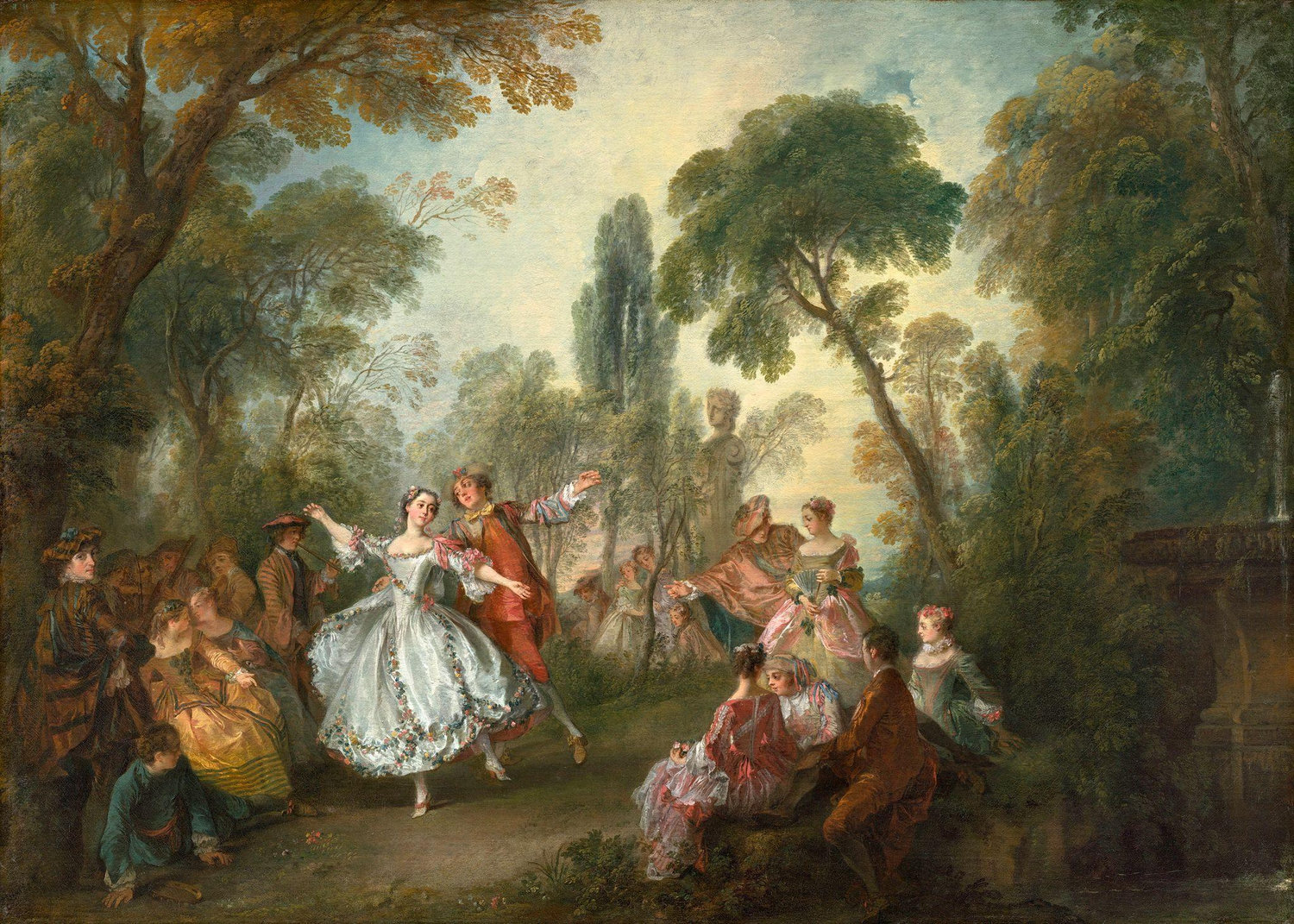
Fête galante is a French term used to describe a type of painting which first came to prominence with Antoine Watteau, whose reception piece at the Academy of 1717, 'The Embarkation for the Island of Cythera', was described as representing 'une fête galante'.
Fêtes galantes, usually small in scale, show groups of elegantly attired men and women, most often placed in a parkland setting and engaged in decorously amorous play.
Precedents for this type of picture can be found in the work of 17th-century Dutch and Flemish artists but Watteau's mix of reality and fantasy in costume and setting, and the open-endedness of his subject matter, were original to him. Pater, Lancret and many other artists followed Watteau in producing fêtes galantes, but did not imbue their paintings with the subtle depiction of human emotion he achieved.
The Embarkation for Cythera – Jean Antoine Watteau, 1717
Fête galante in a Wooded Landscape - Jean Antoine Watteau c.1719
The Dance - Jean-Baptiste Pater c.1730
Les Fetes Venitiennes - Jean Antoine Watteau, 1719
For all the days along the way
Find your wedding photographer© 2026 Zola, Inc. All rights reserved. Accessibility / Privacy / Terms