Things To Do
Lijiang Old Town
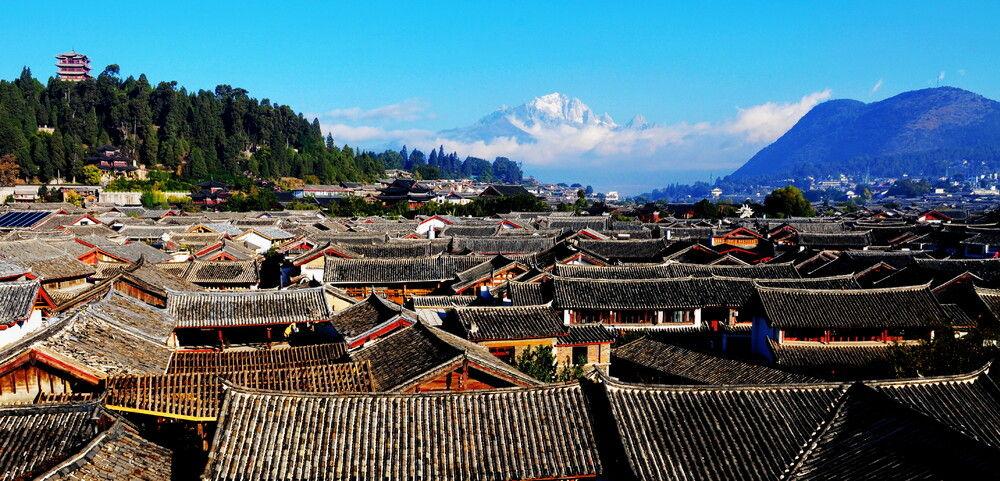
Lijiang Old Town, also called Dayan Old Town, is a well-preserved ancient town for Naxi ethnic group. Old Town of Lijiang was listed as UNESCO World Heritage Site in 1997, including Dayan Old Town, Shuhe Old Town and Baisha Old Town. It is one of the four best-preserved ancient cities in China. Our hotel will be in the Lijiang Old Town! Lijiang Old Town features wide cobbled streets ambling over stone bridges and waterwheel-driven canals filled with huge goldfish and lined with shops, small family-run hotels and hostels, cafes and bars. Sifang Square is the center of the old town. There are four streets stretching from Sifang Square, namely Xinhua Street, Wuyi Street, Guangyi Street and Qiyi Street. Countless lanes extending in all directions form a network and connect every corner of the town. There are about 354 bridges, like wind and rain bridges, stone arch bridge, slab bridge, plank bridge, etc.
Mu’s Residence (木府)
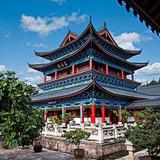
Lijiang Old Town was first built in the late Song Dynasty and early Yuan Dynasty, with a history of more than 800 years. From the beginning to the reign of Yongzheng in Qing Dynasty, Lijiang Old Town was under the rule of Mu Family, local commanders during that time in Lijiang. Tusi Mu was under the ruler of Naxi Ethnic Group during Yuan, Ming and Qing dynasties. The Mu’s Residence is the Tusi Mu’s Yamen. In the heyday of Tusi Mu, it was consisted of 100 buildings. Hence, there is a saying “there is Forbidden City in the North, Mu’s Residence in the south”. Mu’s Residence was called the miniature Forbidden City. Looked from a far distance, it likes a grand imperial palace and it is famous for the grandness and architectural buildings. The hotel we will be staying at is the old Mu Family Mansion Post Station - It was once the site where the Mu Family hosted honored guests.
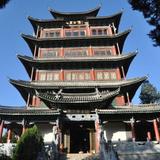
Wangu Pavilion (万古楼)
Wangu Tower sits atop Lion Hill, behind Mu’s Residence. Rising 33 meters and spanning five stories, the tower offers sweeping panoramic views: Lijiang Old Town and its rivers to the east, the modern city of Lijiang to the west, the Jade Dragon Snow Mountain range to the north, and traditional Naxi villages and farmland to the south. The tower’s architecture and design are well worth a closer look— make sure to take time and observe its structure and artworks!
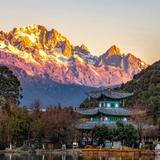
Black Dragon Pool (黑龙潭)
Black Dragon Pool Park, also called Jade Spring Park, was built during Qing Dynasty in 1737. Located in the north of Lijiang Old Town and at the foot of Elephant Hill, Black Dragon Pool Park offers spectacular view of the Jade Dragon Snow Mountain over its white marble bridge. A short visit to the park, travelers can see some exquisite temples, pavilion and bridges over the pool, including the Moon-Embracing Pavilion, Dragon God Temple and Five-phoenix Tower. The park is walkable from the Old Town and it is a wonderful breathtaking place for a morning run. If you are lucky, you may see the famous magical "日照金山" (the mountain flowing gold at sunrise). It refers to the moment just after sunrise, when the low-angle sunlight turns snow-capped peaks a glowing gold color. It carries a poetic, almost auspicious feeling in Chinese, often associated with beauty, luck, and rare timing.