Cody & Monica


Things To Do
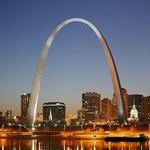
Gateway Arch
The Gateway Arch is a 630-foot monument in St. Louis, Missouri, United States. Clad in stainless steel and built in the form of a weighted catenary arch, it is the world's tallest arch, the tallest man-made monument in the Western Hemisphere, and Missouri's tallest accessible building. Built as a monument to the westward expansion of the United States,[5] and officially dedicated to "the American people," the Arch, commonly referred to as "The Gateway to the West" is the centerpiece of Gateway Arch National Park and has become an internationally recognized symbol of St. Louis, as well as a popular tourist destination.
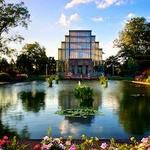
Forest Park
Forest Park is a public park in western St. Louis, Missouri. It is a prominent civic center and covers 1,371 acres (5.55 km2). Opened in 1876, more than a decade after its proposal, the park has hosted several significant events, including the Louisiana Purchase Exposition of 1904 and the 1904 Summer Olympics. Bounded by Skinker Boulevard, Lindell Boulevard, Kingshighway Boulevard, and Oakland Avenue, it is known as the "Heart of St. Louis" and features a variety of attractions, including the St. Louis Zoo, the Saint Louis Art Museum, the Missouri History Museum, and the St. Louis Science Center. It is the seventh largest urban park in the United States, a natural oasis in an urban environment. Forest Park is 450 acres larger than New York City's Central Park.
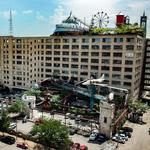
City Museum
City Museum is a museum whose exhibits consist largely of repurposed architectural and industrial objects, housed in the former International Shoe building in the Washington Avenue Loft District of St. Louis, Missouri, United States. Opened in 1997, the museum attracted more than 700,000 visitors in 2010.[1] The City Museum has been named one of the "great public spaces" by the Project for Public Spaces,[2] and has won other local and international awards as a must-see destination.[citation needed] It has been described as "a wild, singular vision of an oddball artistic mind" and compared to the similarly individualistic Museum of Jurassic Technology in Los Angeles.
Saint Louis Zoo
The Saint Louis Zoological Park, commonly known as the Saint Louis Zoo, is in Forest Park in St. Louis, Missouri. It is recognized as a leading zoo in animal management, research, conservation, and education. The zoo is accredited by the Association of Zoos and Aquariums (AZA). Admission is free.
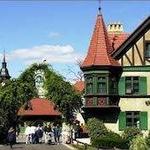
Grant's Farm
The property was at one time owned by Ulysses S. Grant, 18th president of the U.S. and Civil War general. It is now owned by the Busch family, who owned the Anheuser-Busch Brewing Company for many years until it was sold to InBev in 2008. Grant's Farm has been an animal reserve for many years and is open to the public for free; however, there is a parking fee of $13 per vehicle. This fee helps to maintain the farm. The farm is home to such animals as buffalo, elephants, camels, kangaroos, donkeys, goats, peacocks, the iconic Budweiser Clydesdales and many more. Most of these animals can be seen by visitors on a tram tour of the deer park region of the park, while the Clydesdales are found in their nearby barn and pastures. The farm also contains a cabin called "Hardscrabble," which was built by Ulysses S. Grant in 1856 on another part of the property and later relocated to Grant's Farm. It is the only remaining structure that was hand-built by a U.S. president prior to assuming office.

Missouri Botanical Garden
The Missouri Botanical Garden is a botanical garden located at 4344 Shaw Boulevard in St. Louis, Missouri. It is also known informally as Shaw's Garden for founder and philanthropist Henry Shaw. Its herbarium, with more than 6.6 million specimens, is the second largest in North America, behind only that of the New York Botanical Garden.
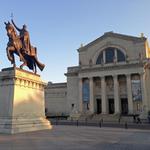
Saint Louis Art Museum
The Saint Louis Art Museum is one of the principal U.S. art museums, with paintings, sculptures, cultural objects, and ancient masterpieces from all corners of the world. Its three-story building stands in Forest Park in St. Louis, Missouri, where it is visited by up to a half million people every year. Admission is free.
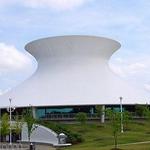
Saint Louis Science Center
The Saint Louis Science Center, founded as a planetarium in 1963, is a collection of buildings including a science museum and planetarium in St. Louis, Missouri, on the southeastern corner of Forest Park. With over 750 exhibits in a complex of over 300,000 square feet (28,000 m2), it is among the largest of its type in the United States.
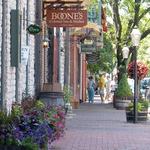
St Charles Historic Main Street
Early explorers and pioneers made St. Charles their place of choice for shopping in the 19th century. Today, you can walk those same brick-lined streets, along the Nationally Registered Historic District, and shop in those same buildings. You will find unique specialty items, home accessories, jewelry, and many other one-of-a-kind gifts rather than pelts and barrels of nails. Whether you're looking for the perfect gift or just want to treat yourself to something special, there's something on Main Street to suit every taste.
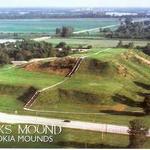
Cahokia Mounds State Historic Site
Cahokia Mounds, some 13 km north-east of St Louis, Missouri, is the largest pre-Columbian settlement north of Mexico and a UNESCO World Heritage Site. It was occupied primarily during the Mississippian period (800–1400), when it covered nearly 1,600 ha and included some 120 mounds. It is a striking example of a complex chiefdom society, with many satellite mound centres and numerous outlying hamlets and villages. This agricultural society may have had a population of 10–20,000 at its peak between 1050 and 1150. Primary features at the site include Monks Mound, the largest prehistoric earthwork in the Americas, covering over 5 ha and standing 30 m high.