Things To Do
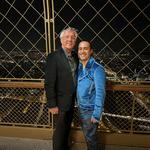
Eiffel Tower

Louvre Museum
The Louvre is a national art museum in Paris, France, and one of the most famous museums in the world. It is located on the Right Bank of the Seine in the city's 1st arrondissement (district or ward) and home to some of the most canonical works of Western art, including the Mona Lisa, Venus de Milo, and Winged Victory. The museum is housed in the Louvre Palace, originally built in the late 12th to 13th century under Philip II. Remnants of the Medieval Louvre fortress are visible in the basement of the museum. Due to urban expansion, the fortress eventually lost its defensive function, and in 1546 Francis I converted it into the primary residence of the French kings.
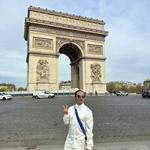
Arc de Triomphe
The Arc de Triomphe de l'Étoile, often called simply the Arc de Triomphe, is one of the most famous monuments in Paris, France, standing at the western end of the Champs-Élysées at the centre of Place Charles de Gaulle, formerly named Place de l'Étoile—the étoile or "star" of the juncture formed by its twelve radiating avenues. The location of the arc and the plaza is shared between three arrondissements, 16th (south and west), 17th(north), and 8th (east). The Arc de Triomphe honours those who fought and died for France in the French Revolutionary and Napoleonic Wars, with the names of all French victories and generals inscribed on its inner and outer surfaces. Beneath its vault lies the Tomb of the Unknown Soldier from World War I.

Montmartre
Montmartre is a 130-meter-high hill in Paris's 18th arrondissement. It's known for its artistic history, the white-domed Basilica of the Sacré-Cœur on its summit, and as a nightclub district. Montmartre is a neighborhood with a distinctive village atmosphere. It's known for its cobbled streets, steep, winding streets, and artists. The area in front of the church offers extensive views of the city. Montmartre was home to many artists, intellectuals, and writers.
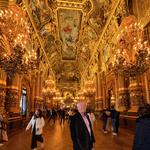
Palais Garnier
The Palais Garnier, an architectural masterpieceinaugurated in 1875 at the request of Napoleon III, is without doubt one of the most dazzling monuments in Paris. A world of elegance, not to be missed! To visit the Palais Garnier is to enter a realm of pomp and refinement in which the poetry, audacity and genius of Charles Garnier have managed to create a unique harmony between the sculpture, painting and architecture. A showcase for dance and opera, the building dazzles with its balconies in onyx, its luxurious marble, its delicate frescoes and its rich gilding. A real gem in the heart of Paris.
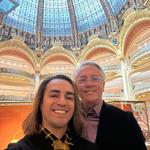
Galleries Lafayette
Galeries Lafayette is an upmarket French department store chain, the biggest in Europe. Its flagship store is on Boulevard Haussmann in the 9th arrondissement of Paris but it now operates a number of locations in France and other countries. In the heart of Paris, the world-famous Galeries Lafayette Paris Haussmann symbolizes French elegance. This shopping temple offers more than 3,500 brands, numerous restaurants, a terrace with a view of the monuments of Paris, and the famous Coupole, divided into three stores: Coupole, L’Homme and Le Gourmet.
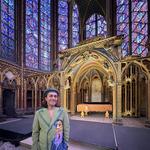
Sainte-Chapelle
The Sainte-Chapelle is a royal chapel in the Gothic style, within the medieval Palais de la Cité, the residence of the Kings of France until the 14th century, on the Île de la Cité in the River Seine in Paris, France.
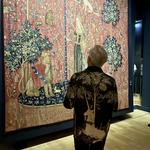
Musee de Cluny
The Musée de Cluny, officially Musée de Cluny-Musée National du Moyen Âge, is a museum of medieval art in Paris. It is located in the 5th arrondissement of Paris, bordered by square Samuel-Paty to the south, boulevard Saint-Michel to the west, boulevard Saint-Germain to the north, and rue Saint-Jacques to the east. One of the richest medieval collections in the world and the famous Lady and the Unicorn tapestries.
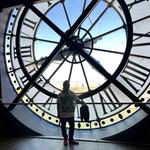
Musee d'Orsay
The Musée d'Orsay is a museum in Paris, France, on the Left Bank of the Seine. It is housed in the former Gare d'Orsay, a Beaux-Arts railway station built between 1898 and 1900. The museum holds mainly French art dating from 1848 to 1914, including paintings, sculptures, furniture, and photography. It houses the largest collection of Impressionist and post-Impressionist masterpieces in the world, by painters including Berthe Morisot, Claude Monet, Édouard Manet, Degas, Renoir, Cézanne, Seurat, Sisley, Gauguin, and van Gogh. It is one of the largest art museums in Europe.

Pont des Arts
The Pont des Arts is a pedestrian bridge in Paris which crosses the River Seine. It links the Institut de France and the central square of the Palais du Louvre, (which had been termed the "Palais des Arts" under the First French Empire). The bridge appeared on the 2004 finale of Sex and the City

Jardin des Plantes
The Jardin des Plantes is the main botanical garden in France. Jardin des Plantes is the official name in the present day, but it is in fact an elliptical form of Jardin Royal des Plantes Médicinales ("Royal Garden of the Medicinal Plants"), which is related to the original purpose of the garden back in the 17th century.
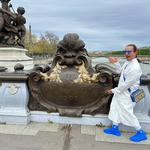
Pont Alexandre III
Spanning the River Seine, Pont Alexandre III dates back to 1900 and is reminiscent of the Belle Epoque era. The Pont Alexandre III is Paris's most elegant, grandiose, and sumptuous bridge: one of the most beautiful river crossings in the world.
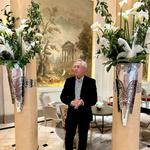
Plaza Athenee
Indulge in true splendor at Hotel Plaza Athenee, one of the most iconic 5-star hotels in Paris. The hotel opened in 1913. Chef Alain Ducasse obtained three Michelin stars at his restaurant in the hotel in 2001. We had breakfast here and truly say it's not to be missed!

Sapid
One of our favorite vegetarian restaurants in Paris. Sapid is a refectory with a gourmet and committed cuisine. The restaurant forges partnerships with market gardeners, farmers and seafood artisans. Michelin-starred chef Alain Ducasse’s new Paris restaurant Sapid is all about plants. Located in the east of the French capital, Sapid’s menu is vegetable-forward, with very few animal products on offer. (Five percent of the offering features eggs, cheese, and fish. The other 95 percent is plant-based.)
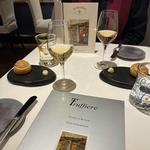
La Truffiere
One of the most amazing meals we've ever had! Atmospheric eatery with wood beams & stone vaults, serving refined & artfully plated French cuisine. Located in the heart of the historic Latin corner near the Pantheon, La Truffière welcomes you in the warm and cosy decor of a 17th century sheephouse. The chef proposes a gourmet and creative Mediterranean cuisine, around the vegetable, the herbs and the truffle, favouring French growers and seasonal products. The wine list - displaying one of the country's largest selections, with 4200 references - won several awards.
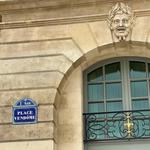
Place Vendome
Place Vendôme was built on the orders of Louis XIV, as a grandiose setting that would embody absolute power in the very heart of Paris. Napoleon replaced the statue of the king, dismantled in 1792, with a bronze column made from 1,200 enemy canons. During the Second Empire, however, the octagonal square – a marvel of classical urban design – gradually became a showcase for luxury goods rather than political power. The world’s great jewellery brands have turned Place Vendôme and the adjoining Rue de la Paix into one continuous stream of window displays filled with sparkling diamonds, rubies and emeralds.
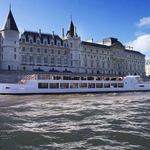
Conciergerie
The Conciergerie is a former courthouse and prison in Paris, France, located on the west of the Île de la Cité, below the Palais de Justice. It was originally part of the former royal palace, the Palais de la Cité, which also included the Sainte-Chapelle. Two large medieval halls remain from the royal palace. During the French Revolution, 2,780 prisoners, including Marie Antoinette, were imprisoned, tried and sentenced at the Conciergerie, then sent to different sites to be executed by the guillotine. It is now a national monument and museum.
Notre Dame
Notre-Dame de Paris, often referred to simply as Notre-Dame, is a medieval Catholic cathedral on the Île de la Cité, in the 4th arrondissement of Paris, France. The cathedral, dedicated to the Virgin Mary, is considered one of the finest examples of French Gothic architecture. The cathedral has recently reopened after the devastating fire in 2019.
Place des Vosges
Characterised by its unique architecture and romantic park, the Place des Vosges is a must-see in the Marais district, home to the Carnavalet museum.
La Galerie Dior
Featuring a unique scenographic narrative, La Galerie Dior embodies the spirit of Parisian Haute Couture while perpetuating the memory of this historic address.
Petit Palais
The Petit Palais is an art museum in the 8th arrondissement of Paris, France. Built for the 1900 Exposition Universelle, it now houses the City of Paris Museum of Fine Arts. The Petit Palais is located across from the Grand Palais on the former Avenue Nicolas II, today Avenue Winston-Churchill. And it's free!
Grand Palais
The Grand Palais is one of the most iconic Parisian monuments. Built for the 1900 Exposition Universelle, it is recognizable by its large glass dome flanked by the French flag. This architectural masterpiece of stone, steel and glass has been listed as a historical monument since 2000. It will reopen in Spring of 2025 after being closed for renovations and the Olympic Games.