Things To Do
PARROQUIA DEL SAGRADO CORAZON
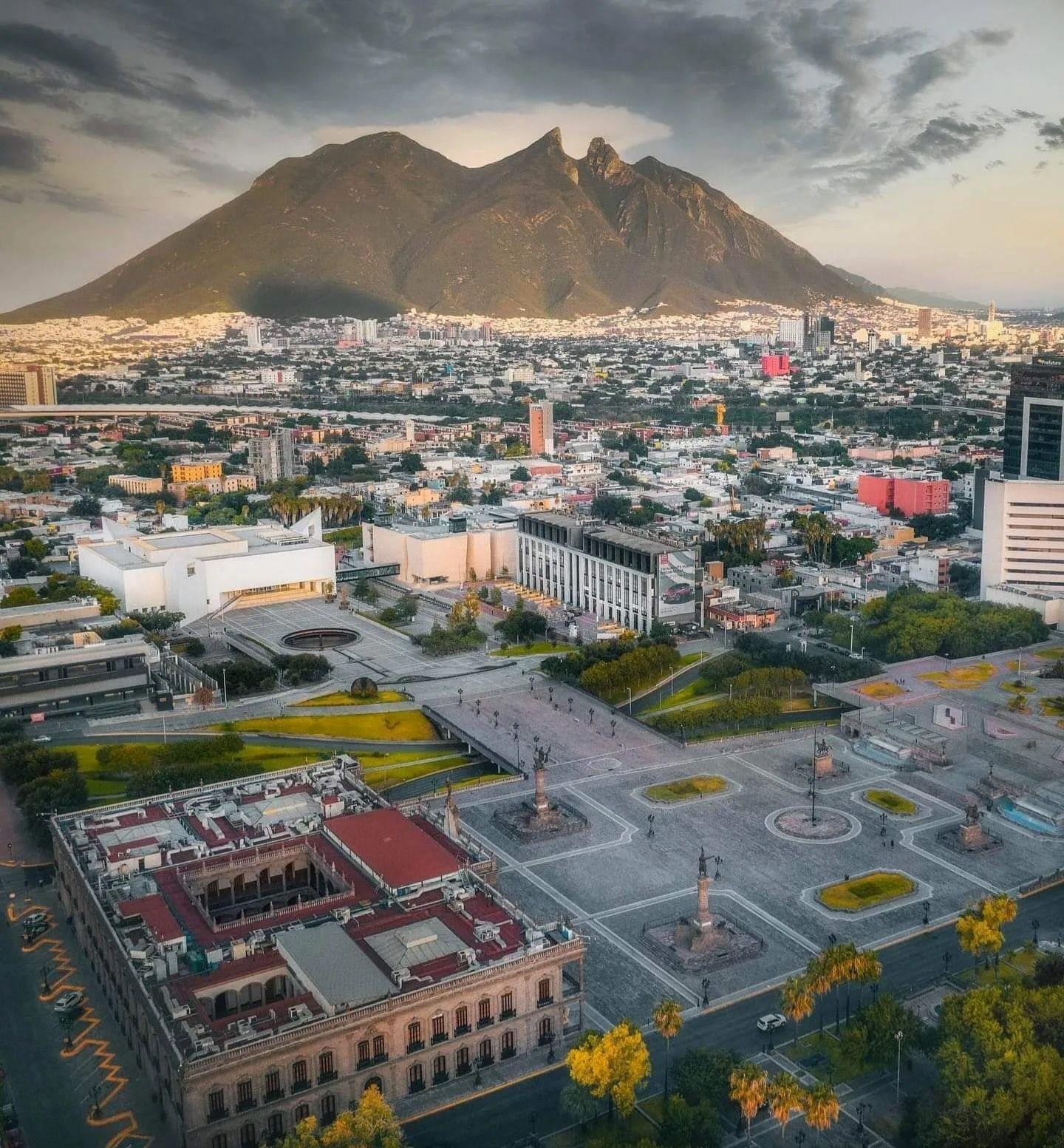
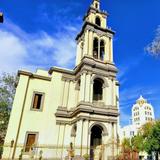
The church was constructed starting in 1874 on land donated by María Antonia de Arrese y Llano. The temple took nearly three decades to build, finally concluding in 1903. Services began in 1899, and its first pastor was Presbyter Francisco de la Garza Martínez. It is of great sentimental value for Brenda to get married in this Church because her maternal grandparents got married here on October 1965. The Parroquia del Sagrado Corazón de Jesús sits at the northern end of the Macroplaza and across Palacio del Gobierno.
CASONA DE SANTA LUCIA
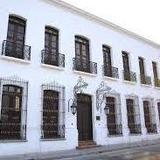
La Casona de Santa Lucía is an historic 19th-century estate located in the heart of Monterrey, Mexico. Originally built in 1871 in the traditional barrio of Las Tenerías—a historically significant area where leather was tanned using the natural waters of the Ojo de Agua de Santa Lucía spring—the property stands today as a protected National Monument. Its history is marked by a rich and fascinating timeline: 1871: The original casona is built. Mexican Revolution (Early 1900s): The property was seized by General Francisco Villa, who used it as his military headquarters. During this turbulent time, it was also used as a site for the execution of detractors to the armed movement. Present Day: The estate has been carefully restored and currently operates as an exclusive event venue in the city center, preserving its original 19th-century architecture and charm. La Casona de Santa Lucia is very close to the Macroplaza, next to Paseo Santa Lucía.
MACROPLAZA
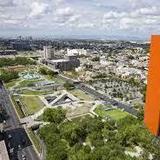
The Macroplaza is Monterrey's largest plaza - and the 5th largest continuous public plaza in the world. Macroplaza connects Palacio de Gobierno (Governor's Office and Museum) to the north with Palacio Municipal (City Hall) to the south. The Macroplaza is lined by a number of government offices and legislative buildings, making it the seat of state and municipal politics in the state of Nuevo León and the city of Monterrey. The Macroplaza sits nestled between the historic center, Barrio Antiguo, and the Santa Lucía Riverwalk. This continuous plaza is home to a number of sculptures, monuments, and fountains, most notably are Fuente de Neptuno and Faro del Comercio.
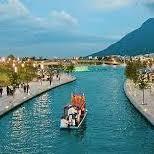
PASEO SANTA LUCIA
Enjoy a scenic stroll or take a boat ride from the Macroplaza, following the Santa Lucia River Walk all the way to Fundidora Park. Paseo Santa Lucía is a 2.5km (1.5 miles) artificial river in Monterrey's historic center. It is the longest artificial river in Latin America. The riverwalk contains a number of sculptures and plazas that commemorate the life and culture of Monterrey and its people. The riverwalk begins at the site of Monterrey's founding - an ancient spring named Ojos de Agua de Santa Lucía. This site is commemorated with a plaza and plaque depicting the words of Diego de Montemayor, the Spanish conquistador that founded the city in September of 1596.
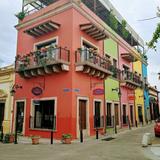
BARRIO ANTIGUO
Barrio Antiguo is one of the oldest neighborhoods in Monterrey. Bordered by the Santa Lucía Riverwalk to the north, Macroplaza to the west, and the Santa Catarina River to the south and east, Barrio Antiguo is a vibrant neighborhood that is characterized by its narrow, cobblestone streets and buildings that date back to the 1700s. Barrio Antiguo is home to many restaurants, cafés, and bars, making it one of Brenda & Michael's favorite places to visit and linger. On weekend nights, the streets of Barrio Antiguo get taken over by pedestrians where live music attracts crowds outdoors. The neighborhood is also home to La Casona de Santa Lucía. On Sunday mornings, Barrio Antiguo hosts what is known as Callejón del Arte where artisans and informal vendors line Calle de Francisco Javier Mina to sell everything from small trinkets to large works of art.
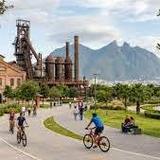
FUNDIDORA PARK - PARQUE FUNDIDORA
Parque Fundidora is Monterrey's largest park. The park gets its name because the grounds were once the site of the Monterrey Foundry - the first steel and iron foundry in Latin America. Preserved remnants of the city's industrial past litter the park making it an open-air museum and homage to one of the industries that made Monterrey the industrial capital of Mexico. The park hosts many public events and is home to venues and concert halls such as Arena Monterrey and Auditorio Citibanamex. World Cup 2026 Monterrey Fan Fest is going to land in Parque Fundidora. Parque Fundidora is one of Brenda and Michael's favorite places to visit and get lost in. On weekends they like to sit by the park's lagoon and people watch since it is connected to the rest of the historic center via the Santa Lucía Riverwalk.
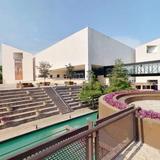
MUSEO DE HISTORIA MEXICANA
Being one of the museums that make up the 3 Museos campus, Museo de Historia Mexicana is home to the most important collection of Mexican history in northern Mexico. Museo de Historia Mexicana is conveniently located in front of the Macroplaza where it overlooks the site where Monterrey was founded in 1596. Museo de Historia Mexicana is bordered by the Macroplaza to the west and Paseo Santa Lucía to the east.
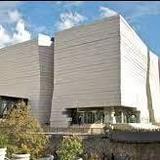
MUSEO DEL NORESTE
Museo del Noreste is one of the museums that make up the 3 Museos campus. This museum showcases the history of northeastern Mexico - a region that had been historically overlooked by both the Spanish colonial and Mexican federalist governments for its scarcity of water and natural resources. This museum contains permanent exhibits that explore the historical and cultural ties between the states that make up the region - Nuevo León, Coahuila, Tamaulipas, and Texas. Museo del Noreste sits on the same plaza that is overlooked by Museo de Historia Mexicana.
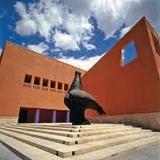
MUSEO DE ARTE CONTEMPORANEO
Inaugurated in 1991, Museo de Arte Contemporáneo (MARCO), houses a collection of contemporary art as both temporary and permanent exhibits. The permanent exhibits are largely made up of Latin American paintings. This museum hosts a variety of programs and special events that are geared towards community engagement with the purpose of presenting regiomontanos with variety of distinct forms of art. MARCO is located just east of the Macroplaza and directly south of the Metropolitan Cathedral. It can be accessed via Metrorrey lines 2 and 3 at Estación Zaragoza.
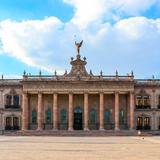
MUSEO DEL PALACIO
Built in 1895 under the governorship of Bernardo Reyes, Museo del Palacio was built to be the seat of the Legislature of the State of Nuevo León; it remained as the seat of legislative power in the state until 1985. The museum allows the visitor to explore the rich cultural heritage of Nuevo León by showcasing the changes that the state has undergone throughout its 500 year history. This museum sits at the northern end of the Macroplaza where it is bordered to the north by Palacio del Correo to the north and the wedding church, Sagrado Corazón de Jesús to the west.
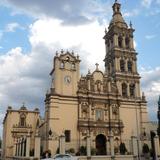
CATEDRAL METROPOLITANA DE MONTERREY
Catedral Metropolitana de la Inmaculada Concepción, or Catedral Metropolitana as it is known colloquially, was built between 1705 and 1791 in a mix of baroque and neoclassical architectural styles. Catedral Metropolitana was declared a cathedral in 1777 by Pope Pius VI and has served as the main church in the Monterrey metropolitan area; it serves as the seat of the Archdiocese of Monterrey. As is the case with most cities and towns in Latin America, Catedral Metropolitana sits on the main plaza of the city across from the seat of municipal government.
SAN PEDRO GARZA GARCIA
Mexico San Pedro Garza Garcia is Monterrey’s most upscale and stylish neighborhood, known for its excellent restaurants, luxury shopping, and beautiful mountain views. Popular shopping destinations include Plaza Fiesta San Agustín, Fashion Drive, and Punto Valle, all offering a mix of international brands, local boutiques, and great dining options.
VILLA DE SANTIAGO
Villa de Santiago (officially Santiago) is a charming Pueblo Mágico nestled in the Sierra Madre Oriental mountains of Nuevo León, Mexico, just 20 miles south of Monterrey. Famous for its cobblestone streets, colonial architecture, and eco-tourism, it serves as a popular weekend getaway for outdoor adventurers and sightseers alike