
FAQs
Question
What will the weather be like?
Answer
-Daytime temperatures tend to run in the ballpark of 20‑25 °C (68‑77 °F), though peaks into the upper 20s or even low 30s (≈ 30 °C / 86 °F) are possible, especially later in the month. -Nights (or early mornings) are cooler — you might see lows around 10‑15 °C (50‑59 °F), especially in mountain or elevated terrain. -Since Interlaken is in an alpine region and somewhat elevated, weather can change — even in summer you might encounter a breeze, cloud cover, or a cooler moment.
Question
What to pack and wear in Switzerland?
Answer
-Daywear: Comfortable for warm sunshine — think sundresses, short‑sleeves, light layers. -Evening or higher elevation: Bring a cardigan/jacket or light layer because it’ll cool off. -Outdoor venue notes: Since you’ll be outdoors (and possibly on grass or uneven ground), consider shoes and outfits that can handle that. -Rain possibility: Even in June you may get a passing shower — a light waterproof or umbrella could be a good idea.
Question
🚆 Traveling by Trains (Recommended)
Answer
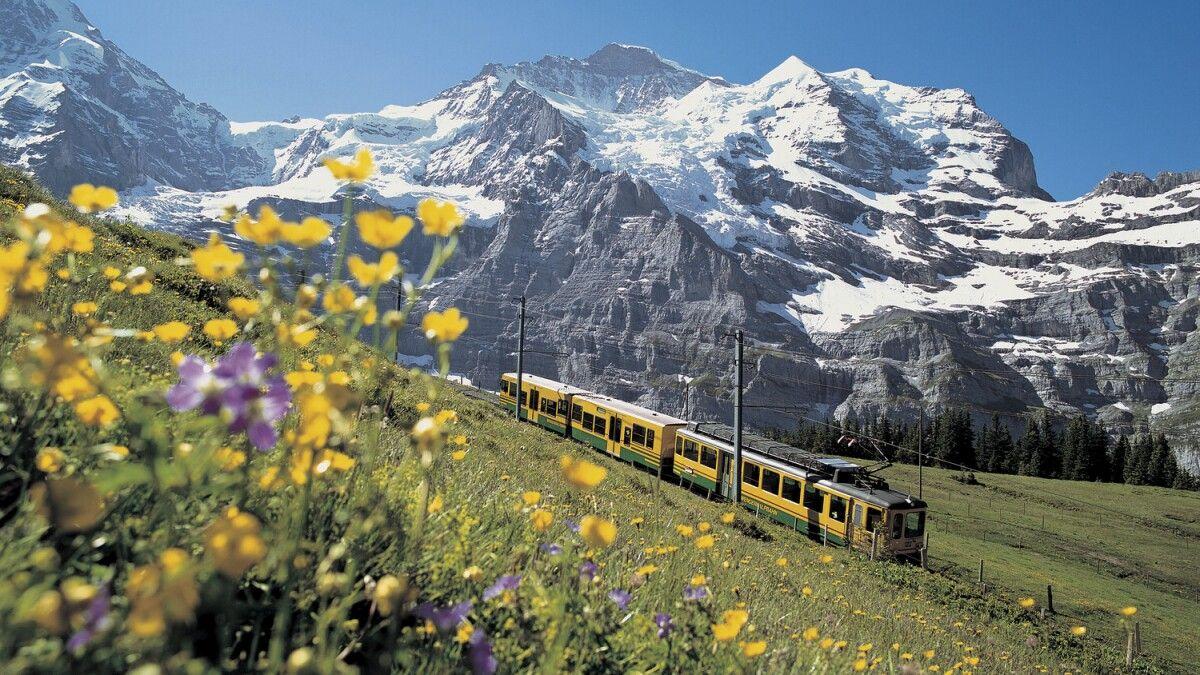
Swiss trains are very reliable, frequent, scenic, and usually stress-free. If you choose public transport only, you can get to Wengen entirely by train — no car required. Typical Train Route from Airport to Wengen 1. Zurich Airport (ZRH) → Interlaken Ost (about 2–2.5 hours) 2. Interlaken Ost → Lauterbrunnen (about 20–30 min) 3. Lauterbrunnen → Wengen (about 12–15 min) Total journey time is typically ~3–3.5 hours depending on connections and wait times. Why You Might Prefer Trains - No driving stress — you can relax, enjoy the views, and avoid parking hassles. - Switzerland’s rail system is highly punctual and connects most tourist destinations efficiently. - All mountain train changes are easy to manage with luggage.
Question
🎫 Train Passes & Ticket Options
Answer
🚆 Rail Pass Options ✦ Swiss Half Fare Card (Anna and Spencer's Choice) - Valid for 1 month - Allows you to purchase most train, bus, boat, and many mountain transport tickets at 50% off - Great if you plan multiple journeys but don’t need unlimited travel ✦ Swiss Travel Pass - Provides unlimited travel on most Swiss public transportation (trains, buses, boats) - Available in set durations (such as 3, 4, 6, or 8 days) - Includes free entry to many museums and discounts on select mountain excursions ✦ Berner Oberland Pass (Highly useful for the Jungfrau Region) - Covers unlimited travel within the Bernese Oberland region, including trains, buses, boats, and many mountain railways - Especially convenient for travel around Interlaken, Lauterbrunnen, Wengen, Grindelwald, and nearby scenic areas - Available in multi-day options (typically 3–10 days) - Often includes discounts on select high-altitude excursions (like Jungfraujoch) ✦ Eurail Global Pass - Valid across multiple European countries, including Switzerland - Useful if your trip includes travel beyond Switzerland - In Switzerland, may provide partial discounts (often 25–50%) on some mountain railways rather than full coverage ✦ Individual Tickets - If you’re only taking a few train trips, purchasing single tickets may be the most economical option - This is especially cost-effective when paired with the Swiss Half Fare Card ⭐ Which Pass Is Best for Most Guests? - For guests spending most of their time in the Jungfrau Region (Interlaken, Lauterbrunnen, Wengen, Grindelwald), the Berner Oberland Pass and/or a Swiss Half Fare Card paired with individual tickets often provides the best value and flexibility. - If you plan to travel extensively across Switzerland in a short period of time, the Swiss Travel Pass may be more convenient. - That said, travel needs vary — we recommend researching your options and comparing prices based on your specific itinerary to find what works best for you.
Question
🚗 Traveling by Car + Train
Answer
Renting a car can sometimes be more affordable or give you extra flexibility to explore Switzerland. That said, Wengen itself is a car-free village, so you cannot drive all the way into town. What to Expect - You would drive to Lauterbrunnen Valley, where there is a large multi-storey car park near the train station. - From Lauterbrunnen, take the short mountain train up to Wengen. - Renting a car can be helpful if you want to visit other regions or scenic areas on your own schedule. - Parking in Switzerland often costs extra and can be limited in popular areas, so many visitors choose a combination of driving to a base and then using public transport. - Many rental cars in Europe are manual transmission, so be sure to request an automatic if needed.
Question
🔗 Helpful Travel Resources
Answer
There are so many great resources online to help plan and navigate travel in Switzerland. We watched a lot of YouTube videos and found the channel Alpins in the Alps especially helpful — particularly for understanding train passes and getting around the Jungfrau Region. Here are a few of their videos we found useful: Ultimate Swiss Train Pass Guide: https://www.youtube.com/watch?v=fzuP0hMUjFk 1 Week Itinerary for the Jungfrau Region: https://www.youtube.com/watch?v=t8BWKFHWN58&list=PLKLDj1KvzhNqybtJC37RAR66q3zQcV7Fn&index=2